What Is Lace? The Secret History Of A Power Symbol
Into: Imagine a fabric created not just for modesty or warmth, but to "stitch the very air" into patterns of ultimate romance. Throughout its centuries-long journey, lace has undergone a dramatic transformation of identity. It was once the "liquid gold" of Venetian artisans—a high-stakes power code so expensive it bankrupt aristocrats and sparked death-defying smuggling rings across borders. This article will give you a comprehensive understanding of lace.
The history of lace
The origin of lace
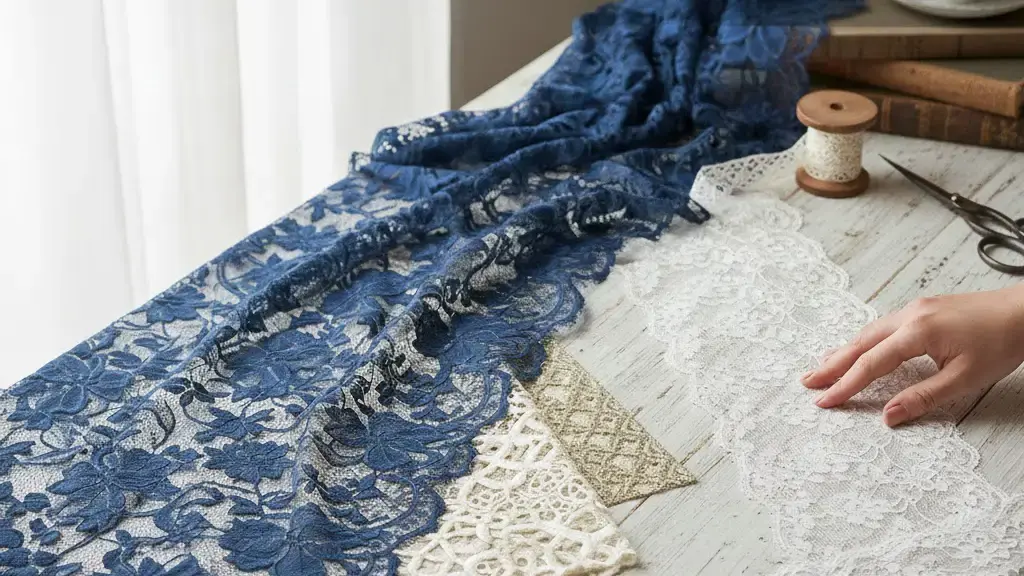
The history of lace is really the history of the human desire to preserve “pure air” in fabric. In 15th and 16th century Europe, lace didn’t just pop out of nowhere, it painstakingly evolved from early examples of cutwork and drawn-thread embroidery, in which artisans cut holes in linen. The big “Aha!” came in Venice, where craftsmen wondered why bother with a cloth base at all? Why not begin weaving the pattern into the air itself with nothing but a needle and thread and call the technique, aptly, Punto in Aria that is “stitches in the air”. At about the same time in Flanders (modern Belgium), people were busily tossing dozens of wooden bobbins to themselves and weaving dreams in a fabric so light that when you breathe upon it, it seems to evaporate into the air like a dragonfly’s wing. At that time lace was not just clothing; it was liquid gold, the very currency of the aristocracy. Every inch of an elaborate pattern represented weeks, if not months of a craftswoman’s time, spent pouring out her life in yellow candlelight.
Lace is a symbol of status
If you thought today’s exorbitantly priced limited-run luxury bags are bad, you should have seen lace in the 1600s. Back then, lace wasn’t an understated accessory; it was an obnoxious display of sheer wealth. When you spot one of those old oil portraits of an aristocrat with that massive ruff, they’re not being coy about their clothes, they are literally saying, “I’m so rich, so distanced from manual labor, that I can’t even look down at my own feet”.
So, lace being so expensive that a family could be wiped out by its acquisition, European authorities went completely postal and slapped down “Sumptuary Laws” ostensibly intended to prevent moral degradation, but actually for the purpose of keeping their ducats from flowing out to the Italian and Flemish workshops. Naturally, you can help make anything sought by a desire even more desirable, and lace became the craved item that every would-be owner used some genius smuggling tactic to hide under their noses, lining coffin linings, suturing it within the folds of a baby’s diaper. But the best of these is the wild “Lace Dog,” where smugglers would go so far as to shave a canine, several dog lace layers are wrapped underneath skin, and toss an outsize pelt over the top. Then they would navigate guarded forest borders. This lace trade was a literal cat and mouse game through centuries.
The Industrial Revolution
Imagine travelling back to the Industrial Revolution and giving lace its first anti-establishment tattoo: Before the nineteenth century, lace remained in the sanctuary of British cathedrals, on chaste royal necks and snoods—it was the divine light on the vestment; not for the likes of us. Until inventors like John Leavers brought massive machines to town that mimicked the most intricate of hand-weaves. What once took years for the industry’s craftswomen to create could be “spat out” in hours on the new, giant machines. With lace de-shrined, in seconds it was taken off its altar and exposed to Shoppers—that ubiquitous lace shawl was swept into middle-class girls’ Sunday strolls. Lace, no longer liturgically sacred, grew up to become The Fabric of Romance.
The definition of lace
More than just “fabric with holes”
Lace is sometimes confused with “anything breathable with holes in it.” In textile language, lace has a very specific “DNA” that sets it apart from mesh or embroidery. Think of embroidery as an “add-on” -you need a “solid” base cloth first to stitch your patterns onto; remove that cloth and your embroidery would simply fall to the floor. Lace is the “maverick”-it doesn’t need a pre-existing cloth, but is “constructed of thin air” by the twisting and looping of threads to form an entire fabric. Mesh is a simple, repeated grid; lace has “soul”—it has motif and net which are created together with the fabric as a whole. In simple terms “decorating a room” sounds like embroidery while “building the entire house out of nothing but thread” would be lace.
Structural core
Lace is exciting because it defies DNA. Most fabrics, whether silk or cotton, follow a pattern of gridlines; threads of warp and weft woven in a grid pattern and meeting at right angles to form a net. Lace ignores that grid completely. “Free from the constraints of warp and weft,” threads are twisted and looped and knotted, or bound and lacey, depending on the design. The individual threads never need a single square inch of base cloth on which to dance and play, creating all the unseen beauty of a hollow space to fill our eye and brain. Every exquisite motif has its own story; our threads improv-dance when left on their own, trusting in their ability to lean on and pass through each other to create a new strength. It’s in that being lost in otherness that a work of lace has its soul; transparent and skating, a weave can never be.
Anatomy of Lace
To appreciate lace, one must “dissect” it as a surgeon would by taking the layers apart and studying how each layer works individually and cooperatively with others.
The Motif: The Soul of the Design The Motif makes up the soul of any piece of lace—it’s the “face” that forms one’s first impression. Be it a romantic rose, an abstract geometric shape, or even a complicated narrative scene, it is within the motif that visual storytelling takes place. Technically-speaking, this is the part most filled with density in lace construction. By changing tension and direction regarding stitches, play between light and shadow on surface fabric usually thinner than that wing of cicada is produced. In short, motif happens to be protagonist of design carrying all its aesthetic weight.
The Ground: The Canvas That Binds. The Réseau (French for net) is mostly known as the background canvas binds floating motifs into a cohesive fabric; though it plays what could be considered a mere supporting role, the finesse of the ground becomes majorly responsible for telling about the quality of lace. Some grounds are fine as mist itself while others have definite hexagonal or diamond-shaped cells-this is the net which takes up individual patterns and turns them into one continuous piece of fabric that may later be cut, draped, and sewn to fit the body.
The Brides: Invisible Cables in the Air In lacework that craves a sense of airiness, you won’t find a continuous mesh background; instead, you’ll see Brides (or Bars). These are delicate, strategic threads that bridge the gaps between motifs like miniature suspension cables. This structure was a hallmark of early Venetian needle lace, making the patterns appear as if they are floating in a void, held together by nothing but a few ethereal tethers. It creates a visual tension that is both incredibly transparent and remarkably dynamic.
The Cordonnet: The Sculptural Outline The Cordonnet is the “final touch” that brings lace to life. Once the motif is complete, artisans trace its silhouette with a significantly thicker, more substantial thread. Think of it as adding a bold outline to a sketch or creating a bas-relief effect on a flat painting. With the cordonnet in place, the patterns instantly “pop” from the flat ground, gaining a sculptural, three-dimensional depth that is the signature mark of elite techniques like Alençon lace.
Popular Types of Lace
Chantilly Lace
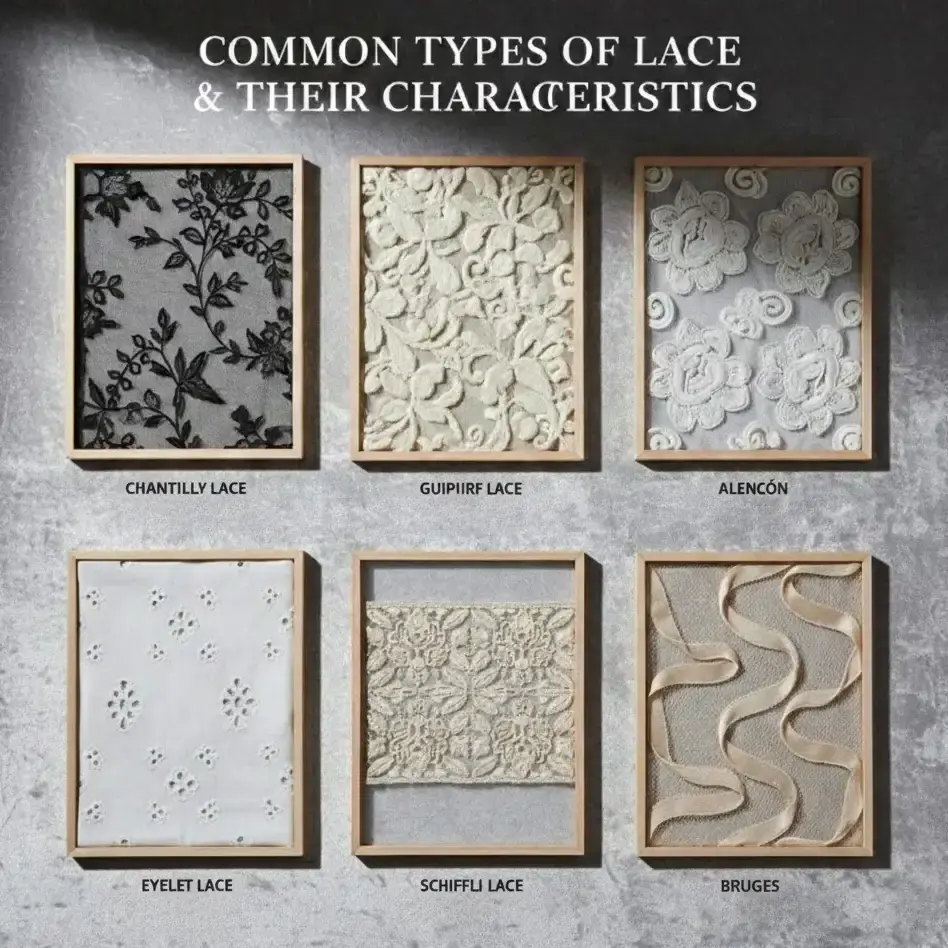
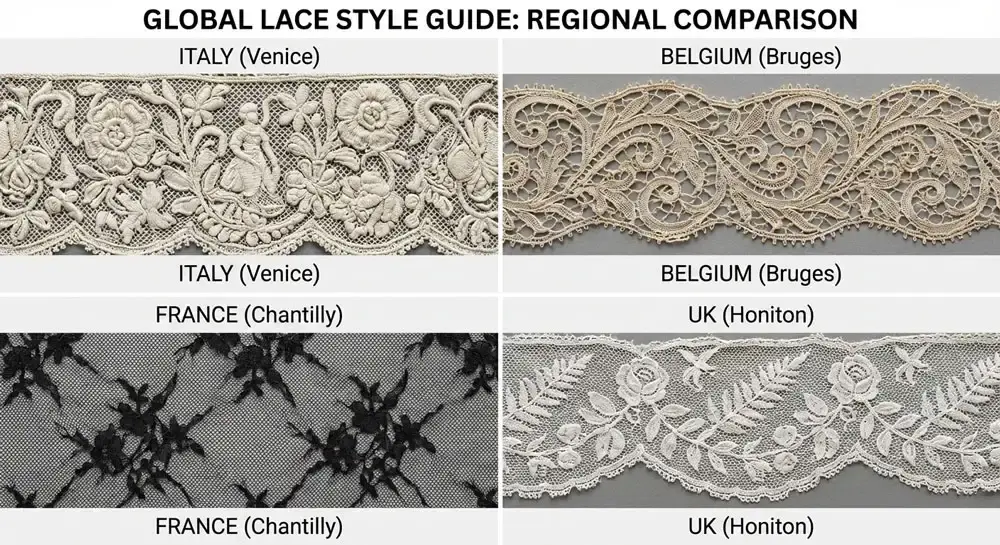
Chantilly lace brings to mind a light, dream-like softness. It’s the fairy of the lace world. Its key feature is a fine mesh base like mist, almost see-through. Lifelike romantic flowers float on this airy ground. Chantilly stands out for its great lightness and flow. It stays soft and silky on the skin, never stiff. This rare grace makes it a top pick for wedding gowns and luxury lingerie. It adds magic when layered on a dress or against skin. The sheer peek blends old-school romance with fresh appeal.
Guipure Lace
Picture Chantilly lace as a soft fairy. Guipure lace stands as the brave star. It breaks all rules in the lace family by skipping the usual mesh base. Look at it close. No thin net holds it. Thick threads link the patterns instead. This strong setup adds real weight. It feels thick and rough, with 3D depth like carved art sewn on cloth. Makers today name it chemical or water-soluble lace. They sew designs on a backing that washes away in water. Just the lace shapes float free. It skips light and airy looks. Its firm, building-like style fits bold gowns. They keep their shape and steal the show.
Alençon Lace
When it comes to textiles, Alençon Lace is the queen of the lace and is indisputable in its place at the top of the heirarchy. The way that Alençon Lace has been revered throughout history by the French Court is not exaggerated; Alençon Lace represents the highest level of craftsmanship and artistry. What makes Alençon Lace distinguishable from all other laces is the Cordonnet or raised, outlining thread. After the motifs are completed, artisans take hot wax and carefully outline each blister and scroll before reheating the pieces to allow for more dramatic sculpting. The result is a textile that has the illusion of having been carved from a solid piece of net. Alençon Lace is much more substantial than the silken Chantilly lace. It has a much more present and pronounced “architectural” feeling compared to Chantilly lace, as reflected by the ceremonial qualities that Alençon Lace possesses. Alençon Lace has always been the most desirable choice for haute couture designers, from extravagant collars worn during the reign of Louis XIV, to many of the most glamorous Royal wedding dresses seen in the current era.
Eyelet Lace
While most of the naively constructed ultra-soft laces are intricate and complex in design, like eyelet lace, they represent a new style of lace that feels fresh and uncomplicated. Eyelet lace is unique in that instead of being woven in mid-air from raw yarn, artisans create eyelet lace by creating a flat “sheet” of cotton and then “opening it” into a series of small holes. Once the holes have been created, artisans embroider around the edges of the holes using needle and thread to create densely embroidered designs around the holes and prevent the fabric from fraying. These designs create rounded geometric shapes that are charmingly geometric without attempting to be ethereal and floating. The richness of the eyelet lace’s texture and its warm natural feel, which is characteristic of cotton, also gives eyelet lace an earthy quality; therefore, eyelet lace will always evoke an authentic South of France or garden environment. At the same time, eyelet lace is light, breezy, and has a youthful and genuine appearance. The fabric is ideal for summer dresses, feminine blouses, and light curtains that are hung in sunny, warm places.
Schiffli Lace
Schiffli lace is such a classic example of an item produced using modern industrial machinery that we refer to it as being produced during the “magic hour” of modern industrial production. As the ultimate example of embroidered lace using machine embroidery technology, many may recognize the name however, you probably are not aware you frequently wear it!. The term “Schiffli” is derived from the German word for a shuttle, which is the piece that fits into the machine that produces Schiffli lace. The true genius of the Schiffli embroidery process is its ability to produce very large quantities of high quality embroidered fabric using many needles at once. The ability to coordinate thousands of needles allows for the creation of beautifully detailed and perfectly symmetrical patterns. This technology made it possible for many people to purchase beautifully designed laces instead of only very wealthy individuals. The Schiffli lace also had the ability to add “substance” and “strength” to lace, and you will find Schiffli lace on garments, jackets, and other items of clothing that you wear today. You will see Schiffli lace being used for the hems of “ready to wear” dresses and as decorative trim on garments manufactured using “fast-fashion” methods. Although Schiffli lace was created during the machine age, the dense stitching and rich texture of this product gives any garment an immediate lift in appearance and sophistication.
Common lace techniques
Needle Lace: The Mastery of a Single Needle
Needle lace is a highly regarded and difficult lace making method, but it also happens to be the oldest form of lace. Although the needle lace toolkit only includes two tools—a needle and a piece of thread—only the most skilled needle-lace makers, or artisans, can successfully reach this level of proficiency. Artisans will create a paper pattern to provide an outline for their lacework, then carefully and precisely work each motif in mid-air, creating thousands of extremely tiny stitches, one by one. Think of needle lace as a physical representation of hyper-miniature embroidery. Because hundreds of thousands of tiny stitches comprise every square inch of needle lace, its creation requires a tremendous amount of time. When completed, needle lace is dense and three-dimensional in form and carries the unmistakable aura of true aristocratic luxury, just like the Alençon lace.
Bobbin Lace: The Dance of the Wooden Shuttles
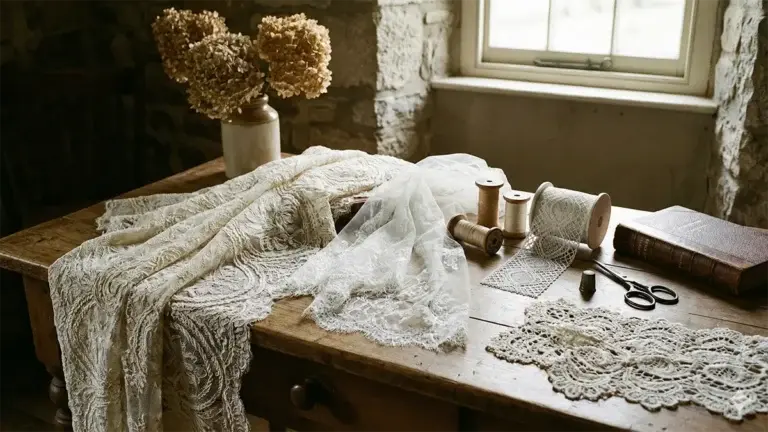
Needle lace creation involves sewing, whereas bobbin lace creation involves weaving. To create bobbin lace artisans lay out their pattern on a cylindrical object called a “pillow” and pin it down. They use many small wooden sticks (called bobbins) to weave the lace. These sticks have threads wound around them, and the artisans cross and twist the threads over the pins to create bobbin lace, using the same process a person would use to weave fabric on a loom. Bobbin lace techniques produce the thin, lightweight, and mesh-like backgrounds seen in works of art such as Chantilly lace. The regular creation of bobbin lace, through this process, results in what is often referred to as the “music of thread,” or the continual “clacking” of the bobbins.
Crochet & Tatting: Folk Wisdom at the Fingertips
Crochet and tatting use simpler techniques than royal techniques and are closer to home, accessible folk art. Crochet uses one hook to create patterned fabric with bulk, texture and form (such as Irish crochet); tatting uses a shuttle to create series of knotted and looped picots/ridges, creating very fine ruffled edges. While these techniques do not have the extreme fineness of needle lace, the bulky, rustic-handmade quality and their ability to mimic upscale looks make them widely popular for personal use and everyday carry.
Chemical/Guipure Lace: The Disappearing Industrial Magic
Chemical lace represents a modern marvel of industry. The creation of chemical lace occurs in stunning detail: A machine stitches together intricate designs using temporary, unstable backing fabric, such as a water-soluble or chemically treated material. Upon completion of the embroidery, the fabric is submerged in a solution or water. The backing material will dissolve completely; only a framework of the interconnected embroidery will remain. This new process is capable of producing complex sculptural types of lace in large quantities and provides the basis for the majority of Guipure lace gowns currently available.
Knitted Lace: The Soft Magic of the Loop
It is easy to confuse knitted lace with a regular style of knitting. While knitted lace can be made from any wool, high-quality knitted lace (such as Shetland and Ireland) is extremely delicate, resembling spiderwebs. The yarn used for high-quality knitted lace is very fine, and the openwork designs are created by using a rhythmic pattern of increasing and decreasing stitches. Unlike bobbin lace, which has a rigid frame of threads, knitted lace has a unique softness and flexibility that gives it a very light feel, while still keeping the wearer warm. The result is a shawl that may be able to pass through a wedding ring when held in front of you.The evolution of lace materials
The evolution of lace materials
Classical period
Classical lacemaking was characterized by a fine balance between both practicality and beauty through the choice of materials used. Linen was the fabric of choice in classical lacemaking, because it produces longer and stronger fibers when compared to other fabrics, giving the lacemaker the ability to produce much finer thread than one human hair to create very detailed and complicated patterns. The best thing about using linen is that it gets crisper and whiter after each wash. However, for those wishing to exhibit pure luxury or extravagance (often defined as “fancy” or “rich”), Silk was the only option in lacemaking. Silk lace, traditionally produced in black or ivory, not only has an appealing glossy pearlescent appearance but its tactile qualities also resemble that of silk or water. Despite its inability to stand the test of time, because of the time and care needed to be able to handle silk lace, it is often referred to as one of the highest “status symbols” amongst royals and high-society types during the great evening gala events.
Industrial Age
The Industrial Revolutions gears began turning the evolution of lace, giving it a “democratizing” makeover as the “star” of the lace world became “Cotton”. This phenomenon coincided with the introduction of power looms that enabled manufacturers to use power-looms to produce cotton lace and unseat the traditional dominance of linen lace and silk lace. Compared to linen’s somewhat brittle and capricious quality, cotton threads were more supple, adaptable, and maintain their dimensional stability under the rapid-output requirements imposed by the high-speed machines. The technical advancement in spinning ultra-fine combed cotton permitted manufacturers to duplicate detailed intricate designs with a remarkable degree of accuracy, representing a revolutionary development. Cotton lace created an accessible price point, enabling a dramatically expanded clientele, which transformed it into an accessible price point in the marketplace versus luxury at that time. While it did not possess the same overall architectural integrity as historic lace, cotton lace had a softer, less “stiff” appearance, and represented an everyday practical yet artistic outlet bringing lace into the fabric of everyday use for typical women.
Modern technology
Lace has overcome its long-standing stigma as being a stiff, fussy textile in contemporary times due mainly to scientific innovation resulting from the creation of synthetic materials in laboratories. The development of nylon and polyester essentially provided “body armor” to lace by greatly enhancing its durability, reducing its weight, and allowing it to dry quickly; however, it was Spandex that provided real action in the development of this textile. Historically, lace provided very little elasticity—although it was beautiful to look at, it made moving difficult when worn. However, by adding Spandex to the new generation of lace, this material provides a fit similar to that of a second-skin and allows the user to move freely while still being comfortable. Because of this reason, lace lingerie and bodycon-type dresses fit all curves perfectly, in contrast to the feeling of being “shrink-wrapped” that traditional lace designs created for wearers. As such, technology has allowed for the transformation of lace from being a non-functional fine art piece to being a superior functional textile that moves well with the human form.
Sustainable trends
Lace is showing that it can be beautiful while also being friendly to the environment as the eco-minded movement continues to impact the world of fashion. In the past, much of the lace industry used very high volumes of virgin petrochemicals with little regard for their impact on our planet. Today, however, with the introduction of recycled polyester and organic cotton, there is a new way to look at lace. Many modern recycled polyester items are made from up-cycled plastic bottles that are turned into yarns that retain the strength and softness of nylon, while also drastically decreasing the carbon impact of the fabric. Organic cotton (in particular) is bringing lace back to mother nature with its lack of chemical fertilizers, herbicides, and pesticides, which provides lace with its natural purity and breathability. This is a huge change for the lace industry; lace has now changed from being simply a beautiful product to being an example of responsible beauty. Understanding that a delicate lace dress may have been made from a “recycled” product (reborn) adds more depth to its beauty: that type of mindful sophistication is going to be what defines the future of fashion.
Lace Centers of the World
The Lace of Venice and Burano: A Sculptural Legacy
If you are searching for the “crown jewel” in the world of lace, you need to find Burano, a small, colorful island located in the Venetian lagoon. The lace that is produced in Burano is not just a type of fabric; it is a miracle created from nothing but a single needle and a piece of thread. Whereas most lace produced elsewhere, is different than Venetian needle lace because it is produced using a unique, architectural method. Venetian Needle Lace consists of thousands of tiny interlocking stitches that create a firm, textured fabric with bold outlines, allowing the patterns to appear as three-dimensional sculptures. Many pieces created in Burano are made from ivory-colored thread featuring beautiful scrollwork and floral designs, which are reminiscent of the splendor of the Venetian Republic during its greatest days of glory. Today, as you watch the local nonne (grandmothers) working diligently on their lace making inside their homes, it is apparent that they are continuing to preserve a craft so beautiful that it once created such a frenzy among fashionistas, such as King Louis XIV, that he literally created a “frenzy” over wearing it.
Bruges Lace: The Ballet of the Fingertips
When you walk through Bruges, Belgium, it seems as if time itself is held in place with hundreds of delicate threads. This is the ultimate destination for bobbin lace, a type of hand embroidery that the local women refer to as “ballet on the fingertips.” The style of bobbin lace made in Bruges has soft, sweeping curves, and the artisans will deftly maneuver several dozen bobbins back and forth rapidly to create a fabric that has an incredibly smooth and silky feel to it. Bruges is known for the elaborate, scrolling motifs that twist and turn elegantly across a gauzy net and form intricate flower sprays and volutes. In contrast to the rigid architectural design characteristic of Venetian lace, Bruges lace has a flowing & rippling quality with an effortless elegance and natural draping quality that perfectly captures the essence of Bruges, where there is a sense of softness, no ostentation, yet tremendous detail hidden in every aspect of the landscape. No doubt why this lace has consistently been in high demand for people that appreciate understated sophistication and subtly beautiful design.
Calais-Caudry Lace: The Heartbeat of French Elegance
The beauty of Calais lace comes from its unique ability to blend the industrial power of machinery with the finest qualities of high art. Within the history of the lace-making industry lies the powerful legacy of the first Leavers loom located in Calais. Calais lace is known for its beautiful gossamer-like quality, with a quality that has the appearance and softness of cotton grown on an English Estate because it is made from the finest quality silk and cotton woven into a fabric that resembles the delicate mist of morning dew on grass. In addition, these antique looms replicate the traditional process of hand weaving with incredible accuracy, which creates a lace that possesses a quality or “soul” or warmth that cannot be achieved through modern methods of mass production. This is the primary reason why many designers continue to look to this area of France, whether it be for their creations to be worn by royalty or some of the most avant-garde designers in Parisian Haute Couture. The lace of Calais is not merely a form of fabric; rather, it is an expression of French sophistication.
Honiton Lace: The Royal Romance of the English Countryside
Honiton, a small town in Devon, is known for its distinctive yet delicate lace; this style has its roots with English royalty. The most recognizable feature of Honiton lace is the design of each of the individual motifs, which are said to represent the intricate details found in the lush British flora—such as hyper-realistic roses, daisies, ferns, and other plants. All motifs are manufactured separately using an incredibly fine netting material (similar to that created by spiders), then created by stitching together to form the complete design. The historic moment for Honiton lace was in 1840, when Queen Victoria departed from centuries of tradition to wear a beautiful white dress made of Honiton lace, and in doing so, created a new modern-day definition of the white wedding dress. Unlike the excessive grandeur that is a hallmark of some European laces, Honiton lace embodies a simpler style that embodies a sense of quiet elegance; its designs are not overly ostentatious or attention-seeking. Rather, the design style has a subtle, understated sophistication that creates a true sense of intimacy between the wearer and her wedding dress.
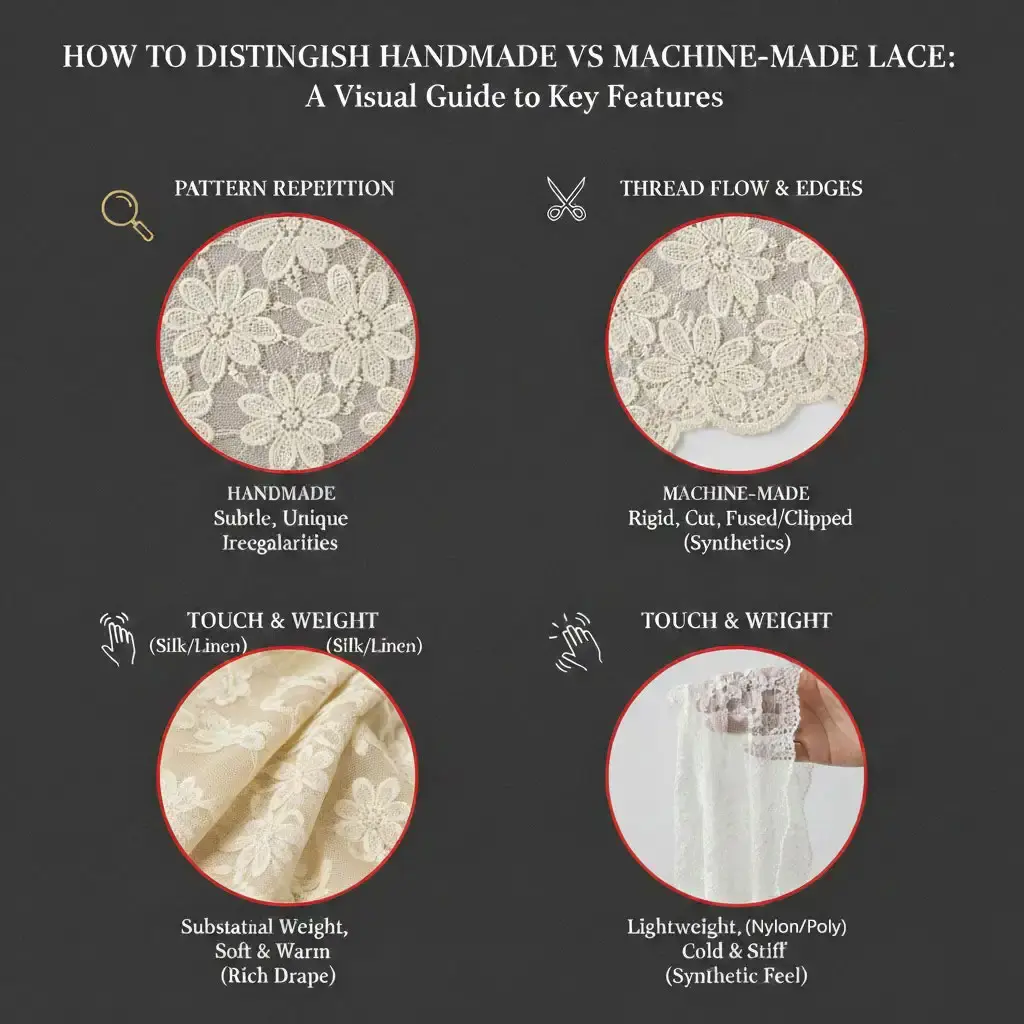
Lace Identification Guide: How to Distinguish Between Handmade and Machine-Made Lace
Pattern Repetition: Finding the “Perfect Imperfection”
When looking through a lace piece, begin by observing how the patters are similar across the lace. A lace machine uses a program to sew out the same seam or pattern repeatedly in a crisp and perfect manner. On the other hand, handmade lace has slight differences in the way each petal of the flower is sewn, and even though there may be many embroidering on top of one another, they are all different from one another in some very slight way. You will most likely see a flower’s centre being off by 1 millimetre, or the netting being slightly looser at some mesh openings than it is at others. These variations are not errors in the making of the lace, they are a sign that the piece is handmade and therefore, it is alive.
Thread Flow: Natural Finish vs. Harsh Cut
The pro-level skill of identifying the structure of handmade lace involves studying the flow of woven thread along its edges. There is a complete circle of woven thread from the start of the thread to the outer edges, including both ends of the thread. The artisan will weave the last bit of thread back into the piece of lace and finish with woven self-supporting ends (no loose threads, no knots). A good example of machine-made lace is the way a large sheet of lace is made first by using a machine to weave the threads together and cutting out the shape of the design later. If you look at the edges of the lace and see where the motifs meet, you can usually tell where a thread has been cut or that there is a stiff, heat-sealed edge that is meant to hold the edges of the thread. Handmade lace has a natural appearance to its edges, as if it was meant to grow in that fashion, but machine-made lace often has a harsh look, as if it had been cut.
Touch and Weight: Silky Warmth vs. Synthetic “Bones”
And most of all, don’t forget to trust your sense of touch to guide you! Classical fabrics (old-school fabrics), such as silk and expensive linen lace, generate an indescribable warmth in addition to being incredibly adaptable to your body’s temperature. So they have a thick, supple feel with a classic drape. In contrast, modern fabrics (synthetic fabrics) like (for example – nylon and polyester) are made with different materials; therefore, they do not possess the same qualities that classical fabrics do – however, they are better for durability, etc., and many times these fabrics will have a “cold to the touch” feel with slight plastic-like friction, which is much lighter weight. Because handmade lace uses thicker materials and involves denser stitching, it provides an extra tender, satisfying, heft, a powerful feeling to hold in your hands. Therefore, the dual nature of being both “ thick in detail and light as air” creates a tactile experience that cheap synthetics cannot create.
The use of lace in modern fashion
Haute couture and wedding dresses
Haute couture and bridalwear have become an homage to lace in a world filled with high fashion on every level. The lace in these garments has become much more than just a fabric—it has become a visual representation of “timeless romance.” Because of this, designers use lace to create a game of transparency interplayed with both chiaroscuro (light and dark) and translucency. The sculptural raised outline of Alençon lace offers a dynamic 3D element while the gossamer whisper of Chantilly lace provides a soft, delicate quality to the look. Each type of lace works to form a poetic, peek-a-boo effect when placed next to the skin of the bride. In general, “Lace” serves as an emotional anchor for the bride—its vintage quality adds dignity, yet when combined with an avant-garde fashion approach to the construction of the garment, it feels very contemporary. As the layers of lace create the voluminous train, it becomes apparent that the lace not only captures an incredible level of aesthetic opulence when photographed; however, it also represents an innate, cross-generational sense of beauty that will always remain fashionable.
Modern ready-to-wear
This is how we relate Lace to Current Forms of Fashion. Historically, Lace has communicated For Formal Occasions only, but Today Lace has become something that is more informal, Casual and Experimental. Lace can be formalised into every Daywear, not only Galas or more extravagant events. As a New Traditional seasoning for Everyday style rather being just the best seasoning for Fancy Events; in Fact, Lace will Mainly Offer A Soft Feeling To Everything Through The Use Of Softness On Collars and Cuffs, during an Office/wear to Work Attire Situation. Both contemporary Designers and Past/ Current Streetwear Designs, Have Made Incredible Use of Layering Fabrics with the Use of Lace as Décor to produce Dramatic Looks, creating Non-Compareable Styles/Game Changers to Years Past. By Combining An “Oversized Structured” Blazer With A Fragile lace Hem, By Layering A Basic Graphic Tee worn Below A Sheer Lace Slip, It Creates An Incredible Contrast of Textures between “hard” and “soft”. The Use of Lace and How It Relates To Every Day to Both High End Lace & Streetwear Shows That Throughout the Past Several Decades That It’s Possible For Products To Have been Created By Using Contrasting Textures/Designs That Swung Back and Forth Between The Two; Streetwear currently has existed In Both Seasons, while High End Lace Is Getting More Bang for it’s buck this Season. It Is About Creating Experiences of Everyday Wear, While Combining Everyday Wear/Style/Experience Expectations.
Home decoration
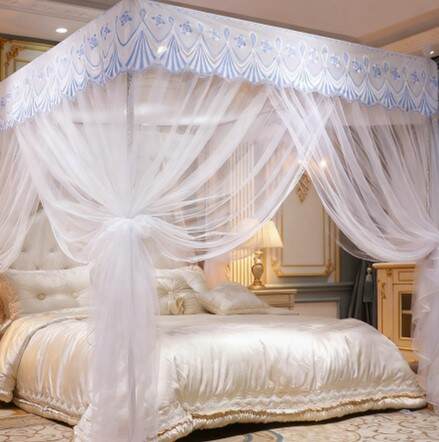
Once lace makes the transition from the runway back to the Home Decor world, its vintage warmth creates a new atmosphere in a room. It feels nostalgic, like coming home after many years away. The way the sun shines through the lace panels to create soft patterns on the wooden floors makes it seem as if you’re watching an old black and white movie. Adding a lace tablecloth to a dining room is more than just a decorative touch; the airy quality of lace reduces the starkness of heavy furniture and enhances the feeling of having a place for afternoon tea. Lace is no longer only associated with people who have money; it has become a warm and welcoming addition to a home, providing comfort and nostalgia in an industry dominated by cold and minimalistic designs.
The Future of Lace
3D printed lace
The rise of 3D printing has created a dramatic shift from “woven fabric” to “sculptural form” in the world of lace design. With this new tool, structural designers are no longer limited to creating their designs on two-dimensional fabric; instead they now create their designs virtually in three-dimensional space using digitally generated models, and are able to print directly using high-precision printing technology. One of the most interesting aspects of this technology is that it provides the designer with complete freedom from the physical constraints of historical bobbin lace or needle lace construction methods. The result is that the designer can create geometric structures that have a nested or cell-like quality and dynamic properties, which could not be achieved by hand. Although the resulting lace might have the feel of a flexible resin or polymer instead of soft cotton, the product is essentially a flexible exoskeleton that reinterprets the classical romantic qualities of lace to a hard-core sci-fi avant-garde aesthetic.
Laser Cutting
3D printing and laser create two very distinct types of fabrication technologies (or methods) with different underlying principles that each yield a different aesthetic. Laser cutting is an incredibly fast way to reproduce how lace was created before the industrial revolution – through cutting and burning out a complex lace pattern from a sheet of steel or iron, using a high-powered laser beam. When you see laser-cut lace, its edges tend to be sharper along with being much thinner than what traditional embroidered lace typically has. Also, the laser cut lace does not tend to have any kind of raised embroidery, although it does resemble a rugged geometric design. One of the most exciting aspects of this method is that it breaks the physical limitations of traditional lace. By creating laser cut designs, we can now use high-tech fabrics that were not possible to hand embroidery, yet still obtain the same effect – that of an ultra-lightweight fabric – with a complicated lace-like design. While today’s lace does not necessarily evoke the warm feeling that comes along with working at the pace of the craftsman, instead, today’s lace has an extremely cool, high-tech look derived from each precise incision.
Smart fabrics
Lace has become a high-tech extension of smart textiles, not just because of its beauty, but now it also has a “human” quality. In the cutting-edge labs, designers have begun weaving extremely fine microscopic conductive fibers directly into elaborate lace designs to create an interactive surface. This is not just another layer of decoration; lace is now more than ever an aesthetically pleasing flexible interface that can be used to monitor heartbeat rates or respond to touch to directly control electronic devices. The most poetic aspect of this new development is that the technology does not compromise the delicate beauty that lace possesses; instead, the metallic or silver high-tech conductive materials provide a modern look to the traditional and create a high-tech digital skin that maintains the beauty of the classical style while giving it a functional voice that resonates with the future.