Where Can I Buy Lace Fabric? The Complete 2026 Sourcing Guide
By 2026, there will be total transparency in the worldwide textile industry. Finding lace fabric for your design will be on the basis of your company’s vision, your sustainability goals, and how complex your design is — rather than just luck or having a store close by (like a “mom and pop”). Regardless of whether you’re a custom wedding dress designer or buying lace from a global sourcing manager — knowing where to purchase is the first step toward having the collection succeed.
This will be an in-depth guide to help you better understand how to navigate the current lace sourcing marketplace.
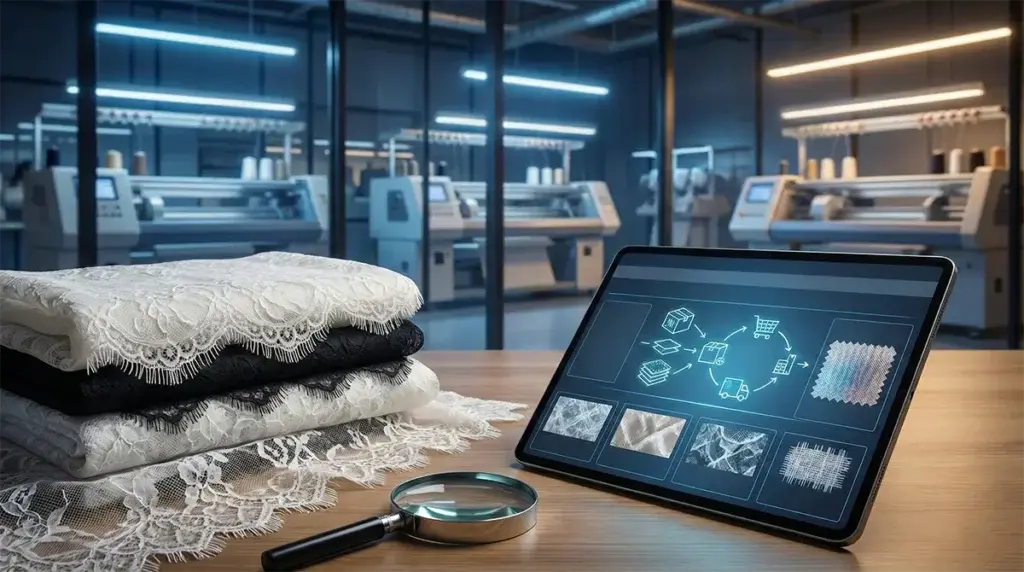
For Small Projects: Retail & Marketplace Gems
The primary focus for independent artists, casual craft maker, or style student is usually having an easy way to acquire smaller amounts of fabric without being forced to buy a high “Minimum Order Quantity” (MOQ).
Etsy & Specialized Digital Marketplaces
When it comes to vintage lace remnants or artisan pieces, Etsy is the leading location for people to purchase what they want. By late 2026, the marketplace will be known as “Deadstock Lace” (old-end designer produced materials that will have gone idle). In this circumstance, you will be able to find “deadstock” lace material and rare, unique patterns that can be made into garments providing a historical or age-defining feel to contemporary clothing. There is only one drawback to this source of lace fabric – as there are no more pieces left on the market, these rare and unique patterns will not be available again.
Global Fabric Districts: A Tactile Experience
For those who cannot purchase fabric to make garments without feeling and experiencing “the hand” (texture) of the piece, you still have access to numerous historic garment districts throughout our world. The New York Garment District (37th through 39th Streets), London’s Berwick Street, and Paris’s Marché Saint-Pierre provide opportunities for sensory experiences that cannot be duplicated using computers. If you want to see how lace drapes, or how light reacts to the mesh of lace, these garment districts are excellent resources. However, retail intermediate prices will be at their highest, and the fabric stores likely will offer insight to beginners about lace as sources of expertise.
For Professionals: Designer-Grade Online Stores
As soon as you’ve finished a project that is well beyond being just a hobby, you will require a source of consistent, professional, and high-quality samples and photographic/images plus technical specifications to ensure that you are producing goods on time.
Curated Institutions: Mood Fabrics & Britex
Retail/wholesale companies like Britex and Mood Fabrics are the perfect example of how a small company can succeed in a competitive retail market by offering consumers access to a broad collection of current trends from the runway in their respective collections, including Guipure, Alençon, and Raschel laces, for example. Furthermore, in 2026 these businesses will have integrated advanced zoom capabilities and 3D-draping previews into the purchase process, which will allow designers to view how muslin will drape as they display their garment sample.
Specialized Importers: Joel & Son Fabrics
When dealing with the ultra-luxury bracket (such as silk or lace), you may be fortunate enough to work closely with an importer like Joel & Son in London or another internationally recognized supplier of the world’s finest laces, often containing the specific lace materials that the Royal Couturiers use. These high-end wedding dress suppliers are where you will find fabric that will allow you to create haute couture wedding gowns worthy of being placed in a museum, rather than use fabric that has little result and is only referred to as “luxury” because of the fabric’s high cost.
For Scale & Excellence: Factory-Direct Sourcing
When looking to get established in the world of fashion, you have a few choices available to you: become a designer and create your own line, or partner with a manufacturer to assist in the production of your clothing. Manufacturers typically offer one of two approaches: either make your garments for you, or allow you to purchase the materials needed to create your garments yourself.
The most common way for established fashion brands (bridal houses/intimate apparel labels) to maximize profits and maintain quality control is by purchasing raw products directly from the mill rather than through middlemen. Purchasing directly from the mill gives buyers the opportunity to communicate with the engineers responsible for designing and developing the fabric.
The Advantage of Vertical Integration
The trend toward vertical integration has been the biggest shift in sourcing from 2020 through 2026. Buyers are looking to move away from sourcing through manufacturer partners who outsource their production and toward creating relationships with manufacturers who have direct control over all aspects of production—i.e., from knitting the mesh to dyeing it. Because of this level of vertical integration, if a buyer orders a specific color shade (like “chantilly white”), there would be no doubt that it would be consistent in every 5,000 yards of fabric. Smaller retailers would find it very difficult, if not impossible, to achieve this level of consistency across their product lines.
Fuyuan: A Strategic Partner Since 1997
A perfect example of this vertical integration is Fuyuan (aka Fuzhou Fuyuan Knitting). Founded in 1997 in Fuzhou City, China, Fuyuan has been perfecting the balance between high-volume production and quality craftsmanship for almost 30 years. Fuyuan has constructed a massive manufacturing facility (118 mu) costing 350 million RMB that is representative of the many products it produces.
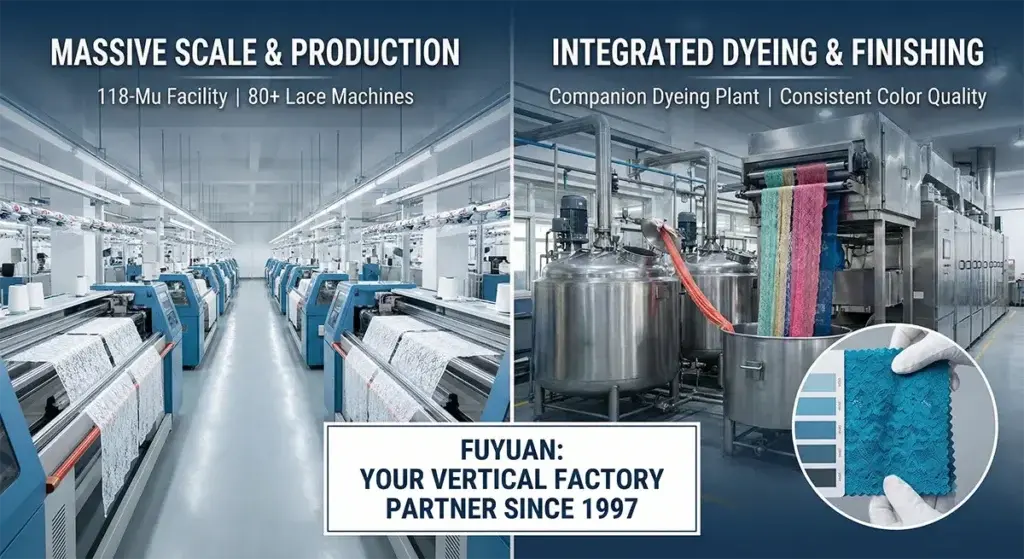
With more than 80 lace and 60 high-speed warp knitting machines, Fuyuan is an industry leader in the production of premium-quality lace, mesh, and warp-knit products. Also, what makes Fuyuan unique? They have invested in a dyeing facility comparable in size and capacity to their knitting operation. This allows them to offer full-service vertical integration by providing buyers with a finished fabric that has been dyed to meet desired specifications before it leaves their facility. The following companies may considered Fuyuan as a partner source for producing high-quality products: Zara and Shein.
French & European Mills
Top tier brands live off of Italian and French heritage, and heritage mills are at the peak of the industry.
French Leavers Lace: Sophie Hallette & Solstiss
Heritage Mills use antique Leavers’ looms, which are the only type of loom which can produce the finest quality “eyelash” trimmed Chantilly lace. The looms used to fabricate Chantilly lace will be treated as “Intellectual Property” in 2026. Therefore, when purchasing from a heritage mill, you are not only purchasing silk and nylon, but if you are buying from a heritage mill, you are also purchasing the legacy and the tale of the fabulous journey of this principal.
Designers need to take into consideration that the high volumes needed by the manufacturers of antique, artisan bales will be slow to grow. Antique looms are artisan and slow as they have endured for hundreds of years. Expect long lead times and very high minimum orders.
How to Choose
Before agreeing to buy from any supplier, make sure you follow these four items to determine if that supplier is a fit for your company.
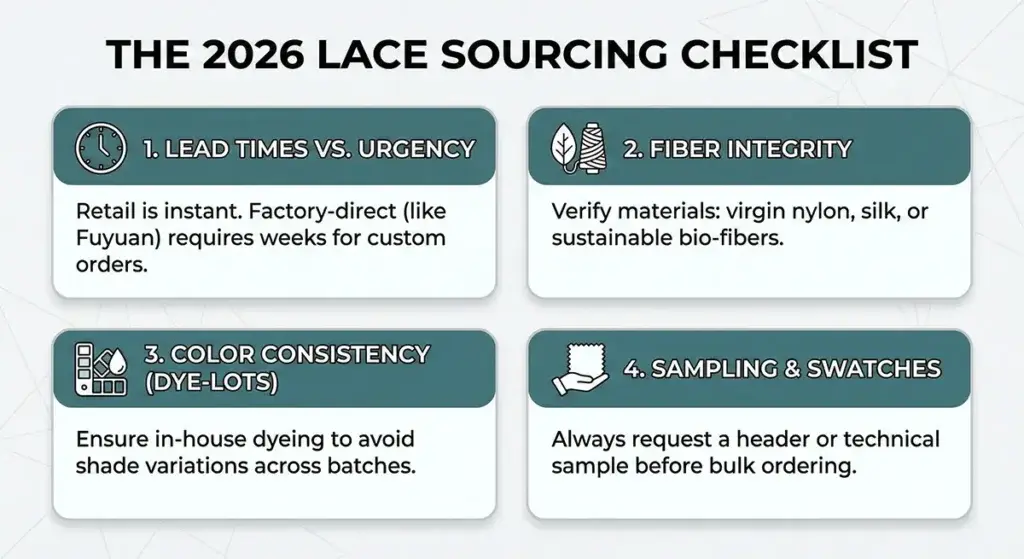
1. Compare Frogpls X Timing vs Urgency.
Most retailers offer you same-day shipping, and you can’t customize your order. Fuyuan, for example, can produce custom color options with massive quantities; however, those options generally can take several weeks to complete, as dyeing and knitting fabric takes time.
2. Assess Fiber Content.
As of the year 2026, the focus will continue to be about complete transparency concerning the origin and contents of all products sold (i.e., is there virgin nylon, virgin silk, and/or an eco-friendly fiber used to produce the lace?).
3. Check for Consistency in Colors across the Same Identification / Batch.
When producing a series of dresses, always check with your supplier/subcontractor to find out whether or not they have their own dyeing plant – this is particularly critical when lagging because of the time it will take to get your dye order from your contractor (dye-lot discrepancies between the lace sleeves of a dress versus the bodice).
4. Request Headers or Samples Prior to Bulk Ordering.
Good mills will always provide you a technical data sheet with a sample to give you an idea of what your fabric’s stretch &recov will be before you make that purchase!
Conclusion
Where to purchase lace fabric is determined by what phase you are in your lace journey. If you are testing and creating lace pieces, I suggest shopping at Garment Districts and Etsy. When you are ready to scale and looking for partners to provide global brands including Zara with ongoing high-quality products, search out integrated manufactures (for example, Fuyuan). When you source based on production capacity, your designs can be pretty but will also meet your business requirements.