What Is Elastane Fabric? A Complete Guide
Pull on a pair of leggings, bend down to tie your shoes, then stand back up — the fabric snaps right back into place instead of sagging at the knee. That small everyday moment of “give” is almost always the work of one fiber hiding inside the blend: elastane. It rarely makes up more than a fifth of any garment, yet it changes how the whole fabric behaves, from how a swimsuit holds its shape in the pool to how a pair of skinny jeans moves with you instead of fighting you. This guide covers what elastane actually is, where it came from, how mills turn it into yarn, how it stacks up against other elastic materials, and how much of it really belongs in different types of clothing.
What Is Elastane Fabric?
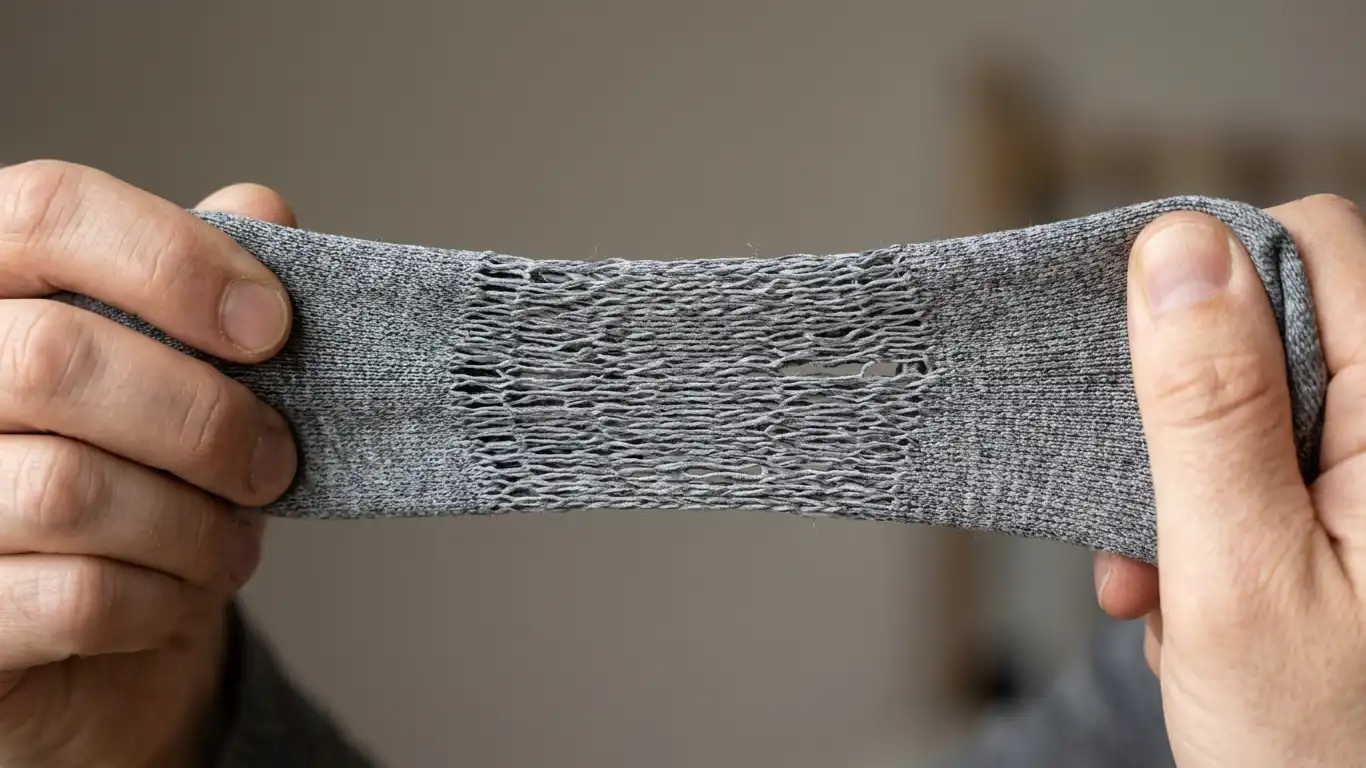
Elastane is a synthetic fiber made from a long-chain polymer called polyurethane. Its defining trait is elasticity: a single strand can stretch to several times its resting length and then pull back close to its original shape almost instantly. In the United States and Canada, the same fiber is usually called spandex — an anagram of “expands.” In Europe and most of Asia, “elastane” is the standard term. Lycra, meanwhile, isn’t a separate material at all; it’s a trademarked brand name originally owned by DuPont and now produced by The LYCRA Company.
Chemically, elastane is built from segments that alternate between rigid and flexible sections. The rigid parts hold the fiber together, while the flexible, coiled segments are what let it stretch and recoil. This structure is also why elastane is almost never used by itself. On its own, the fiber doesn’t have much texture or body — it’s the partner fibers like cotton, nylon, or polyester that give a fabric its hand-feel, while elastane supplies the stretch.
A Brief History of Elastane
The story starts with polyurethane itself, developed in Germany in the late 1930s as a substitute for rubber, which was expensive and supply-constrained at the time. After the war, DuPont picked up research into polyurethane chemistry, and in 1958 a chemist named Joseph Shivers led the team that turned it into a genuinely elastic textile fiber. DuPont branded the result Lycra and began selling it to garment makers shortly after.
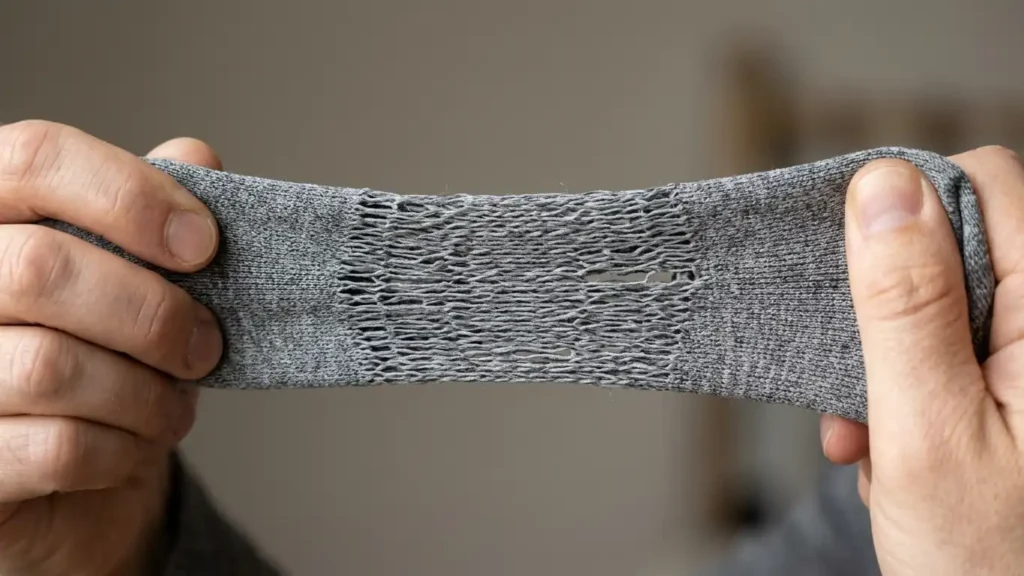
The timing mattered. Rubber thread, the material elastane replaced, was heavy, yellowed with age, and broke down quickly when exposed to body oils or sunlight. Elastane solved most of those problems at once — it was lighter, more durable, and held its stretch through repeated washing. It started out in girdles and foundation garments, then spread into hosiery, swimwear, and eventually the sportswear and denim categories where it’s most common today.
How Elastane Fabric Is Made
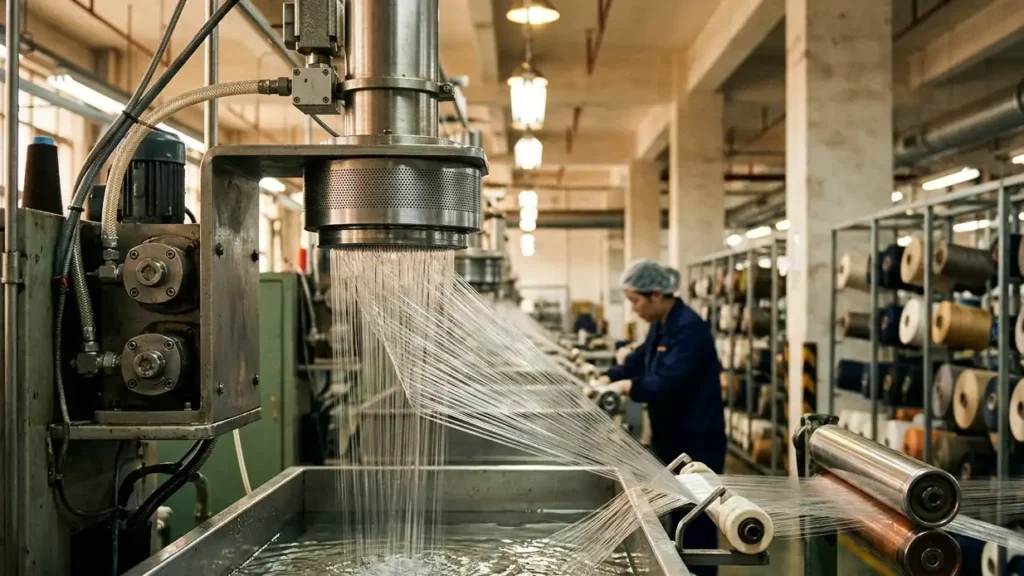
Elastane fiber is produced through a chemical and mechanical process rather than being grown or harvested. Several spinning methods exist, but dry spinning is by far the most common, accounting for the large majority of global elastane output. The basic sequence looks like this:
- Prepolymer formation — A macroglycol is reacted with a diisocyanate to form a syrupy prepolymer, the chemical starting point for the fiber.
- Chain extension — The prepolymer reacts with a diamine, building it out into a longer polymer chain with the alternating rigid-flexible structure that gives elastane its stretch.
- Dissolving and spinning — The polymer is dissolved in a solvent, then pumped through a spinneret — a metal disc with hundreds of tiny holes — to form continuous liquid filaments.
- Curing — Hot air or a chemical bath causes the filaments to solidify into solid elastic strands.
- Twisting and finishing — Several fine filaments are twisted together into a single yarn, then coated with a finishing agent (often a fine powder) so the strands don’t stick to themselves on the spool.
The finished elastane yarn is then either wrapped around a non-stretch yarn like cotton or polyester, or knitted directly alongside it, depending on the fabric construction. Nylon is one of the most frequent partner fibers in this step, particularly for swimwear and performance fabric — a pairing worth understanding on its own, since nylon, or polyamide, fabric behaves quite differently from elastane despite often sharing the same yarn.
Advantages of Elastane Fabric
Elastane earns its place in so many fabric blends because of a fairly short list of properties that happen to matter a lot in clothing:
- High stretch and recovery — it can extend several times its resting length and spring back without sagging.
- Lightweight — a small percentage adds flexibility without adding noticeable weight or bulk.
- Shape retention — garments resist bagging at the knees, elbows, and waistband over repeated wear.
- Resistance to body oils and sweat — unlike natural rubber, it doesn’t degrade quickly from everyday skin contact.
- Easy to dye — it takes color well and doesn’t limit the dye options available to the base fabric.
- Comfortable, close fit — it lets garments sit closer to the body without restricting movement.
Disadvantages of Elastane Fabric
The same properties that make elastane useful also come with real trade-offs:
- Heat sensitive — high temperatures from ironing or hot drying can weaken the fiber and reduce its stretch over time.
- Never used alone — pure elastane lacks texture and breathability, so it always needs a partner fiber.
- Not biodegradable — like most synthetics, it persists in landfills for a long time after disposal.
- Sheds microplastics — washing releases tiny synthetic fibers that can end up in waterways.
- Difficult to recycle — because it’s blended rather than used alone, separating elastane from other fibers at end of life is technically hard and rarely done at scale.
- Limited breathability on its own — it’s only as breathable as the fiber it’s blended with.
Elastane vs Other Elastic Materials
Elastane isn’t the only material capable of stretch and recovery. Natural rubber latex and thermoplastic elastomers like TPU and TPEE are the two other materials most often discussed alongside it, even though each is suited to different applications.
| Property | Elastane (Spandex) | Natural Rubber Latex | TPU / TPEE |
|---|---|---|---|
| Origin | Synthetic, petroleum-based polyurethane | Natural, tapped from rubber trees | Synthetic, thermoplastic polymer |
| Stretch (elongation) | Roughly 500–700% | Slightly higher than elastane, around 600–700% | Varies widely by formulation |
| Recovery / energy loss | Strong recovery, but loses more energy as heat during stretching (higher hysteresis) | Strong recovery with lower energy loss than elastane | Good recovery, often used in bonded rather than woven form |
| Resistance to heat, oils, UV | High | Lower — degrades faster with age, oils, and sunlight | High |
| Biodegradable | No | Yes | No |
| Typical apparel role | Knitted or woven into stretch yarns and blends | Largely phased out of garment fiber, still used in some elastic tapes | Mostly coatings, laminates, and waterproof seams rather than spun yarn |
Source: compiled from technical fiber comparisons published by Inviya Textile Solutions (“Comparison of Spandex with Rubber”) and general elastomeric fiber patent literature filed with the USPTO.
In short, natural rubber actually stretches a little further and recovers more efficiently, but it ages poorly and isn’t practical for most modern apparel. Elastane trades a small amount of raw stretch for much better durability, dyeability, and resistance to everyday wear — which is why it replaced rubber thread in clothing decades ago.
Common Uses of Elastane Fabric
Elastane shows up almost anywhere a garment needs to move with the body rather than against it:
- Activewear and sportswear — leggings, sports bras, cycling shorts, and compression tops rely on elastane for fit and freedom of movement.
- Swimwear — chlorine- and saltwater-exposed garments need elastane’s recovery to keep their shape wash after wash, which is why most performance and swimwear fabric blends list a nylon-spandex or polyester-spandex composition.
- Denim and casual pants — a small percentage of elastane in stretch denim allows a closer fit without restricting movement.
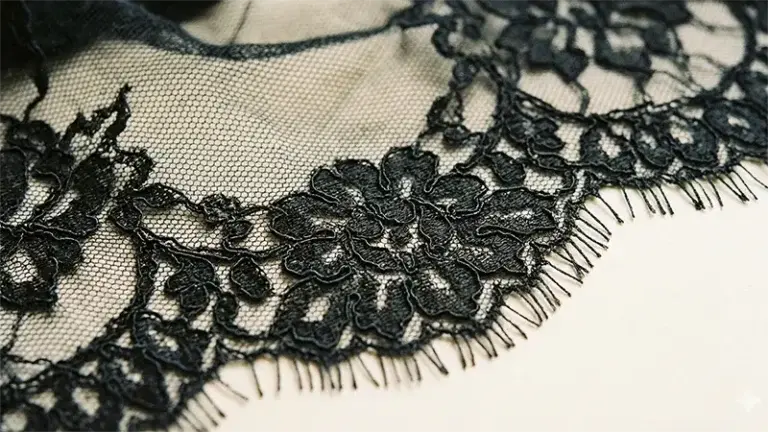
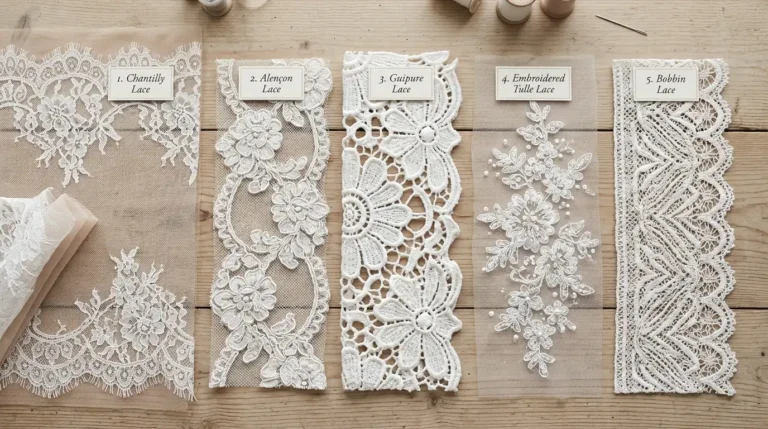
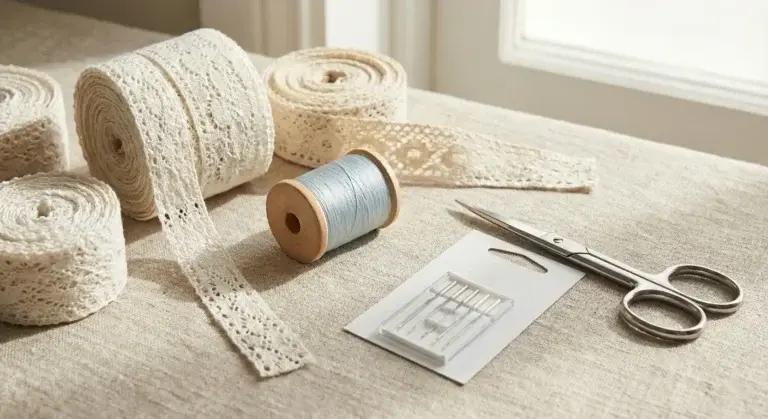
- Underwear, lingerie, and shapewear — bras, briefs, and stretch lace trims use elastane in the waistband or throughout the fabric for a snug, comfortable hold; stretch lace fabric is one of the more technically demanding applications, since the lace pattern itself has to stretch evenly.
- Hosiery and socks — even all-wool or all-cotton socks usually contain a small amount of elastane to keep them from sliding down.
- Medical and compression garments — orthopedic supports, compression sleeves, and post-surgical garments use elastane for consistent, even pressure.
How Much Elastane Is in Different Garments
Elastane content varies a lot depending on how much stretch a garment actually needs. A pair of jeans only needs a slight give, while swimwear and compression wear need to flex and recover constantly.
| Garment Type | Typical Elastane Content | Common Partner Fiber |
|---|---|---|
| Jeans / denim | 1–3% | Cotton |
| T-shirts and tops | 2–5% | Cotton, polyester |
| Dresses and skirts | 5–10% | Polyester, viscose, cotton |
| Underwear and lingerie | 5–15% | Cotton, nylon, modal |
| Activewear and sportswear | 10–20% | Polyester, nylon |
| Leggings and yoga pants | 10–20% | Nylon, polyester |
| Swimwear | 15–30% | Nylon, polyester |
| Hosiery and compression wear | up to 30–40% | Nylon |
Source: compiled from fabric composition data published in Sewport’s fabric directory and Thygesen Textile Vietnam’s manufacturing guide, cross-checked against nylon-spandex compositions listed on Fuyuan Knitting’s own performance fabric line, which range from roughly 5% to 30% spandex depending on the construction.
These figures aren’t strict rules — finishing techniques and yarn construction can shift the numbers — but they’re a reasonable starting point for sourcing or designing a garment. It’s also worth noting that elastane blends aren’t limited to synthetic partners; it’s increasingly paired with semi-synthetic fibers too, and viscose-elastane blends are a common example used for drapey tops and dresses that still need some recovery.
Final Thoughts
Elastane is a small but disproportionately influential fiber. It almost never appears alone, usually sitting at somewhere between 2% and 30% of a fabric’s composition, yet that small share is responsible for whether a garment holds its shape, moves with the body, and survives repeated washing. Compared with natural rubber, it trades a sliver of raw stretch for much better durability and dye compatibility, which is why it replaced rubber thread in clothing decades ago and remains the default choice across activewear, swimwear, denim, and lingerie today. Understanding roughly how much elastane belongs in a given garment type — and which partner fiber it’s paired with — is a useful starting point whether you’re designing a collection or sourcing fabric for one. If you’re working on a stretch fabric project, Fuyuan Knitting’s team can walk through composition and construction options for your specific application.
FAQs
Is elastane the same as spandex and Lycra?
Yes. Elastane, spandex, and Lycra all describe the same polyurethane-based fiber. “Elastane” is the term used in Europe and most of Asia, “spandex” is the common term in North America, and “Lycra” is a specific brand name for elastane produced by The LYCRA Company.
How much elastane is in leggings compared to jeans?
Leggings typically contain around 10–20% elastane to support full range of motion, while jeans usually contain only 1–3%, just enough to add a slight amount of give without changing the structure of the denim.
Does elastane fabric shrink in the wash?
Elastane itself resists shrinking, but garments containing elastane can still shrink if the partner fiber — cotton, for example — shrinks during a hot wash. Cold water and low-heat drying help preserve both the partner fiber’s dimensions and the elastane’s stretch.
Is elastane fabric breathable enough for hot climates?
On its own, elastane isn’t especially breathable, but it’s rarely used alone. When blended with breathable fibers like cotton or moisture-wicking polyester, the overall fabric can perform well in warm weather; the breathability ultimately depends more on the partner fiber and knit structure than on the elastane content itself.
Can elastane fabric be recycled?
Recycling elastane is technically difficult because it’s almost always blended with other fibers, and separating those fibers at scale isn’t widely available yet. Some manufacturers have introduced partially recycled or bio-based elastane fibers, but mainstream fiber-to-fiber recycling of elastane blends is still limited.