
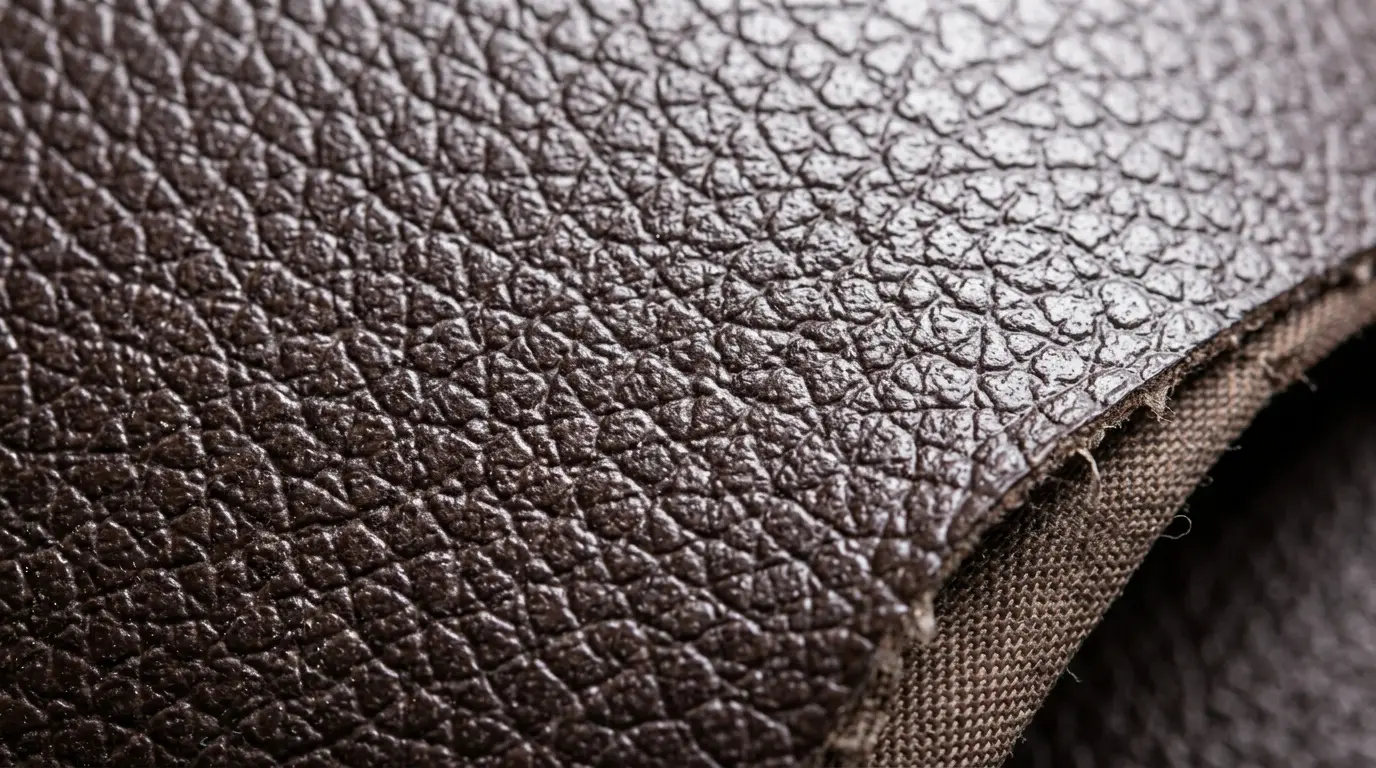
What Is Faux Leather? The Truth Brands Rarely Tell You
Faux leather looks like leather. It feels similar. It costs less.
But what most guides don’t tell you is this: its real value depends on time, not price.
This article skips the basics and focuses on what actually matters—how faux leather behaves, why it fails, and when it makes sense to use it.
Faux Leather in One Sentence
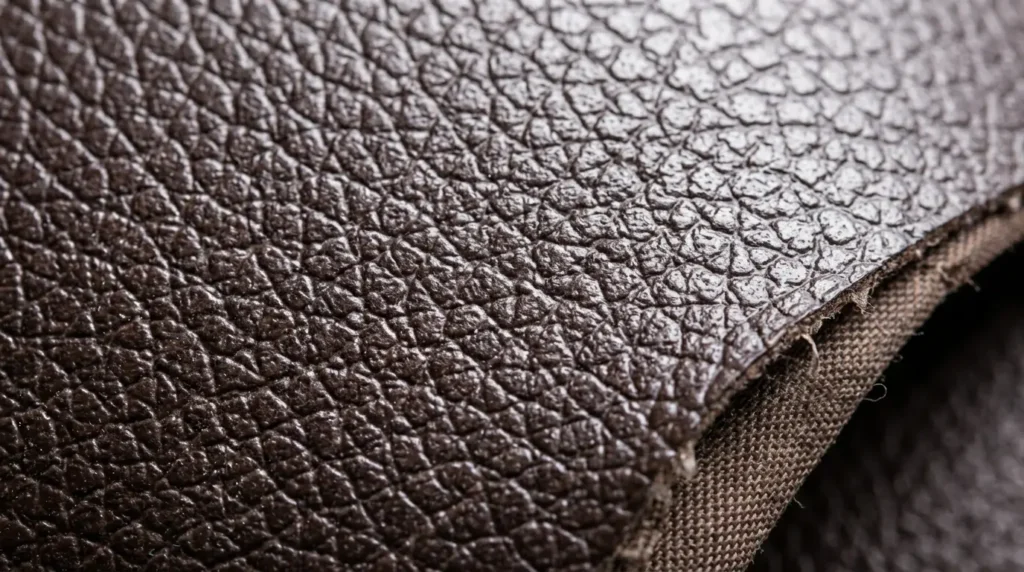
Faux leather is a synthetic material made by coating a fabric base with plastic polymers such as polyurethane (PU) or polyvinyl chloride (PVC), designed to imitate real leather.
The Hidden Cost of Faux Leather (Beyond the Price Tag)
Most people choose faux leather for one reason: it’s cheaper upfront.
But the long-term cost tells a different story.Why Cheap Isn’t Actually Cheap
Faux leather typically lasts 2–5 years, depending on usage. Real leather can last 10–20 years or more with care.
That means replacement matters.
Cost-Per-Year Comparison
| Material | Average Lifespan | Initial Cost | Replacement Cycle | Cost per Year |
| Faux Leather | 3 years | $100 | 5 times (15 yrs) | ~$33/year |
| Real Leather | 15 years | $400 | 1 time | ~$27/year |
👉 The takeaway: faux leather is cheaper to buy, but not always cheaper to own.
Why Faux Leather Peels, Cracks, and Fails
This is the most common complaint—and the least explained.
The Science Behind PU Breakdown
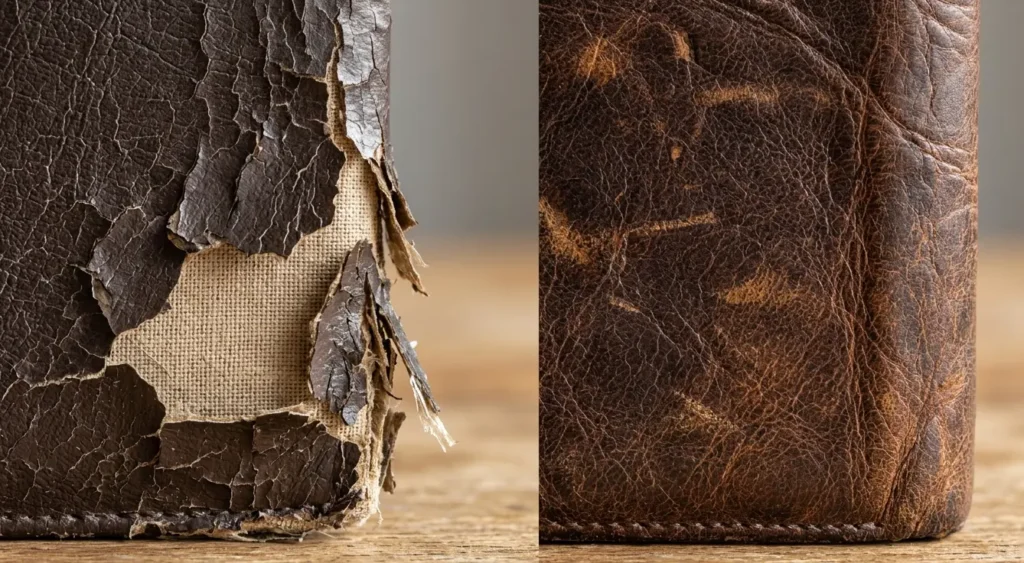
PU leather fails mainly due to hydrolysis—a chemical reaction between moisture and the polymer.
- Humidity breaks molecular bonds
- Surface loses flexibility
- Peeling begins
Why PVC Becomes Brittle
PVC relies on plasticizers to stay soft. Over time:
- Plasticizers evaporate
- Material stiffens
- Cracks form
Environmental Factors That Accelerate Damage
- Heat (cars, sunlight)
- Sweat and body oils
- Humid climates (like Southeast Asia)
👉 In places like Singapore, faux leather ages faster than average.
The Biggest Myth: “Vegan = Sustainable?”
Faux leather is often marketed as “eco-friendly.” That claim is misleading.
Petroleum Reality Behind Faux Leather
Most faux leather is made from plastics derived from fossil fuels.
Why It’s Hard to Recycle
- Mixed materials (plastic + fabric)
- Chemical coatings
- Lack of recycling infrastructure
Result: most faux leather ends up in landfills.
Greenwashing in Marketing
Terms like:
- “vegan leather”
- “eco leather”
- “sustainable leather alternative”
…often describe the same plastic-based material.
👉 The label sounds better than the reality.
When Faux Leather Makes Sense (And When It Doesn’t)
Faux leather is not “bad.” It’s just context-dependent.

Best Use Cases
- Decorative items
- Low-use furniture
- Fashion items with short cycles
- Budget-conscious purchases
Worst Use Cases
- Sofas (daily wear)
- Car interiors (heat exposure)
- Office chairs (constant friction)
How to Identify High-Quality Faux Leather
Not all faux leather is equal. Most buyers miss this.
Surface Clues
- Repeating patterns = lower quality
- Irregular grain = better imitation
Backing Material Matters
The fabric base affects durability more than the coating:
- Polyester backing → weaker
- Microfiber backing → stronger
Simple Physical Tests
- Bend test: cracks appear? Avoid
- Smell: strong chemical odor = low quality
- Weight: too light often means thin coating
Quick Buyer Checklist
✔ Check flexibility
✔ Inspect backing material
✔ Avoid glossy plastic look
✔ Ask about PU thickness
Faux Leather vs Real Leather: A Long-Term Perspective
Instead of comparing features, compare time.
| Factor | Faux Leather | Real Leather |
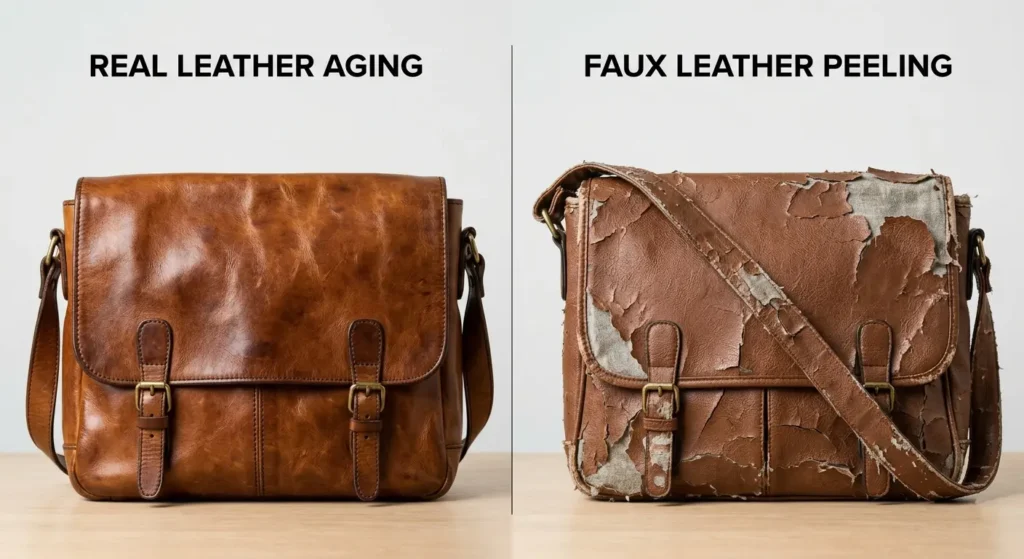
| Aging | Peels | Develops patina |
| Repairability | Very limited | High |
| Lifespan | Short | Long |
| Waste generation | High | Lower over time |
👉 Real leather ages. Faux leather deteriorates.
The Future of Faux Leather
There is innovation—but it’s not what marketing suggests.
Bio-Based Materials
Some new materials use:
- pineapple fibers
- mushroom-based substrates
But most still include plastic coatings.
The Reality of “Plant Leather”
Even “plant leather” often contains PU for durability.
👉 Fully plastic-free alternatives are still rare.
Who Should Actually Buy Faux Leather?
Faux leather works—but only for certain people.
Good Fit
- Short-term users
- Trend-driven buyers
- Budget-focused shoppers
Not a Good Fit
- Long-term investors
- Sustainability-focused consumers
- High-use environments
Bottom Line
Faux leather is not a scam.
But it’s often misunderstood.If you treat it like a temporary material, it performs well.
If you expect it to behave like real leather, it will disappoint.The smarter choice isn’t about “real vs fake.”
It’s about how long you expect it to last.