What Is Lace Trim? A B2B Buyer’s Guide
Buying lace trim looks simple until you get three quotes for the “same” product — and they range from 0.15 to 4.80 a yard. This guide is for sourcing buyers, merchandisers, and brand owners who need to understand what actually drives price, quality, and lead time in lace trim procurement.
We won’t waste your time defining every lace pattern under the sun. Instead, we’ll focus on what helps you write better POs and avoid bulk-order disasters.
Quick Answer
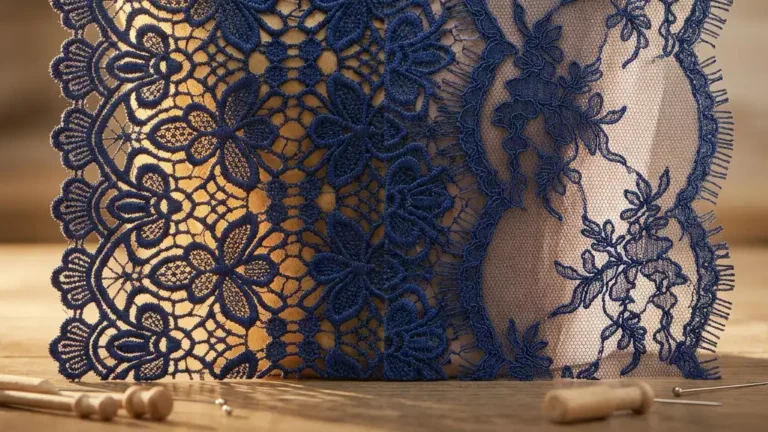
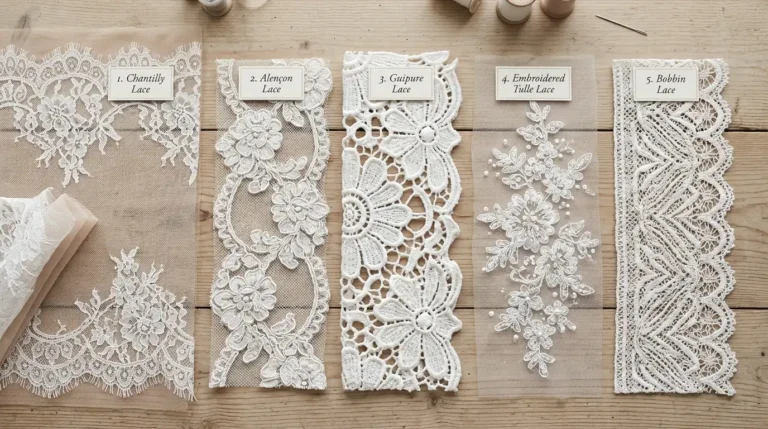
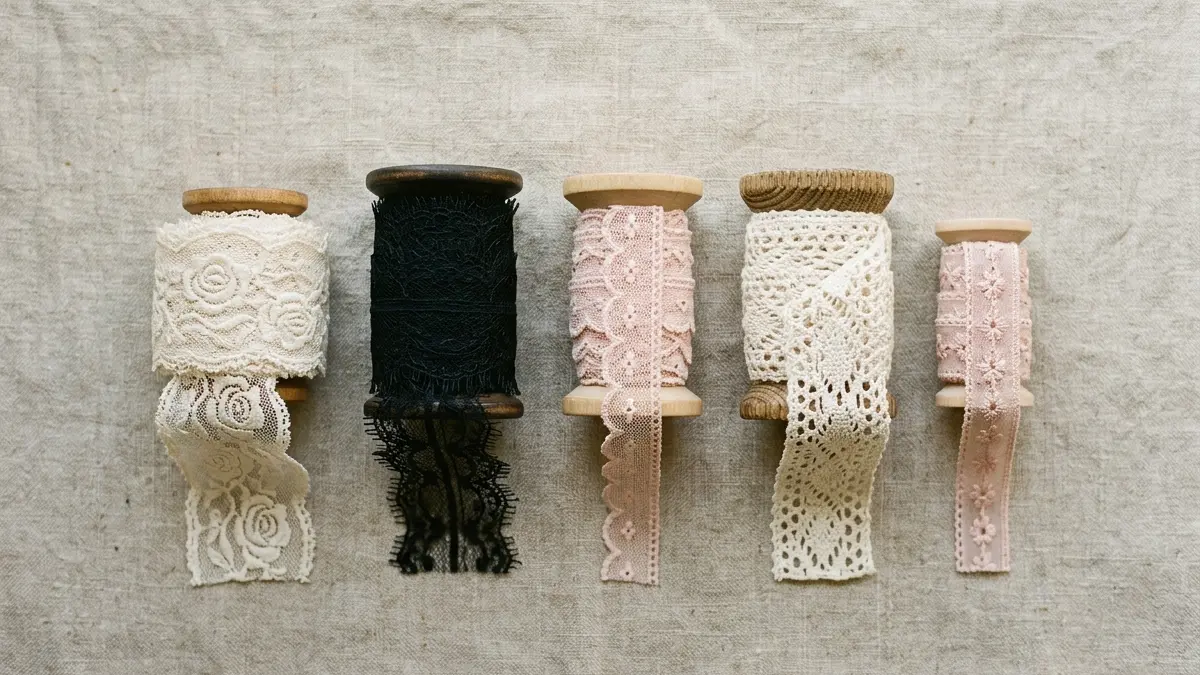
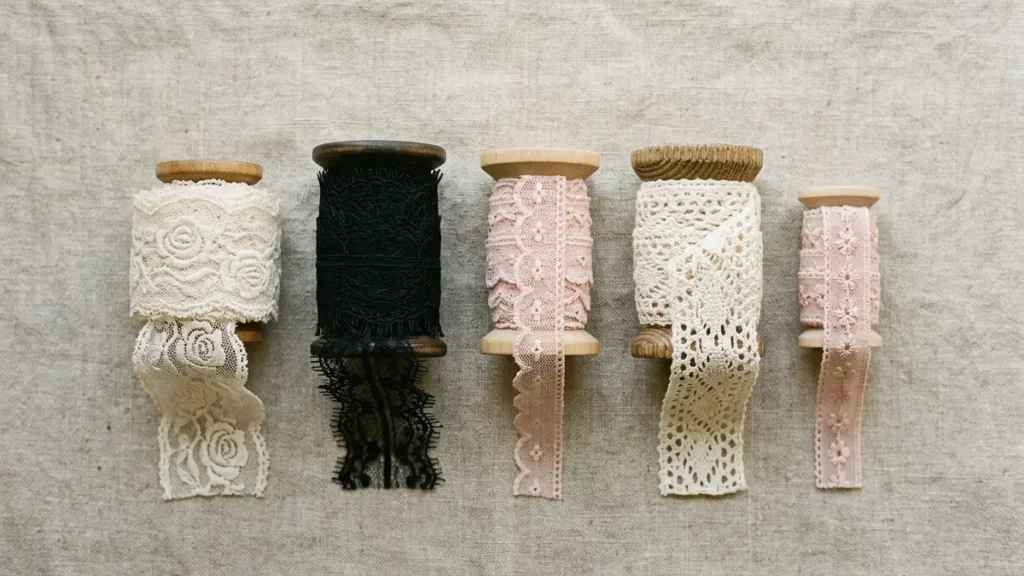
Lace trim is a narrow decorative textile, usually 0.5–30 cm wide, with patterned openwork and a finished or scalloped edge. It’s sold by the yard or roll and used in apparel, lingerie, bridal, home textiles, and packaging.
For B2B buyers, three variables decide everything: machine type, region of origin, and certifications. Get those right, and pricing makes sense.
What Buyers Should Know Before Negotiating
Most buyers only see the final price. Understanding the four-step chain helps you spot where a supplier is adding margin — or cutting corners.
- Yarn sourcing — polyester, nylon, cotton, or recycled fibers. Yarn alone can swing the unit price by 25–40%.
- Knitting / weaving — different machines produce very different results (more on this below).
- Finishing — dyeing, bonding, foiling, embossing, slitting.
- Packing — roll length, core type, polybag vs. carton.
A factory that owns all four steps in-house usually offers better pricing and faster turnaround than a trader who outsources finishing.
For background on integrated lace production, see Fuyuan Knitting’s manufacturing overview.
Machine Types Decide Price
This single table answers most “why is it so expensive?” questions.
| Machine Type | Typical Look | GSM Range | Common MOQ | Price Range (USD/yd) |
|---|---|---|---|---|
| Raschel | Basic floral, mesh | Light | 500–1,000 yd | 0.10 – 0.50 |
| Jacquardtronic | Dense jacquard | Medium | 1,000–3,000 yd | 0.50 – 2.00 |
| Textronic | Fine, 3D effect | Medium-heavy | 2,000+ yd | 1.50 – 5.00 |
| Handmade Crochet | Artisan, irregular | Varies | ~100 yd | 5.00 – 50.00 |
If a supplier quotes $0.30 for what looks like Textronic-grade trim, ask for a machine video. The pattern is probably a Raschel imitation.
Browse Fuyuan’s lace trim collections to compare actual machine outputs side by side.
How to Write a Lace Trim Spec Sheet Suppliers Won’t Misread
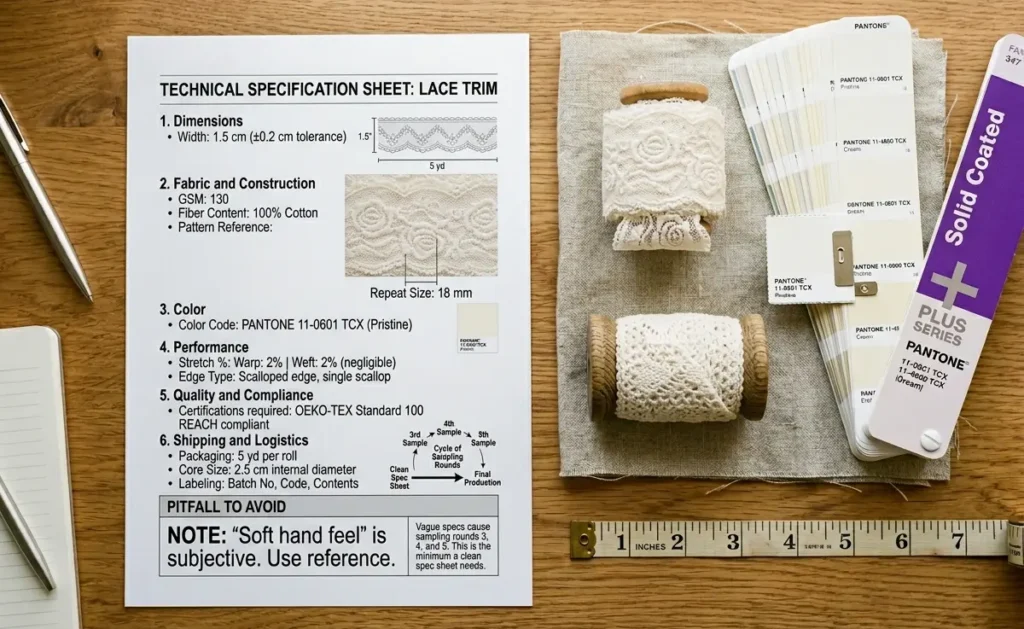
Vague specs cause sampling rounds 3, 4, and 5. Here’s the minimum a clean spec sheet needs:
- Width (in cm, with tolerance ±0.2 cm)
- GSM (grams per square meter)
- Fiber content (% breakdown)
- Pattern reference (photo + repeat size)
- Color (Pantone TCX or TPG code, not “ivory”)
- Stretch % (warp and weft, if applicable)
- Edge type (single scallop, double scallop, straight)
- Finish (soft, crisp, bonded, foiled)
- Certifications required (OEKO-TEX, GRS, REACH)
- Packaging (yards per roll, core size, labeling)
Pitfall to avoid: “soft hand feel” means nothing without a reference sample. Always send a physical swatch — or accept whatever the factory’s interpretation is.
Global Sourcing Map
Not every region produces every type of lace. Match your product to the right origin.
| Region | Strength | Typical MOQ | Lead Time |
|---|---|---|---|
| China — Fujian (Changle, Jinjiang) | ~70% of global capacity, best value | 1,000 yd | 20–35 days |
| China — Guangdong | Fast turn, small-order friendly | 500 yd | 15–25 days |
| France — Calais-Caudry | High-end bridal, AOC-protected | 300 m | 60–90 days |
| India | Hand-embroidered, metallic | 100 yd | 30–45 days |
| Turkey | EU duty advantage | 1,000 yd | 25–40 days |
China’s Fujian cluster handles most of the world’s mid-market lace trim. If you’re sourcing in this region, check Fuyuan Knitting’s product range for direct factory pricing.
Why Two Suppliers Quote 3× Different Prices
A typical lace trim cost structure looks like this:
- Yarn: 25–40%
- Machine time + labor: 20–30%
- Pattern / tooling amortization: 5–15%
- Certification & testing: 3–8%
- Margin (factory or trader): 10–30%
Three signs you’re talking to a trader, not a factory:
- They can’t show you machine floor photos or live video.
- Lead time stretches when you push for technical detail.
- Sample invoices come from a different company name.
None of these are dealbreakers — traders are useful for small orders — but you should know which one you’re paying.
Compliance & Certifications You Can’t Ignore
Fail compliance once, and a container can sit in customs for weeks. Three certifications cover most markets:
- OEKO-TEX Standard 100 — baseline for most apparel buyers globally.
- GRS / RCS — required when claiming recycled content.
- REACH (EU) and CPSIA (US childrenswear) — chemical safety regulations.
One often-missed risk: pattern copyright. French lace houses actively pursue infringement on their proprietary designs. Always ask suppliers to confirm pattern ownership in writing before bulk production.
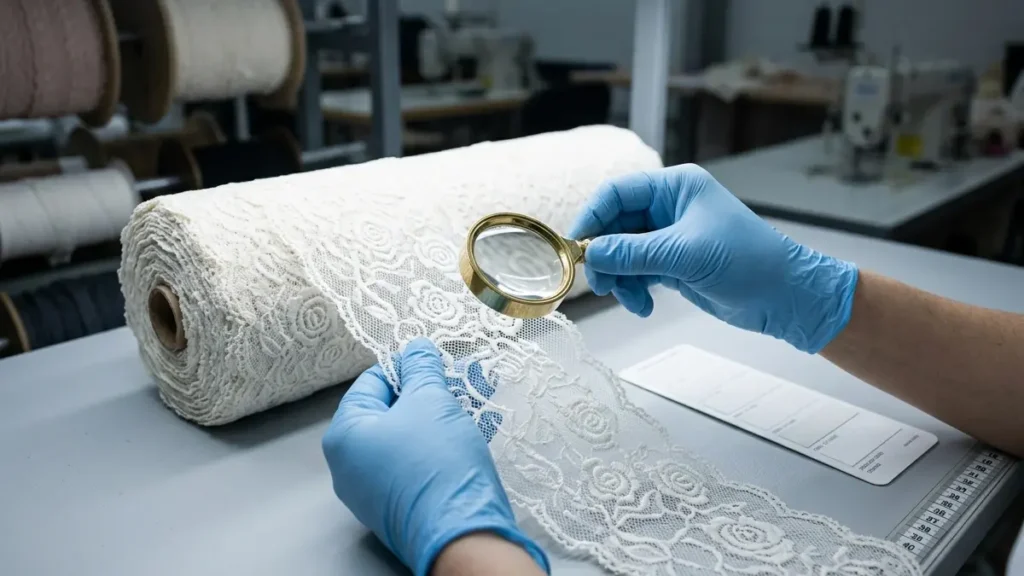
9 Defects to Reject at Inspection
Run these checks during pre-shipment inspection (AQL 2.5 is standard for trims):
- Broken yarn / missing stitches
- Pattern misalignment across repeats
- Color difference (Lab ΔE > 1.5 vs. approved sample)
- Frayed or loose edges
- Stiff hand feel (vs. golden sample)
- Shrinkage above 3% after wash test
- GSM below tolerance (±5%)
- Uneven roll winding
- Inconsistent width across the roll
Managing Risk Before You PO
Skipping sampling rounds is the most expensive shortcut in textile sourcing. The clean sequence:
- Lab dip — color approval first, on actual yarn.
- Strike-off / pre-production sample — confirms pattern, hand feel, width.
- Bulk approval sample — taken from the actual production run.
Always keep a golden sample sealed and signed by both parties. It’s your only real reference if the bulk shipment goes wrong.
Five contract clauses worth insisting on:
- Acceptable color tolerance (ΔE value)
- Defect rate cap and rework terms
- Late delivery penalty
- IP / pattern ownership warranty
- Payment tied to QC pass, not shipment
MOQ & Lead Time Reality Check
| Order Type | Typical MOQ | Lead Time |
|---|---|---|
| Stock lot (existing patterns) | None or 100 yd | 3–7 days |
| Standard production | 500–3,000 yd | 15–30 days |
| Custom pattern (new tooling) | 3,000+ yd | 45–60 days |
To reduce MOQ on custom designs, ask suppliers if they run shared production — combining multiple buyers’ orders on the same setup. Many Fujian factories do this quietly. Reach out via Fuyuan’s contact page to ask about flexible MOQ options.
6 Signals Your Supplier May Be Risky
- Refuses video factory tour or live machine footage
- Quotes 30%+ below the market average with no clear reason
- Has zero certifications, even basic OEKO-TEX
- Bulk samples differ noticeably from approved samples
- Demands 100% T/T upfront with no negotiation
- Can’t produce a clean English spec sheet
One red flag is manageable. Three or more — walk away.
Summary
Three takeaways for any buyer working with lace trim:
- Price gaps come from machine type, region, and certification — not random markups. Knowing the difference protects your margin.
- A precise spec sheet saves more money than negotiating hard. Each round of sampling costs 7–14 days.
- Compliance and QC are the two gates that prevent bulk-order disasters. Build them into the contract, not the email.
If you’d like to see real samples or discuss a specific project, browse Fuyuan Knitting’s lace trim products or get in touch directly.
FAQ
What’s the typical MOQ for custom lace trim?
For new patterns, expect 3,000 yards minimum from most Chinese factories. Stock patterns usually start at 500 yards.
Can I get lace trim with my brand logo woven in?
Yes, but only on Jacquardtronic or Textronic machines, and you’ll need a custom pattern card. Setup costs typically run 200–800.
How long does a China-to-US/EU shipment take?
Production: 20–30 days. Sea freight: 30–45 days to the US West Coast, 35–50 days to EU main ports. Air freight cuts it to 5–7 days at roughly 6× the cost.
Is it cheaper to buy by roll or by yard?
By full roll (typically 50–100 yards). Cut yardage carries handling fees.
Lace trim vs. lace ribbon — what’s the difference in B2B catalogs?
Lace trim usually has at least one decorative scalloped edge. Lace ribbon has two straight edges and a uniform width, often used in gift wrap and floristry.