Swimwear Fabric Sourcing: What Brands Should Check Before Bulk
Swimwear fabric sourcing is not just a search for a smooth nylon spandex swatch. A swimsuit has to stretch, recover, cover the body, hold color, dry quickly, survive salt or pool water, sew cleanly, and still feel comfortable after repeated wear. If a brand chooses fabric only by handfeel or price, the first fitting sample may look fine but the production order can create problems in opacity, seam tension, shade matching, or after-wash appearance.
This guide is written for swimwear startups, private-label brands, sourcing teams, and garment factories that need a more practical way to brief a fabric supplier. It focuses on the checks that matter before bulk production, not only the attractive surface of the sample card.
Start With the Swimwear Use Case
A bikini, one-piece, rash guard, shaping swimsuit, resort cover-up, and competition-style suit do not need the same fabric. Some styles need a soft fashion handfeel. Others need firm compression, UV coverage, chlorine resistance, or strong recovery. Before asking for price, define the garment category, target consumer, expected wearing environment, and how much support the fabric must provide.
A fabric that is perfect for a soft resort bikini may feel too light for a shaping one-piece. A firm fabric that supports the body may feel too heavy for a delicate fashion top. The supplier can only recommend the right construction when the brand explains the final use clearly.
Shell Fabric and Lining Must Be Chosen Together
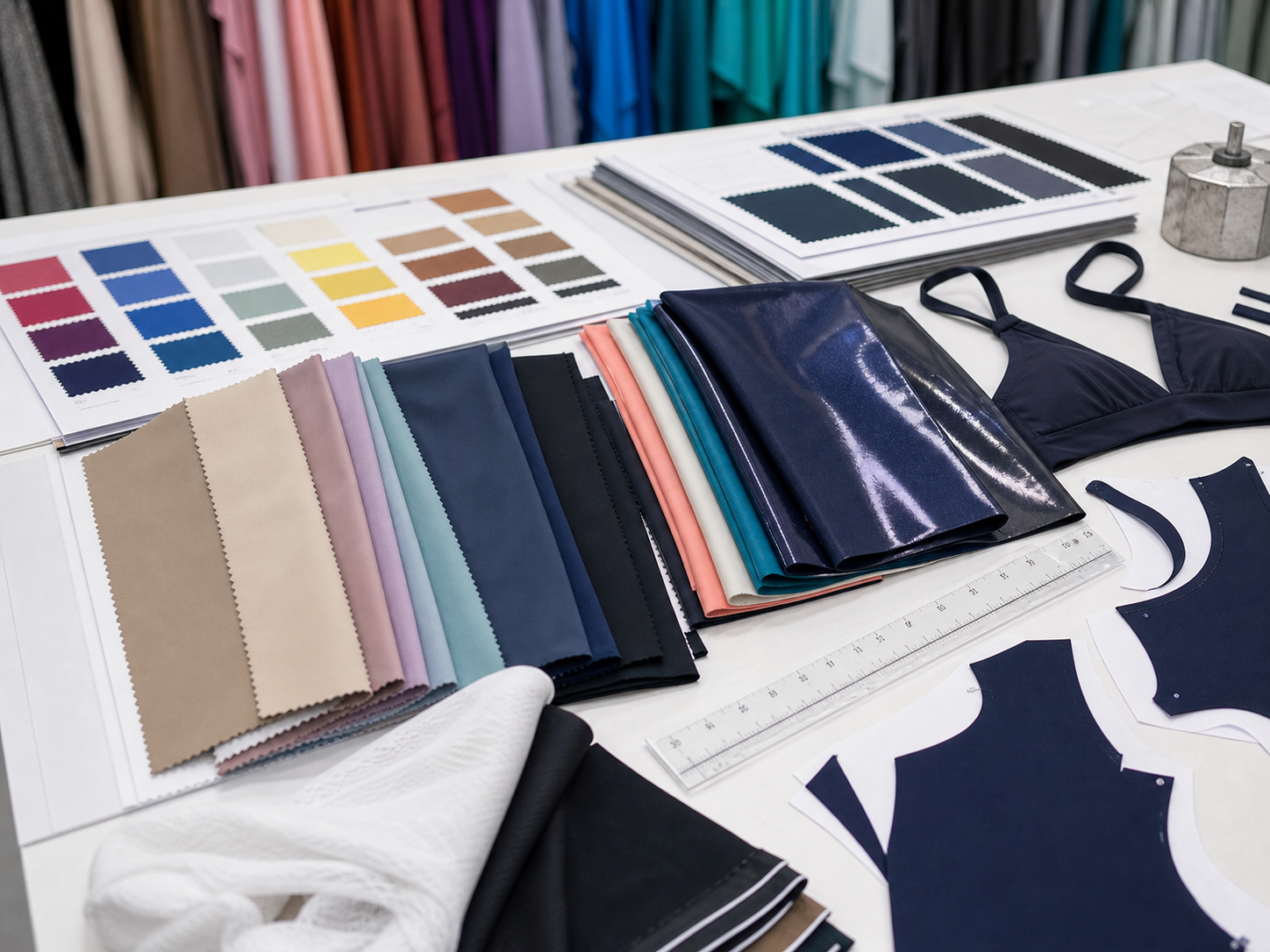
Many swimwear problems are caused by treating shell fabric and lining as separate decisions. The shell may have good stretch, but if the lining is weaker, the garment can bag out. The lining may be soft, but if it is too transparent, the full garment can fail when wet. Color also changes when shell and lining are layered, especially in white, nude, pastel, and bright shades.
Review shell and lining together during sampling. Stretch them together, wet them together if relevant, and check whether the combined handfeel still fits the target product. For light colors, compare the layered fabric on different backing cards and under strong light. For dark colors, check whether the lining creates a dull or uneven look through the shell.
| Item | Why It Matters | What to Confirm |
|---|---|---|
| Shell fabric | Controls appearance, stretch, and recovery | Composition, GSM, width, surface, stretch direction |
| Lining | Controls comfort, opacity, and support | Opacity when wet, recovery, color match, softness |
| Elastic | Affects leg, neckline, and underbust fit | Compatibility with fabric stretch and sewing method |
| Thread | Can change seam recovery and durability | Stretch seam performance after washing and pulling |
| Color standard | Prevents shade disputes | Review shell, lining, and elastic together |
Opacity Should Be Tested Wet and Stretched
Opacity is one of the most important swimwear checks, yet it is often judged incorrectly. A relaxed dry swatch on a table does not represent real wear. Swimwear stretches around the body, becomes wet, and is seen under sunlight. Those conditions can make a fabric look more transparent than it did in the sample room.
Test opacity in four simple states: dry relaxed, dry stretched, wet relaxed, and wet stretched. For white and light colors, this step is essential. For printed swimwear, check whether the base fabric or lining changes the print tone. If the garment is fully lined, test the complete layer combination rather than the shell alone.
Stretch Recovery Is More Important Than Maximum Stretch
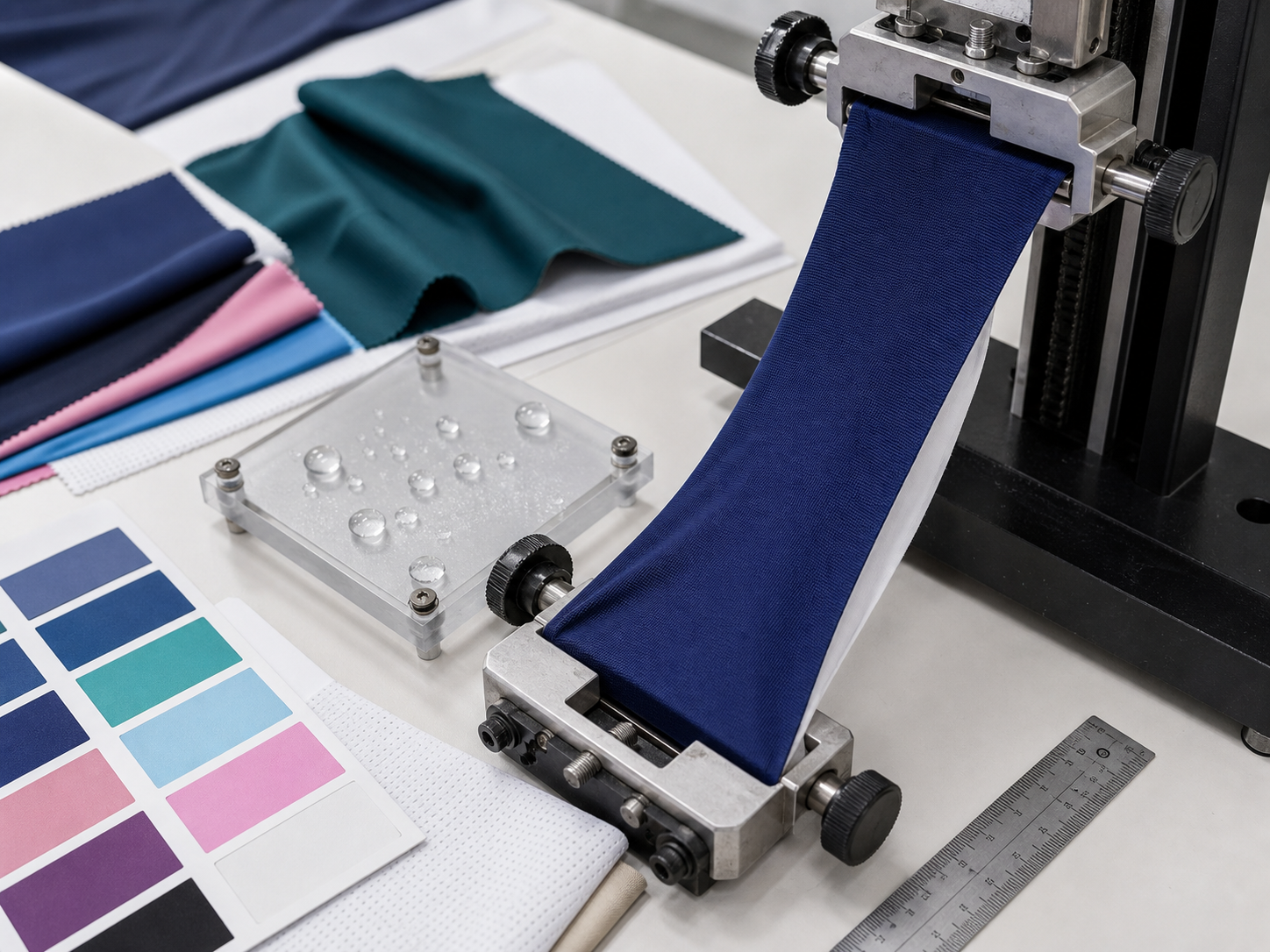
A fabric that stretches far is not automatically a good swimwear fabric. What matters is how it returns. Poor recovery can cause bagging at the seat, wrinkling at the waist, loose straps, and unstable seams. Ask for stretch and recovery in both length and width directions, then compare those numbers with the garment pattern and intended fit.
During sample review, stretch the fabric to the approximate garment tension, release it, and let it rest. If the fabric does not return close to its original size, the style may need a firmer construction, a different lining, or a pattern adjustment. Repeat the same check after washing or soaking if the product is meant for frequent water use.
Color and Print Approval Need Realistic Conditions
Color can shift after heat setting, washing, or contact with pool and sea water. Printed swimwear adds another layer of risk: a print that looks sharp on paper may lose clarity when the fabric stretches. Ask for strike-offs on the actual base fabric, not only digital artwork. Review color beside lining, elastic, and any trim that will be used in the final garment.
For repeat orders, keep an approved cutting from the bulk lot. A digital photo is useful for communication, but it is not enough for future shade comparison. If a color is central to the brand, physical standards reduce arguments when the next lot is produced.
Sewing Tests Should Happen Before Bulk Fabric Approval
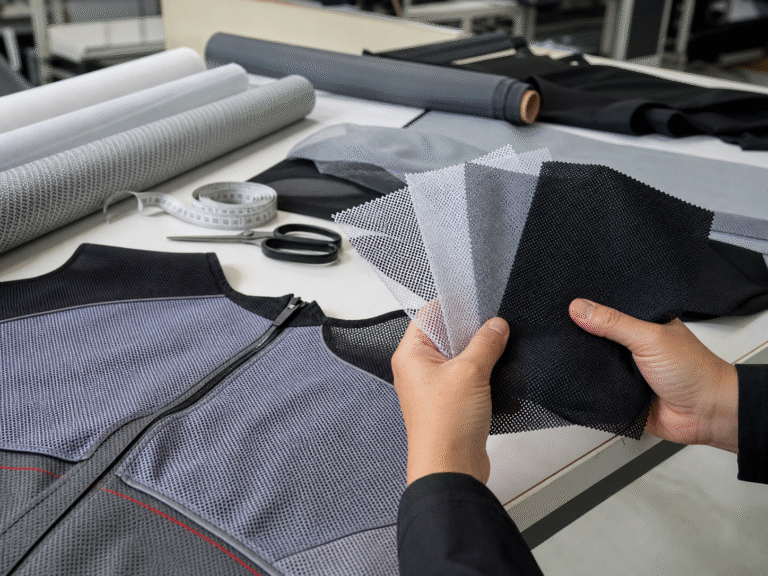
Fabric can behave differently once it is sewn. Some surfaces slip under the presser foot. Some fabrics tunnel at coverstitch seams. Some recover well as fabric but lose stability when stitched with the wrong thread or tension. Before approving bulk, run a small sewing trial with the intended seam type and elastic application.
Check seam stretch, seam grin, edge curling, needle marks, and whether the fabric becomes shiny or damaged after stitching. This step is especially important for wet-look fabrics, very fine 30D or 40D constructions, and high-stretch styles.
Questions to Ask Before Placing a Swimwear Fabric Order
- What is the recommended end use for this fabric: fashion swim, active swim, rash guard, or shaping?
- What are the stretch and recovery ranges in both directions?
- How does opacity change when the fabric is wet and stretched?
- Which lining works best with this shell fabric and color?
- Can the same color and finish be repeated for future orders?
- What packing method prevents roll tension marks or creasing?
Common Mistakes
The most common mistake is approving a beautiful dry swatch without testing it in garment-like conditions. Another mistake is choosing the shell fabric first and treating lining as a cheap afterthought. Brands also underestimate how much elastic, thread, and seam construction affect the final result. A strong swimwear program treats fabric, lining, elastic, pattern, and sewing as one system.
If you are comparing textile options, Fuyuan’s 40D matte swimwear fabric and wet-look swimwear fabric examples show how surface, denier, and end use can vary even inside one product category.
Build a Small Approval Matrix
Before moving from sample fabric to bulk fabric, create a simple approval matrix for the style. The matrix does not need to be complicated. It should list shell fabric, lining, elastic, print or solid color, seam type, target stretch, opacity requirement, and the person responsible for approval. This gives the factory and brand a shared reference instead of scattered comments across email, chat, and sample labels.
The matrix is especially useful when a brand develops several swimwear styles at the same time. A triangle bikini, high-waist bottom, long-sleeve rash guard, and shaping one-piece may share colors but need different fabric behavior. If the same fabric is used across all styles without checking each garment use, one successful sample can hide three weak ones.
Think About Returns Before You Choose the Fabric
Returns in swimwear often come from fit, transparency, color bleeding, or a fabric that feels different from the product photo. Fabric sourcing cannot solve every return problem, but it can reduce avoidable risk. If the brand sells online, opacity and color accuracy matter because customers cannot touch the fabric before purchase. If the brand sells through boutiques, recovery and hanger appearance matter because the product may be tried on many times.
Ask how the fabric will look after folding, after being stretched on the body, and after drying. A fabric that photographs beautifully but creases heavily in packing may create extra steaming work. A fabric that feels soft but loses recovery after repeated try-ons may create quality complaints before the product even reaches the customer.
MOQ, Lead Time, and Reorder Planning
Fabric choice also affects business flexibility. Stock colors may be easier for small runs, but they can limit brand identity. Custom colors can look more exclusive, but they require lab dips, minimum quantities, and stronger shade control. Printed swimwear adds another layer because base fabric, ink, and stretch all affect the final look.
For a new brand, it is often safer to test one or two core fabrics across several styles rather than approve too many unique qualities at once. For an established brand, a controlled material library can support seasonal color updates while keeping fit and production more stable. The sourcing goal is not to buy the most technical fabric. It is to choose a fabric system that matches the brand’s product plan, order volume, and quality promise.
Final Takeaway
Good swimwear fabric sourcing is practical and test-based. Define the garment category first, choose shell and lining together, test opacity under wet and stretched conditions, confirm recovery, and run a sewing trial before bulk approval. These steps reduce returns, fitting surprises, and shade disputes while giving the factory a clearer target.