Custom Mesh Fabric: Define Openness Before You Quote
Many custom mesh fabric projects start with a familiar sentence: “We need something breathable but not too see-through.” That sounds clear in a meeting, but it is not clear enough for a factory to quote accurately or develop the right sample. Mesh performance depends on yarn, knitting structure, openness, elasticity, finishing, color, and how the fabric is used in the final product. If those points are not defined early, the first sample often feels close but not useful.
Search results for mesh fabric usually explain types, uses, GSM, and stretch. Those basics matter, but buyers often need a more practical bridge between an idea and a factory-ready brief. This guide focuses on the missing middle: how to define openness, handfeel, transparency, and sample approval before asking for custom mesh fabric or wholesale mesh fabric production.
Start with the job the mesh must do
Mesh is not one material. It can be a light overlay, a lining, a ventilation panel, a power layer, a decorative contrast, or a support fabric. The same weight can perform differently depending on yarn and construction. Before asking for a quote, write one sentence that defines the job: “This mesh is a soft lining for swimwear,” “This mesh is a breathable back panel for activewear,” or “This mesh is a sheer overlay for fashion dresses.”
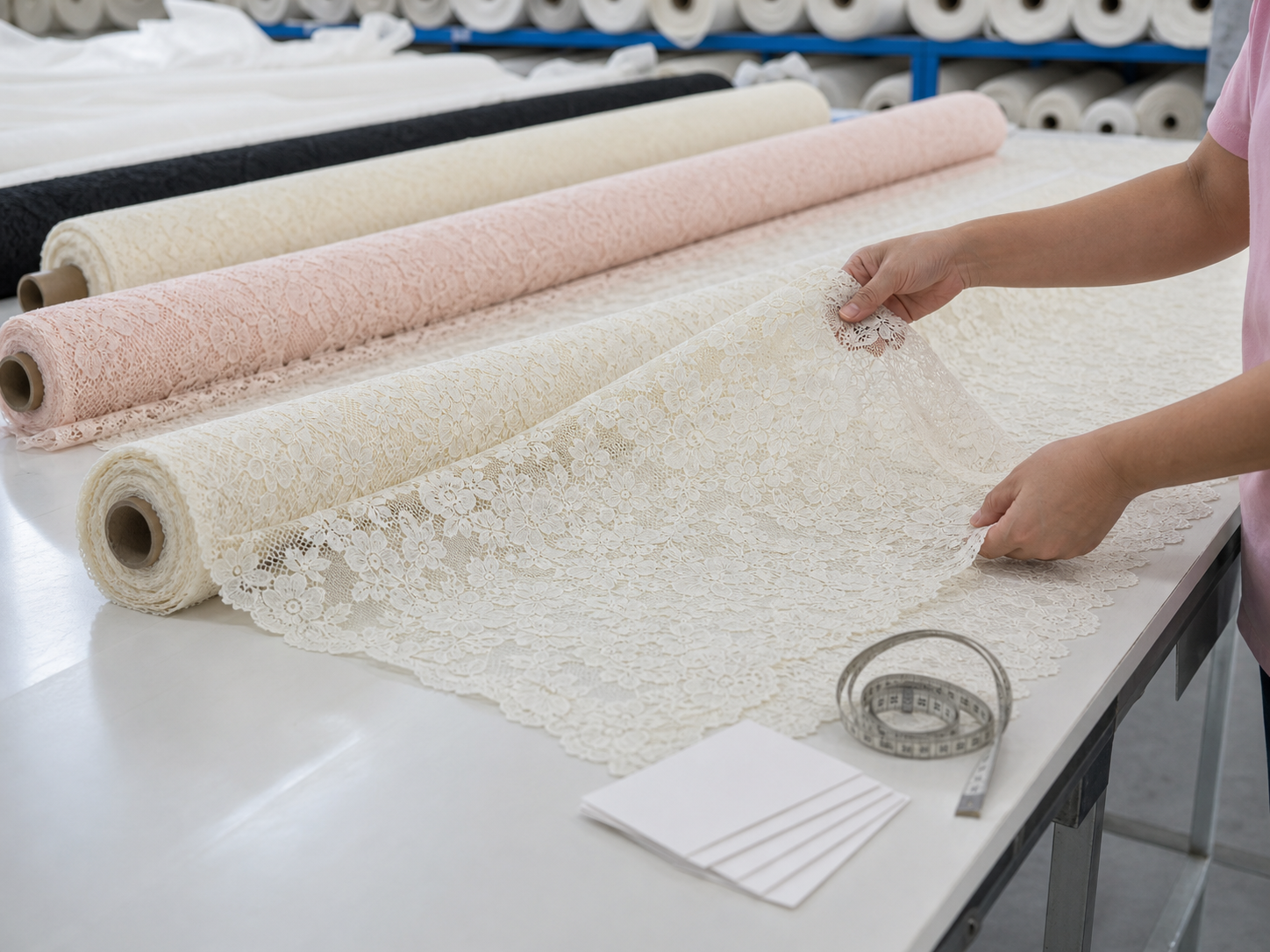
That sentence gives the factory a direction. A lining mesh needs comfort and skin feel. A ventilation panel needs air flow and stability. A sheer overlay needs drape and visual clarity. A support layer may need recovery and resistance to distortion. Fuyuan’s warp knit mesh fabric category shows how different constructions can look similar at first but behave differently in use.
Define openness without relying on photos only
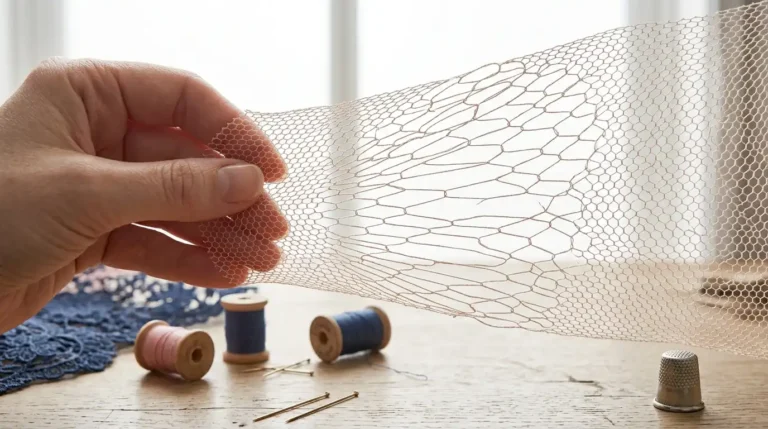
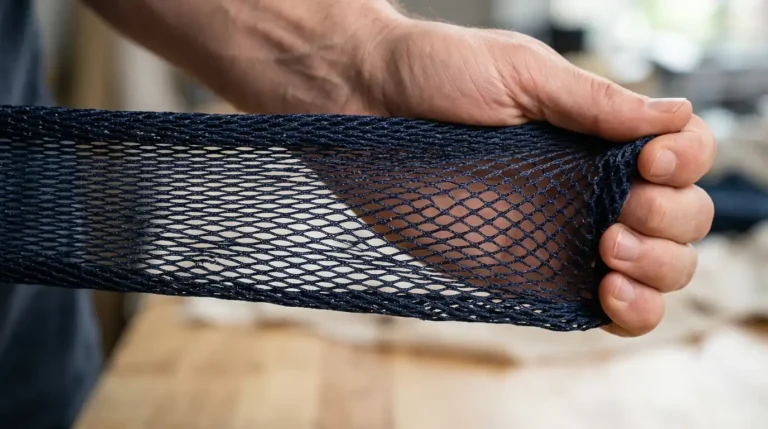
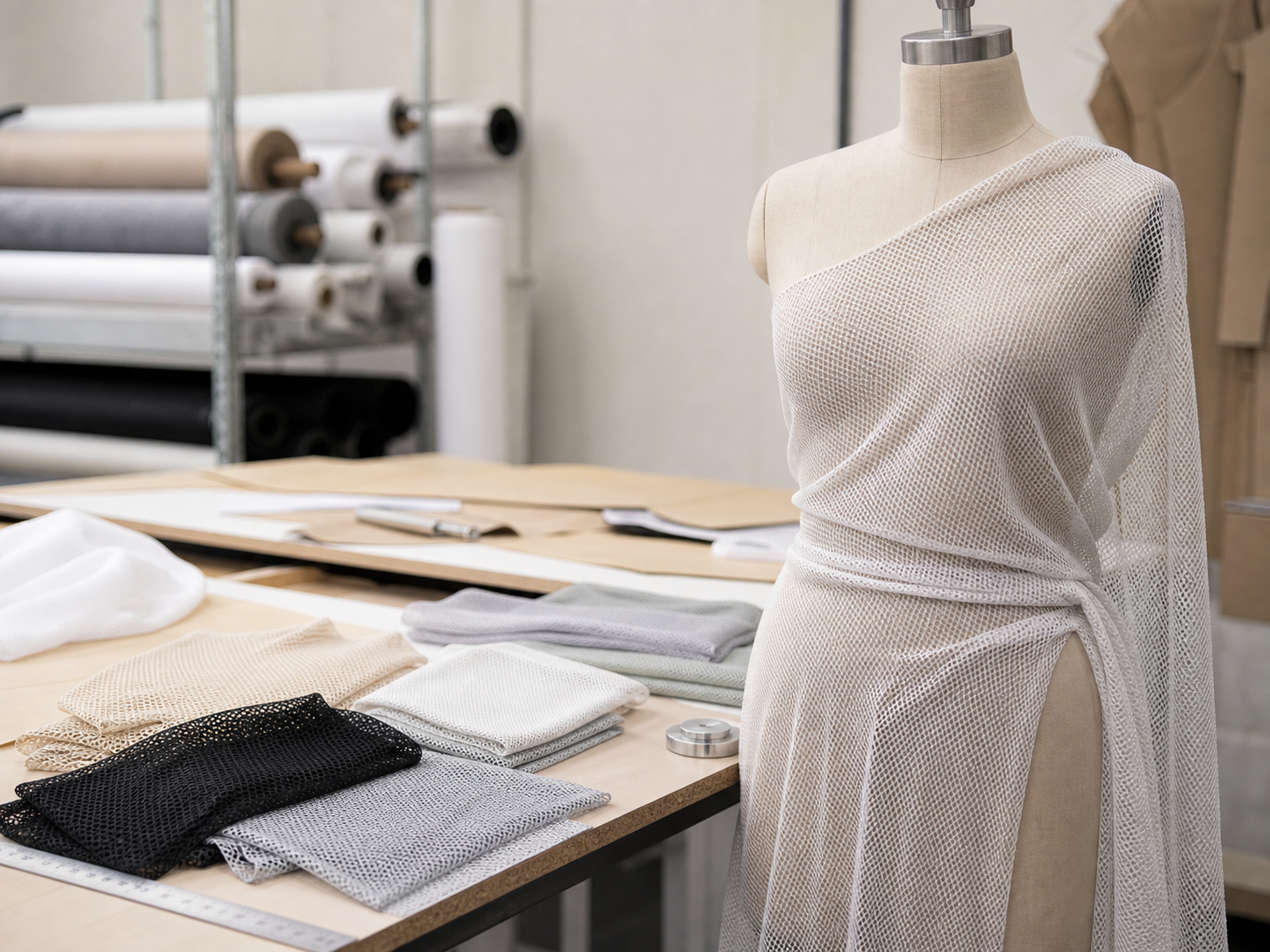
Photos help, but they can mislead. Lighting, background color, zoom level, and camera angle all change how open a mesh appears. A better brief combines image references with a physical target. If you already have a fabric that works, send a cutting. If you do not, describe the openness by end use: light coverage, medium coverage, or strong coverage. Then ask the factory to submit two or three options around that target.
For color-sensitive or transparency-sensitive styles, check the mesh over the fabric or body-color lining it will cover. White mesh over white paper can look clean and modest; the same mesh over a darker base can look far more open. Black mesh can hide structure in photos but reveal more when stretched. Nude mesh can change dramatically under different lighting.
Separate handfeel from softness
Buyers often ask for “soft mesh,” but softness is only one part of handfeel. A mesh can be soft but clingy, soft but unstable, or soft but too limp for sewing. Handfeel also includes dry or slick touch, spring, thickness, surface smoothness, and how the fabric behaves after stretching. For product development, describe the handfeel in relation to the final use.
| Briefing point | Better question to ask | What it helps prevent |
|---|---|---|
| Openness | Should the base layer be clearly visible, softly visible, or mostly covered? | Samples that are breathable but too transparent for the product. |
| Handfeel | Should the mesh feel dry, smooth, cool, compact, or soft against skin? | A sample that feels pleasant in hand but performs poorly when worn. |
| Recovery | Does the fabric need to return quickly after stretch? | Panels that bag out after sewing or fitting. |
| Stability | Will the edge be bound, overlocked, heat cut, or left exposed? | Late discovery of curling, distortion, or sewing difficulty. |
Do not quote from GSM alone
GSM is useful, but it is not a full specification. Two mesh fabrics with similar GSM can have different openness, stretch, recovery, and visual coverage. A lower GSM fabric with a compact structure may look less open than a heavier fabric with larger holes. A buyer should use GSM as one control point, not as the whole brief.
If your team is still building a baseline, combine GSM with stretch direction, width, yarn feel, and transparency. Fuyuan has already covered the relationship between GSM and stretch in its warp knit mesh fabric guide. For a custom order, add the visual and sewing requirements that a standard GSM chart cannot capture.
Prototype the use case, not only the swatch
A mesh swatch can pass on the table and fail in a garment. This happens when the buyer checks the fabric flat but uses it stretched, layered, curved, or sewn into a high-stress area. Before approving bulk, test the mesh in the smallest realistic prototype. It does not need to be a finished product. A half panel, lining test, pocketing test, or overlay mock-up can reveal problems early.
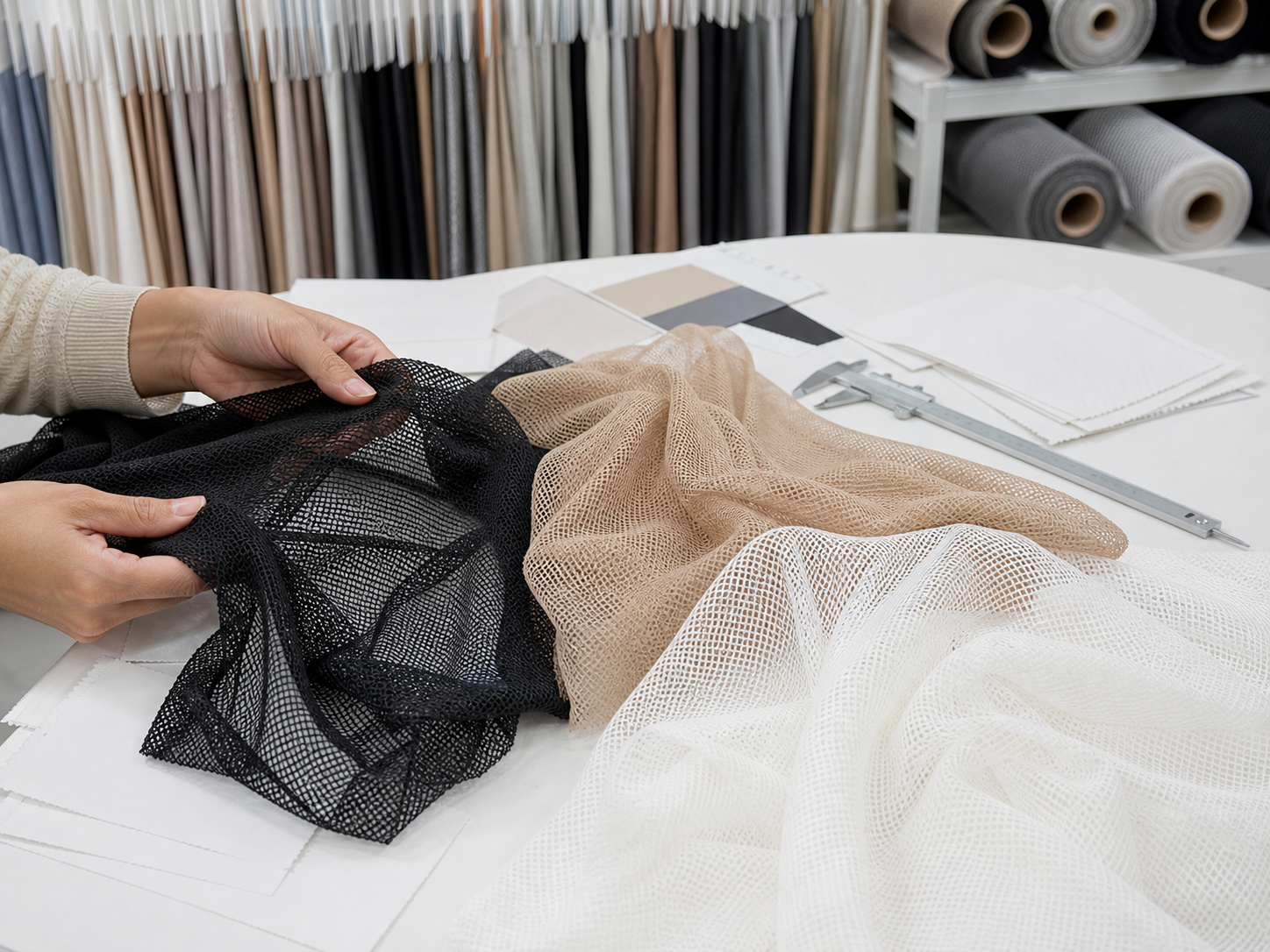
For activewear and swimwear, check opacity when stretched. For dresses and overlays, check drape over the actual base fabric. For lingerie, check comfort against skin and compatibility with lace, elastic, and trim. For bags or accessories, check abrasion points and edge finish. If sewing stability is a concern, review the practical approach in Fuyuan’s article on mesh fabric edge stability.
Ask for a sample set instead of one perfect sample
When developing custom mesh fabric, one sample can trap the discussion. If it is too open, the buyer may reject it without knowing whether a slightly tighter construction would solve the problem. A better development request asks for a small range: target openness, slightly more coverage, and slightly lighter coverage. This gives the buyer a real choice and helps the factory understand the direction.
The same idea works for handfeel. Ask for a standard finish and one softer finish if the product is skin-contact. Ask for a firmer finish if the mesh must hold shape. When the buyer compares the range on the intended product, the approval decision becomes more confident and less subjective.
Approval checks before moving to bulk
- Confirm the final use: lining, overlay, ventilation, support, or decoration.
- Review openness over the correct base color, not only white paper.
- Check stretch and recovery in the direction used by the pattern.
- Make a small sewing or layering prototype before bulk approval.
- Approve color after finishing because finish can change the visual tone.
- Keep one accepted sample for bulk roll comparison and repeat orders.
Common mistakes in custom mesh sourcing
The most common mistake is sending only a mood image and asking the factory to “match this mesh.” The second is using a fabric from a different end use as the target. A decorative craft mesh, a lingerie lining mesh, and a sportswear ventilation mesh can all look similar in a photo but behave very differently. The third mistake is skipping the sewing trial because the handfeel seems right. Mesh can stretch, curl, or distort under the presser foot if the construction is not suitable.
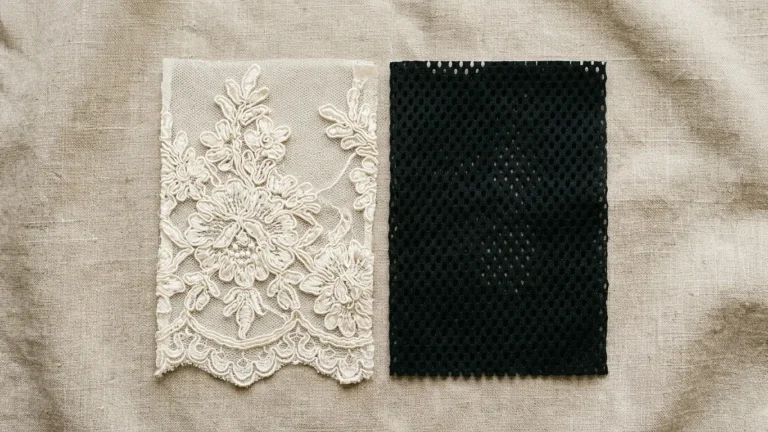
Another mistake is ignoring color and transparency together. A nude mesh that works for one market may not work for another shade range. A black mesh may look stable but show shine under bright light. A white mesh may feel fresh but reveal seam allowances. If the product is swimwear, pair mesh decisions with the broader sourcing checks in Fuyuan’s swimwear fabric sourcing guide.
Final takeaway
Custom mesh fabric development is faster when the buyer defines the problem before asking for the solution. Instead of asking for “soft breathable mesh,” define the end use, openness, base color, handfeel, stretch direction, sewing method, and approval sample. This gives the factory enough information to quote honestly and sample intelligently. It also gives the buyer a clearer standard for saying yes, no, or almost.
For brands buying mesh fabric by the yard during development and then moving into wholesale mesh fabric orders, this discipline reduces repeated sampling and protects the bulk order. The best mesh is not simply the lightest, softest, or most open. It is the one that performs the intended job after cutting, sewing, wearing, and repeat production.