What Is Tulle Fabric: How It’s Made, the Types That Actually Differ, and Where It Holds Up
Cut a piece of tulle and look at the edge. No fraying, no curling threads, no need to run it through a serger. That one property — an open, knotted mesh that doesn’t unravel when you cut it — is most of the reason tulle ended up under wedding dresses, inside ballet tutus, and stretched across event backdrops for the better part of two centuries.
But “tulle” gets used loosely. Some people mean any fine netting. Others use it interchangeably with organza or illusion mesh, which behave very differently on a hanger and under a needle. If you’re speccing a bridal collection or trying to figure out why one supplier’s “tulle” feels stiff as a screen door and another’s drapes like fog, the fiber on the label is only half the story — the knitting method behind it matters just as much, and almost nobody writes about that part.
This guide covers what tulle actually is, how it’s made (including a manufacturing detail most fabric guides skip entirely), the real differences between silk, nylon, polyester, and cotton versions, and what’s worth asking a supplier before you commit to a bulk order.
What Is Tulle Fabric
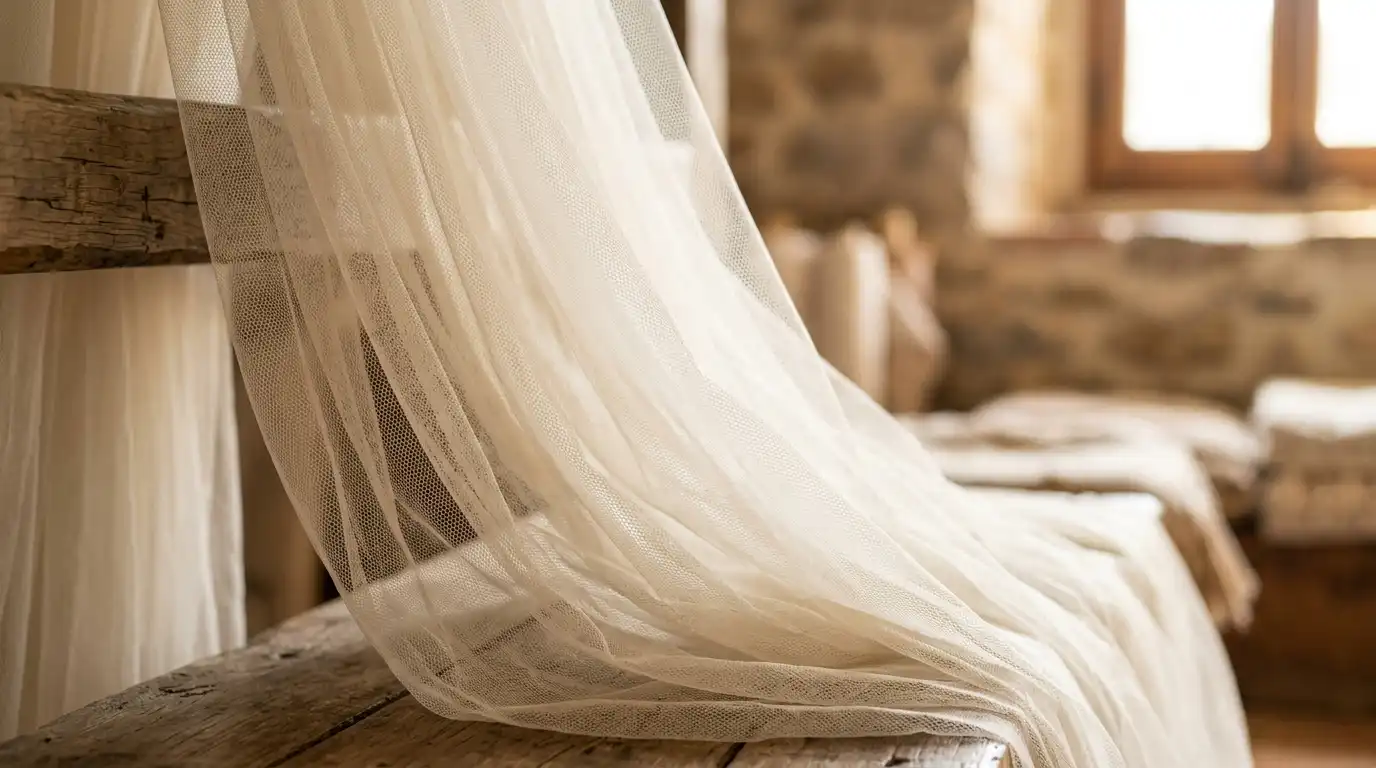
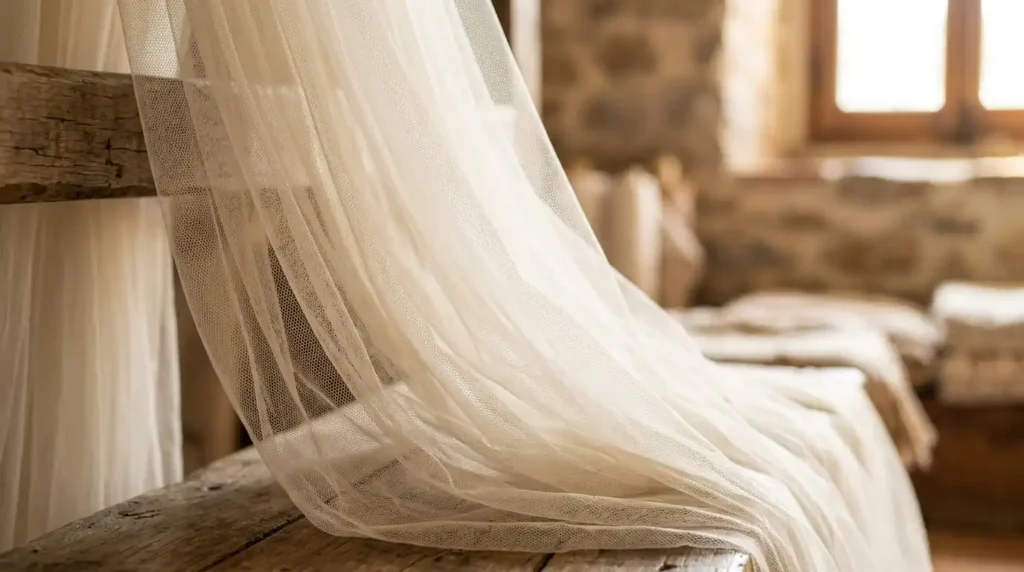
Tulle is a lightweight netting fabric built from a hexagonal mesh of fine threads — finer and lower-denier than what most people mean when they say “netting” in general. It’s sheer almost by definition: hold it up to light and you see straight through the gaps between the knots. Despite that transparency, good tulle has body. It holds a shape when gathered, springs back after being compressed in a garment bag, and — as mentioned — doesn’t need a finished edge.
The fabric takes its name from Tulle, a town in south-central France, where machine-made netting production took off in the early 19th century after John Heathcoat patented a mechanized version of the traditional hand-knotted lace process in 1809. Before that machine existed, a comparable net fabric was essentially hand lace — slow to produce and priced accordingly. Queen Victoria’s use of the fabric in the mid-1800s is often credited with cementing tulle’s association with bridalwear, and honestly, that association hasn’t loosened much since.
Core characteristics and feel
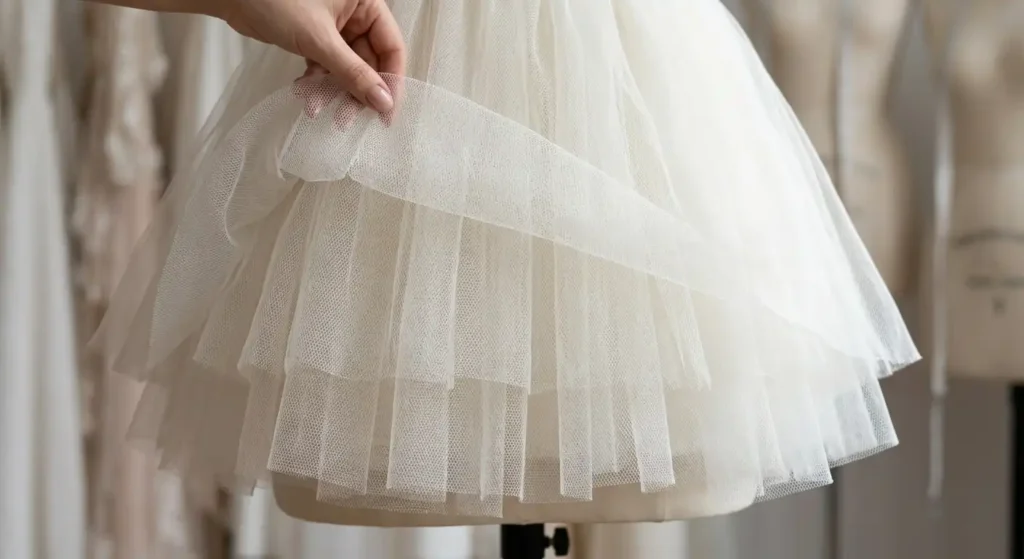
What you notice first with tulle is the contradiction: it’s simultaneously delicate and structural. A single layer is almost nothing — you can scrunch a yard of it into one fist. Stack six layers under a skirt, though, and it holds volume that a woven fabric of the same weight simply can’t produce. The mesh is doing the work: air moves through the gaps, so weight doesn’t accumulate the way it would with a solid fabric, but the knotted or knitted structure still resists collapsing flat.
Where it shines
- Bridal veils and gown underskirts
- Ballet and dance costuming
- Layered eveningwear — overlays, sleeves, trains, and as a base for eyelash lace overlays where the fringe needs something sheer underneath to land on
- Event styling: table skirts, backdrops, pew bows
- Any project that needs volume without adding real weight
Where it struggles
- Direct, prolonged skin contact — stiffer grades can feel scratchy at a neckline or armhole
- High-friction wear — tulle snags on rough surfaces, jewelry, and rings
- Structural support on its own — most bridal skirts still need a crinoline or hoop underneath for real shape, with tulle layered over the top purely for the visual effect
How Tulle Is Made — and Why the Method Matters More Than Most Guides Admit
Most fabric guides gloss over this, but it’s worth understanding if you’re sourcing at any real volume: modern tulle is produced one of two ways, and they are not interchangeable in cost or handfeel.
The original method is bobbinet — the mechanized lace process Heathcoat patented, where warp and weft threads are twisted and wrapped around each other under tension to lock the hexagonal mesh in place without any knots. Bobbinet tulle is soft, and flexible at each individual hole, which is exactly why embroiderers favor it: a needle can pass through the mesh without snapping threads. It’s also genuinely slow to produce, which keeps true bobbinet tulle expensive and mostly reserved for couture bridal and fine veiling.
The method behind nearly everything sold as “tulle” today, though, is warp knitting — the same general family of machine that produces stretch mesh, power net, and structured mesh for a lot of what bridal brands already source. A warp-knitting machine (commonly a Raschel machine) locks the mesh structure with knitted loops instead of twisted threads, and it runs at production speeds bobbinet simply can’t match. The tradeoff is a slightly firmer hand and a bit less give at each mesh hole — but for the large majority of garment and décor applications, the speed and cost advantage is worth it, and a well-finished warp-knit tulle is hard to tell from bobbinet by eye alone.
If a supplier can’t tell you which process their tulle comes from, that’s a fair thing to ask before committing to a bulk order. It affects price and hand-feel more than fiber content does.
What determines softness vs stiffness
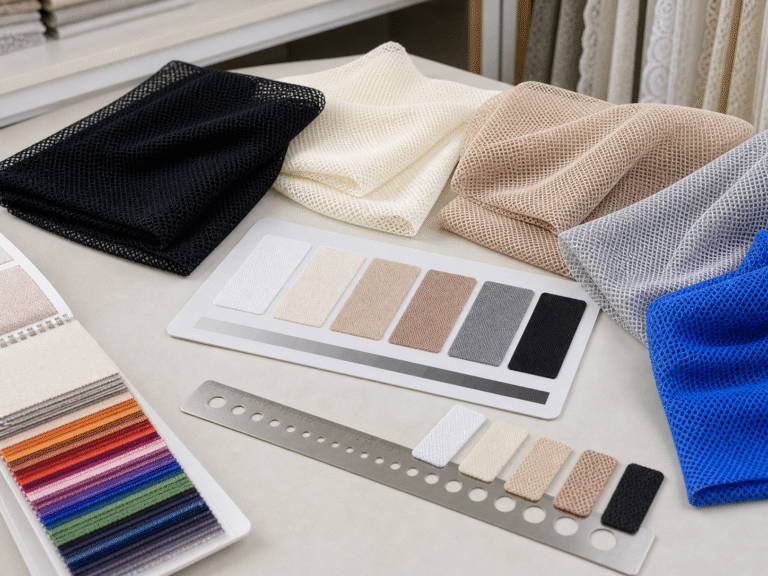
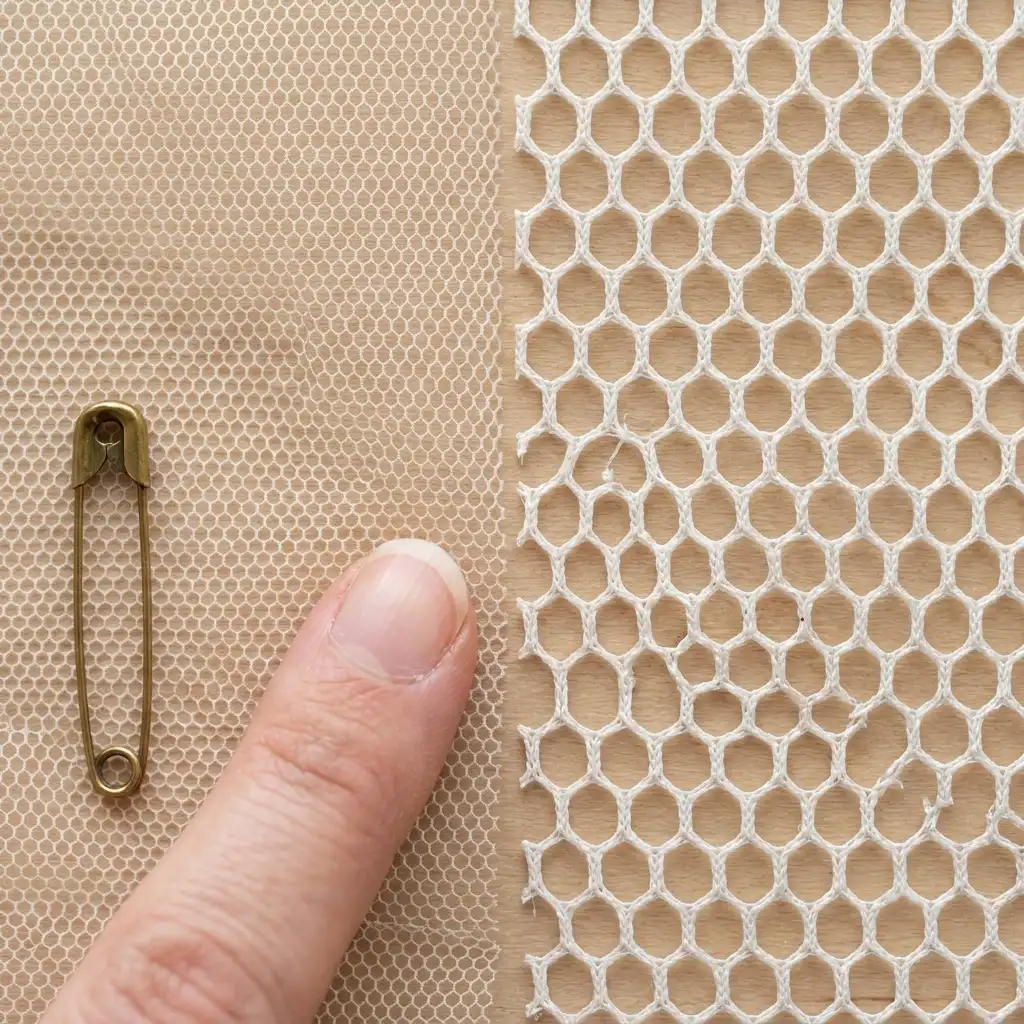
Within either method, three variables decide whether a roll of tulle feels like fog or like a window screen: the fiber, the mesh (hole) size, and the finish. Finer fiber combined with a tighter mesh produces the soft, nearly invisible tulle used for illusion necklines and veiling. A more open mesh paired with a stiffer fiber and a starch or resin finish produces the structured tulle used in tutus and event decor. Starching is still standard practice — the same logic dressmakers have used for a century, just applied to synthetic fiber now instead of cotton.
Performance in use
Because the structure is mostly air, tulle breathes noticeably better than a woven fabric of similar weight — genuinely useful when six yards of it are layered against skin for hours at a wedding. It also takes dye readily on synthetic fiber; natural fiber tulle is a little less predictable on colorfastness, which is worth flagging to your mill if matching color across a production run matters to you.
Limits to watch
- Synthetic tulle (nylon, polyester) doesn’t tolerate high heat — a hot iron will melt or glaze it rather than press it smooth. Steam, held a few inches away, is the safer move.
- Cotton tulle doesn’t stretch and frays more readily at a cut edge than synthetic versions do, so despite tulle’s general “doesn’t fray” reputation, it still benefits from a finished seam.
- Very fine, illusion-weight tulle snags easily on rings, watches, and rough hands — worth factoring into how a garment will actually be worn, not just how it photographs.
Types of Tulle: What Actually Changes Between Them
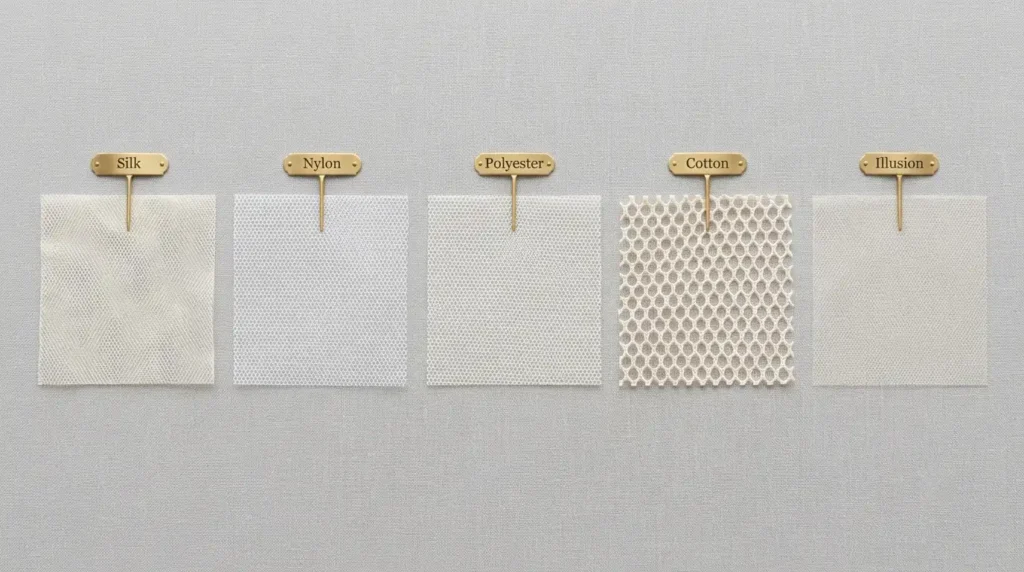
| Type | Feel | Stiffness | Typical Use | Relative Cost |
|---|---|---|---|---|
| Silk tulle | Soft, fluid, slightly matte | Softest of the group | Couture veils, high-end eveningwear | Highest |
| Nylon tulle | Smooth, lightweight | Moderate — holds shape without feeling stiff | Veils, tutus, everyday craft and apparel | Low–moderate |
| Polyester tulle | Slightly crisper hand, wrinkle-resistant | Moderate to firm, depending on finish | Evening gowns, event decor, mass-market bridal | Lowest |
| Cotton tulle | Textured, matte, “vintage” look | Firm but doesn’t hold sharp structure | Trims, heirloom-style pieces, natural-fiber lines | Moderate |
| Illusion tulle | Ultra-fine, nearly invisible against skin | Very soft | Illusion necklines, sleeves, delicate overlays | Varies by base fiber |
💡 Pro Tip: “Illusion tulle” isn’t a fiber — it’s a mesh-size and finish category. You’ll see it knit from both nylon and polyester base yarns, so if a supplier quotes “illusion tulle,” it’s still worth asking what fiber it’s actually made from.
Tulle vs netting vs organza — the confusion worth clearing up
Netting is the broader category; tulle is the fine, low-denier end of it. Generic craft-store netting tends to run coarser, stiffer, and more visibly gridded than tulle. Organza gets confused with tulle constantly, but it’s a fundamentally different structure — a woven fabric, solid rather than meshed, with a crisp, almost paper-like hand and a visible shine. Tulle is netted and sheer; organza is woven and opaque-ish with shine. They both show up in bridalwear, which is probably why people conflate them, but they perform nothing alike under a needle or on a body. If you’re weighing tulle against a fabric that flows rather than holds shape, our chiffon guide covers that comparison directly — chiffon drapes where tulle holds body, which is exactly why the two get paired in the same gown more often than they get chosen as alternatives to each other.
Uses, Care, and Buying Tips
The application list for tulle hasn’t changed much in two centuries, even if the fiber has: bridal (veils, underskirts, full tulle gowns), dancewear (tutus, recital costumes), eveningwear (overlays, sleeves, trains), and event styling (arch draping, table runners, photo backdrops). What has changed is how much of it gets specified by mesh size and construction rather than just “soft” or “stiff” — useful vocabulary once you’re working with a mill instead of a craft store.
On weight and mesh reference: there’s no single industry-standard grading system for tulle weight the way there is for, say, denim — so treat any numbers a supplier gives you as their own internal convention rather than something universally comparable. As a rough guide, illusion and veiling-weight tulle sits at the sheerest end, garment-weight tulle (for gowns and overlays) sits in the middle, and craft or décor-weight tulle — stiffer, more opaque — sits at the top. Ask for a swatch and compare it against a reference you already know, rather than relying on a number alone. Two mills’ “medium weight” can feel noticeably different from each other.
Care essentials
- Washing: Hand wash in cool water where the garment allows it, and skip the wringing — twisting distorts the mesh permanently. Lay flat or hang to drip dry.
- Ironing: Don’t, at least not directly. Synthetic tulle reacts badly to heat — you’ll get a shiny, slightly melted patch instead of a crisp finish. A handheld steamer held a few inches away works far better.
- Storage: Rolled, not folded. Sharp folds crease the mesh, and those lines can be stubborn to steam back out, especially on stiffer, starched grades.
Troubleshooting quick hits
- Mesh looks crushed after shipping? Steam it lightly and let it hang for a few hours before deciding it’s unusable — tulle often relaxes back into shape on its own.
- Snag pulled a thread? Don’t cut it. Ease the pulled loop back through the mesh with a pin; cutting a snag in knitted tulle can run further than it would in bobbinet.
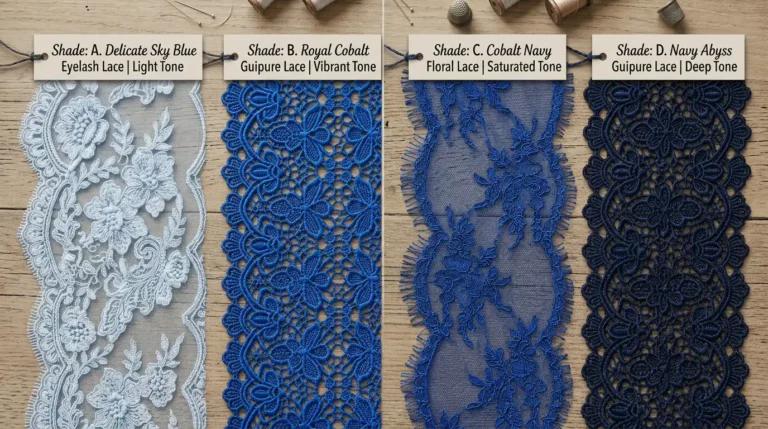
- Colors not quite matching across rolls? Ask whether the tulle was dyed in the same lot. It’s a completely fair question for any mill, and one worth asking before a bulk order rather than after.
⚠️ Warning: Don’t assume “tulle” on a spec sheet means the same construction across suppliers. Bobbinet, warp-knit, and even some woven imitations all get sold under the same name. If hand-feel and drape matter to your line, request a physical swatch before confirming yardage — a photo won’t tell you what your hand will.
What to ask a mill if you’re sourcing for a product line
- Bobbinet or warp-knit?
- What’s the mesh size, and is it held consistent roll to roll?
- What’s the exact fiber — not just “synthetic,” but nylon vs. polyester specifically?
- Is dyeing done in-house or outsourced? In-house dyeing generally means tighter color control across a production run and fewer surprises when roll two doesn’t quite match roll one.
Sustainability and Alternatives
Tulle’s environmental footprint depends almost entirely on which fiber you’re looking at. Polyester and nylon tulle are petroleum-derived and, left alone, about as biodegradable as any other synthetic textile — which is to say, not very. The more encouraging development in recent years is recycled-content tulle, typically polyester rewoven from post-consumer plastic, and it’s become common enough that it’s worth asking for by name rather than assuming standard tulle is the only option on offer.
If recycled content matters to your brand, the practical way to verify it — rather than taking a supplier’s word for it — is to ask whether the recycled polyester is certified under a recognized standard like the Global Recycled Standard (GRS), which audits the chain of custody from recycled input through to finished fabric. A GRS claim on a hangtag means something specific and checkable; “eco-friendly tulle” on its own doesn’t mean much of anything.
Natural-fiber tulle (silk, cotton) biodegrades more readily at end of life, but that comes with its own tradeoffs — silk production carries its own water and land footprint, and cotton tulle, as covered above, isn’t the sturdiest choice for structural applications anyway.
When to reach for something other than tulle: if you need opacity rather than sheerness, organza gives a stiffer hand and a different kind of shine. If you want drape without any mesh texture, chiffon is the closer match. And if the mesh itself needs to carry embroidery or appliqué at scale, a slightly heavier lace-base mesh often holds stitching better than fine tulle does.
FAQs
What is tulle fabric made of?
Most tulle today is nylon or polyester, with silk and cotton versions available for higher-end or natural-fiber applications. Fiber affects softness and cost; the construction method (bobbinet vs. warp-knit) affects hand-feel and price just as much, if not more.
What’s the difference between tulle and netting?
Netting is the broader category — tulle is the fine, low-denier end of it. If a fabric is described as “tulle,” expect a finer mesh and lighter hand than generic craft-store netting, which tends to run stiffer and more visibly gridded.
Is tulle the same as organza?
No, and this trips people up constantly. Organza is a woven fabric — solid, not meshed — usually from silk or polyester, with a crisp, almost paper-like hand and visible shine. Tulle is netted and sheer. They get swapped in casual conversation because both show up in bridalwear, but they behave completely differently under a needle and on a body.
Does tulle fray when you cut it?
Generally, no — that’s one of its most useful properties, since the knotted or twisted mesh structure locks the cut edge in place without unraveling. Cotton tulle is the exception; it frays more than synthetic versions and benefits from a finished edge on garments that will see real wear.
Can tulle be washed at home?
Most synthetic tulle can be hand washed in cool water. Skip the washing machine where possible — agitation distorts the mesh — and never put it in a dryer or under a hot iron, since synthetic fiber glazes or melts under direct heat. A steamer is the safer tool for wrinkles.
Is tulle stretchy?
Barely, and it shouldn’t be relied on for stretch. Warp-knit tulle has slightly more give across the mesh than bobbinet does, but neither substitutes for an actual stretch mesh or power net if the application needs real recovery. Tulle earns its place for volume and sheerness, not elasticity.
What should I ask a supplier before ordering tulle in bulk?
At minimum: whether it’s bobbinet or warp-knit, the mesh size and whether it’s held consistent roll to roll, the exact fiber content, and how dye-lot matching is handled across a production run. If sustainability claims matter to your brand, ask for certification, not just a description on a spec sheet.