What Is Velvet Fabric? Construction, Types, Nap and How to Buy It
Brush a hand across velvet one way and it turns lighter; brush it back and it turns dark again, even though nothing about the color has changed. Velvet is a fabric with a short, dense, evenly cut pile standing up from a base fabric, and that pile, not the fiber, is what makes it velvet: it can be silk, cotton, viscose, polyester or nylon. This guide is for apparel buyers, small-batch manufacturers and designers who need to specify, cut or source velvet, and it explains how velvet is made, how it differs from velour and velveteen, and what to check before ordering.
The short version: “velvet” names a structure. Fiber content, base construction and finish decide how a particular velvet drapes, stretches, wears and photographs, so two fabrics sold as velvet can behave very differently.
How Velvet Is Made
Traditional velvet is woven. It is unusual because the pile comes from an extra set of warp yarns, the lengthwise threads, rather than from the base fabric.
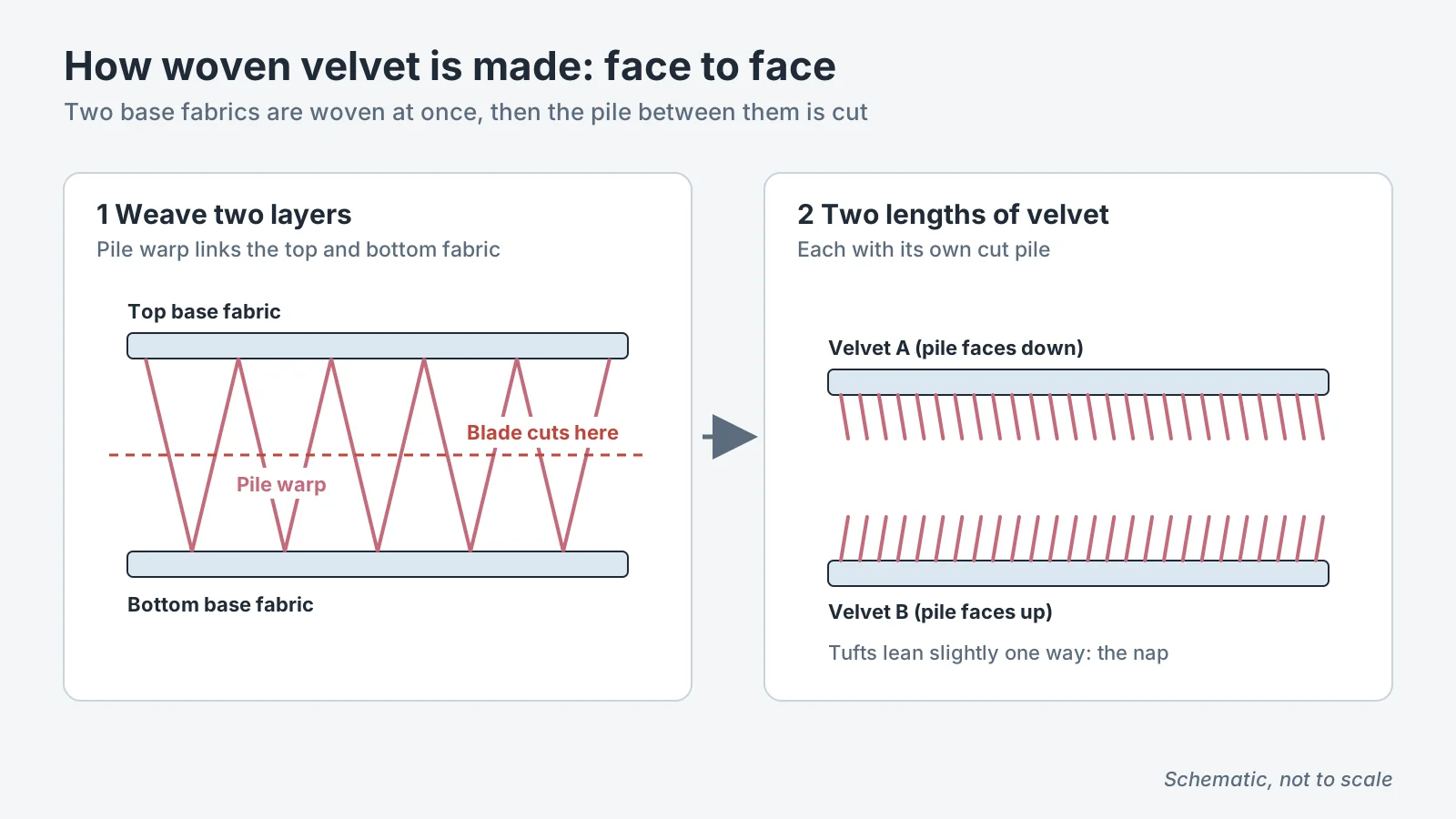
Most woven velvet today is made face to face. A loom weaves two base fabrics at once, one above the other, while an extra pile warp travels up and down between them. A blade then slices through the pile yarns in the middle, separating two lengths of velvet, each with its own cut pile. The older method weaves the pile warp over wires or rods and cuts the loops as the wires are withdrawn; it is slower and now mostly used for specialist and furnishing velvets.
Two details follow from this construction:
- The pile has a direction, called the nap. Each tuft leans slightly one way after cutting and finishing, which is why velvet looks lighter or darker depending on the angle.
- The base fabric does the structural work. Pile adds softness and depth, but strength, stability and stretch come from the ground weave or knit underneath.
Knitted velvet and stretch velvet
Many velvets sold for apparel are not woven at all. They are pile knits: the pile is knitted into a stretchy base, often with elastane (spandex) in the yarn mix. These are usually sold as stretch velvet, or as velour when the pile is longer and less dense. Knitted velvets drape and stretch more easily and suit bodysuits, slip dresses and fitted eveningwear; woven velvets hold a crisper line for jackets, structured gowns and upholstery. Our guide to stretch fabric explains why knit structure and elastane content change recovery so much.
💡 Pro Tip: Ask the supplier whether the velvet is woven or knitted before anything else. It changes how the fabric cuts, how much it stretches and which needle and seam you’ll need.
What Velvet Is Made Of
Velvet can be made from almost any fiber. The fiber changes the luster, hand-feel, weight, care and price far more than the word “velvet” suggests.
| Fiber | Typical look and feel | Strengths | Trade-offs |
|---|---|---|---|
| Silk | Fluid drape, soft deep luster | Lightweight; the historic luxury velvet | Expensive; marks and water-spots easily; usually dry clean |
| Viscose / rayon | Liquid drape, high sheen | Rich color, moves well in eveningwear | Pile crushes easily; can shrink or distort when wet |
| Cotton | Matte, firmer hand | Breathable, more casual look | Heavier; less sheen; can fade on fold lines |
| Polyester | Bright or matte, varies with finish | Durable, crush-resistant, lower cost | Less breathable; can look flat or plasticky in cheaper grades |
| Nylon (polyamide) | Smooth, resilient pile | Good abrasion resistance and recovery | Can show static; heat-sensitive when pressing |
| Blends with elastane | Depends on base fiber | Stretch and recovery for fitted garments | Recovery fades if overheated in washing or pressing |
Silk velvet is often a blend: a silk base with a viscose pile is common, so read the fiber percentages rather than the name. If you are comparing the cellulosic options, our guides to viscose fabric and polyamide fabric cover how each fiber behaves on its own.
Common Types of Velvet
The pile can be cut, crushed, pressed, burned out or left in loops, and each treatment has its own name. These are the ones buyers meet most often:
- Plain or classic velvet: upright, even pile; the reference look.
- Crushed velvet: pile twisted or pressed in random directions while wet, giving a mottled shimmer that hides pressing marks well.
- Panne velvet: pile pressed flat in one direction for a high-shine surface; often a knit in modern apparel.
- Stretch velvet: knitted velvet with elastane for close-fitting garments.
- Devoré (burnout) velvet: a chemical paste dissolves the pile in a pattern, leaving sheer areas of base fabric. It needs a pile fiber that dissolves (usually viscose) on a base that doesn’t (often silk or polyester).
- Embossed velvet: a heated roller presses a pattern into the pile.
- Chiffon or light velvet: a short pile on a fine, sheer base for soft drape.
- Ciselé velvet: cut and uncut loops arranged to form a pattern.
Velvet vs Velour vs Velveteen
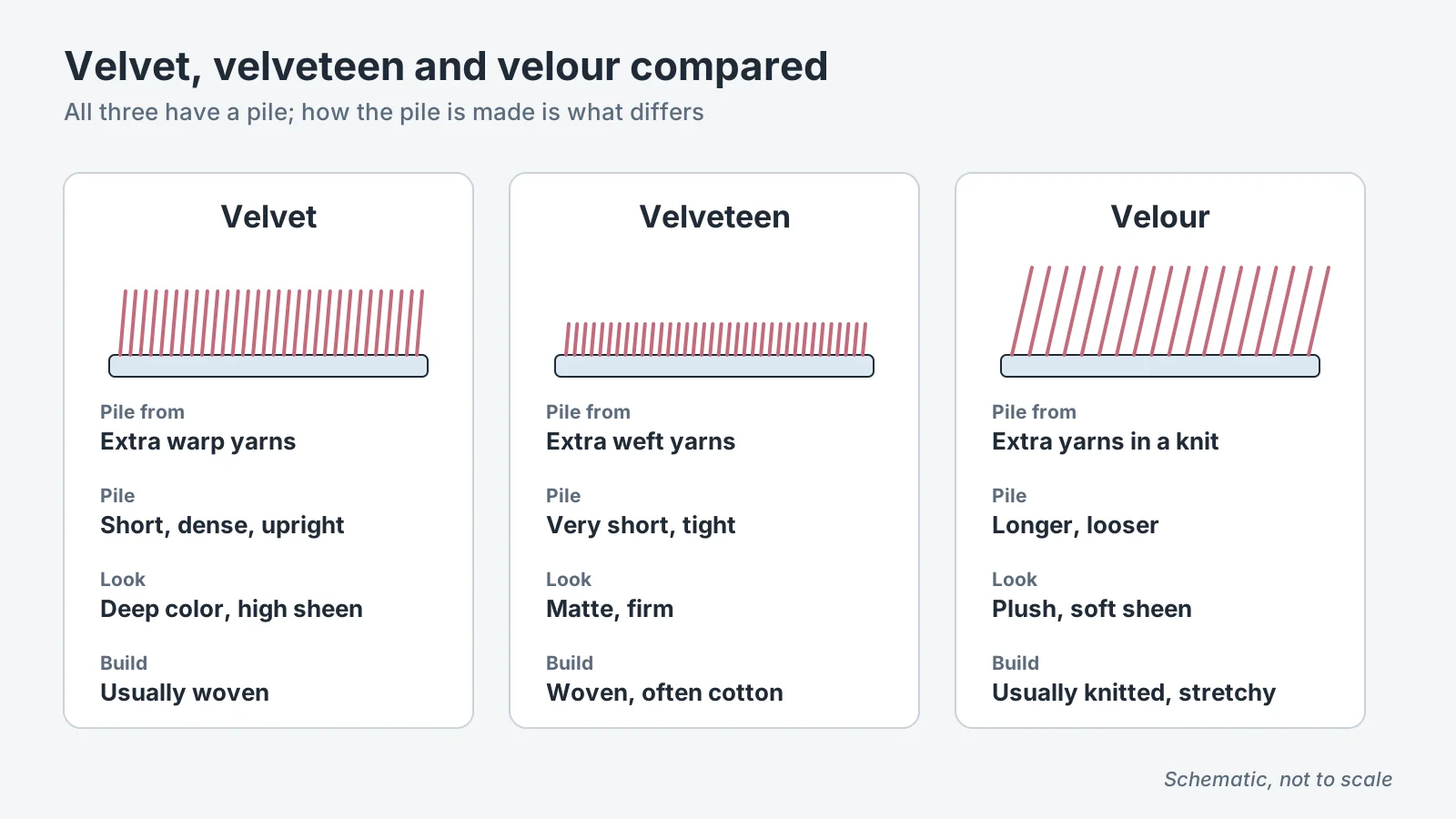
These three get confused because they all have a soft pile. The difference is how the pile is made.
| Velvet | Velveteen | Velour | |
|---|---|---|---|
| Construction | Usually woven; pile from extra warp yarns (or knitted, for stretch velvet) | Woven; pile from extra weft yarns | Knitted (sometimes woven); pile from extra yarns in the knit |
| Pile | Short, dense, upright | Very short, tight | Longer, looser |
| Look | Deep color, strong sheen | Matte, low sheen | Soft sheen, plush |
| Drape | Fluid to structured, depending on base | Firm, holds shape | Soft and stretchy |
| Typical fiber | Silk, viscose, polyester, nylon | Cotton | Cotton, polyester blends |
| Typical uses | Eveningwear, bridal accents, jackets, upholstery | Children’s wear, jackets, trousers | Loungewear, tracksuits, robes |
As a working rule: if it has strong sheen and drapes, it is probably velvet; if it is matte, firmer and cotton, velveteen; if it is plush and stretches easily, velour. Corduroy sits nearby too: it is also a weft-pile fabric, but its pile is cut into ridges (wales) rather than left as an even surface.
Pile Direction: The Detail That Decides Cutting and Yardage
Nap is velvet’s biggest production issue. Pieces cut in opposite directions look like two different shades once sewn side by side, so every piece of a garment must face the same way.
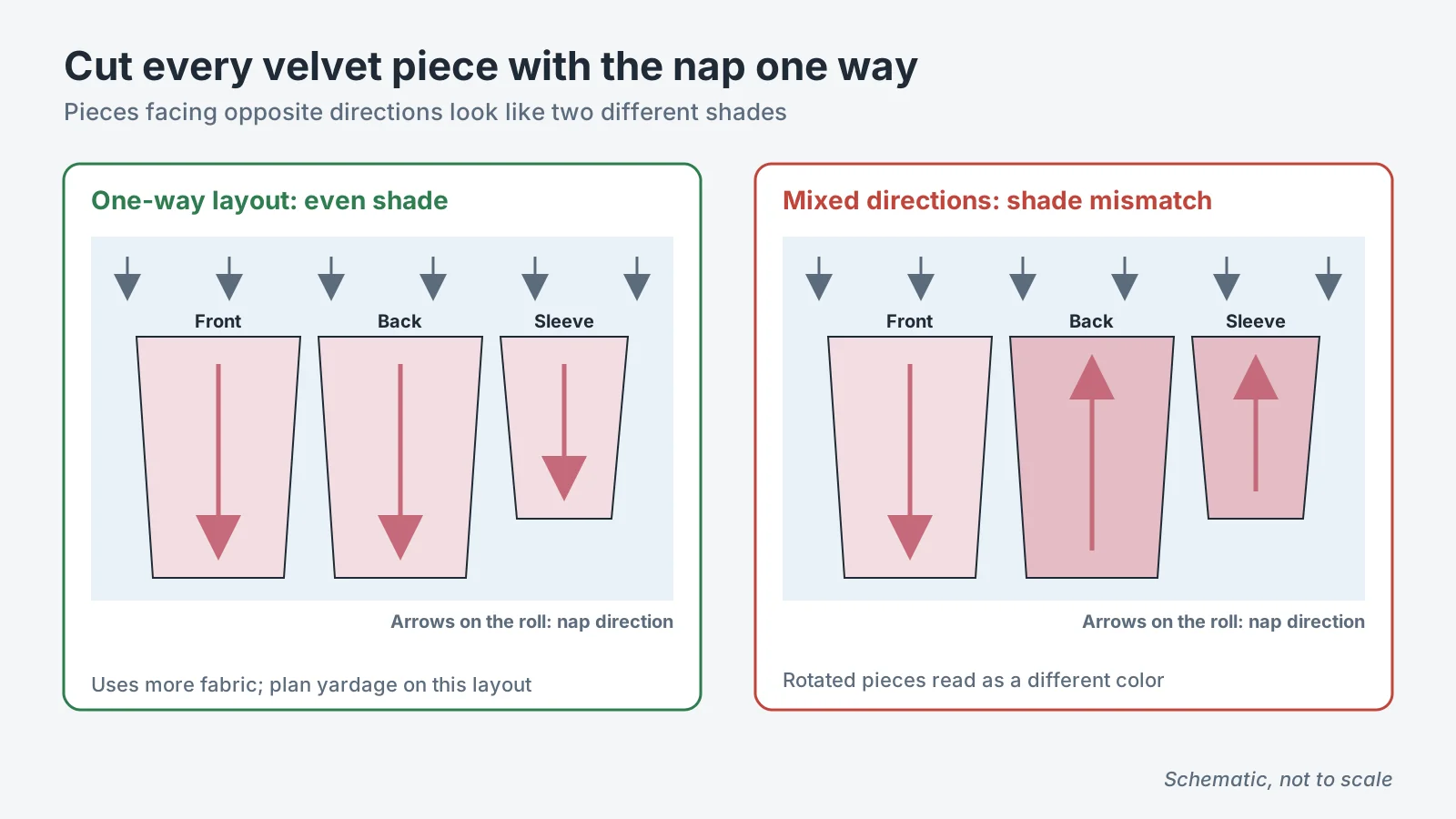
Pile up or pile down? With the pile running up the garment (brushing up feels rough), velvet looks darker and richer. With the pile running down (brushing down feels smooth), it looks lighter and more silvery, and it tends to wear and shed less. Neither is wrong; pick one, mark it on every pattern piece, and keep it the same across a style and across reorders.
What this means for buyers and cutting rooms:
- Use a one-way (nap) layout. You can’t rotate pieces to nest them, so velvet usually needs more fabric than the same garment in a non-directional fabric. Calculate yardage from a nap layout, not a standard marker.
- Mark the nap on the roll and on the spec. Ask the supplier to mark pile direction on each roll, and state it on your purchase order.
- Check shade across rolls with the nap aligned. Comparing two rolls with their naps facing opposite ways will make a good match look wrong, and a bad match look acceptable.
⚠️ Warning: Don’t approve velvet color from a photo or a single swatch held at one angle. Lay the swatch flat, view it from both ends under the same light, and approve the shade with the nap direction you’ll actually use.
Sewing and Finishing Velvet
Velvet’s pile makes the layers creep against each other under a presser foot. A few habits prevent most problems:
- Cut single layer, pile side down, following the nap marks; fold-and-cut doubles the risk of shifting.
- Use a walking foot or reduce presser-foot pressure, and hand-baste or pin within seam allowances only, since pins can leave marks in the pile.
- Use the right needle: a sharp or microtex needle for woven velvet, a ballpoint or stretch needle for stretch velvet.
- Press from the back over a needle board or a spare piece of velvet, pile to pile, with steam held just above the fabric. Pressing velvet flat on an ironing board crushes the pile permanently.
- Seam finishes: woven velvet frays and sheds at cut edges, so overlock or bind them; stretch velvet usually needs no finishing beyond a stretch-friendly seam.
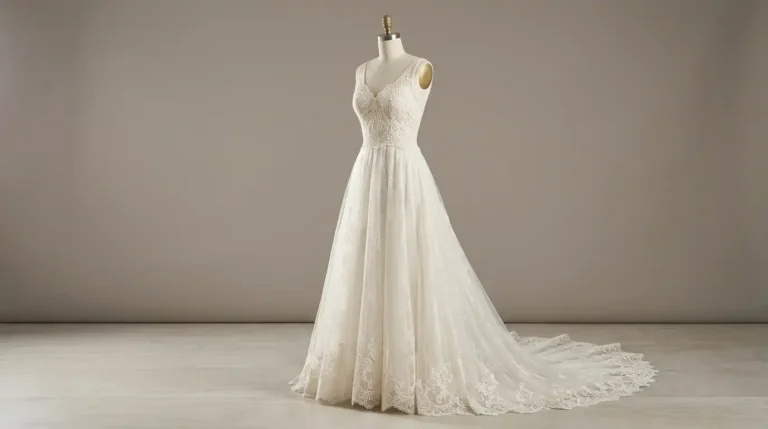
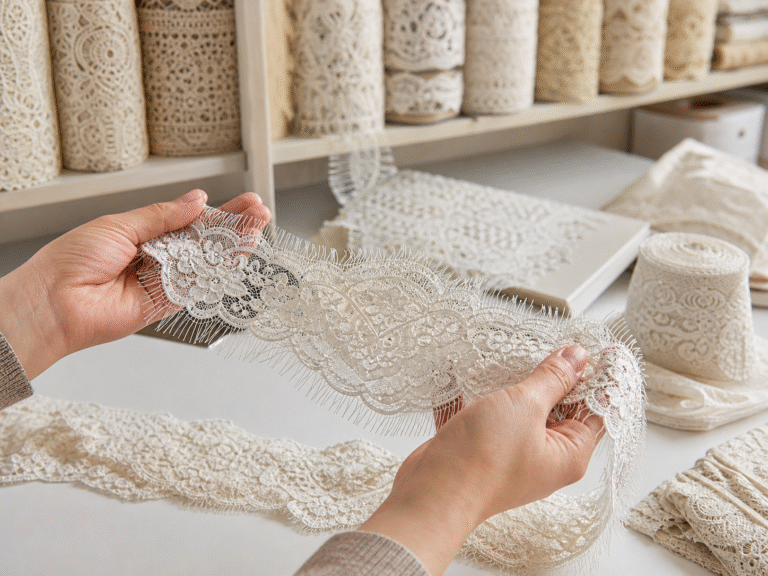
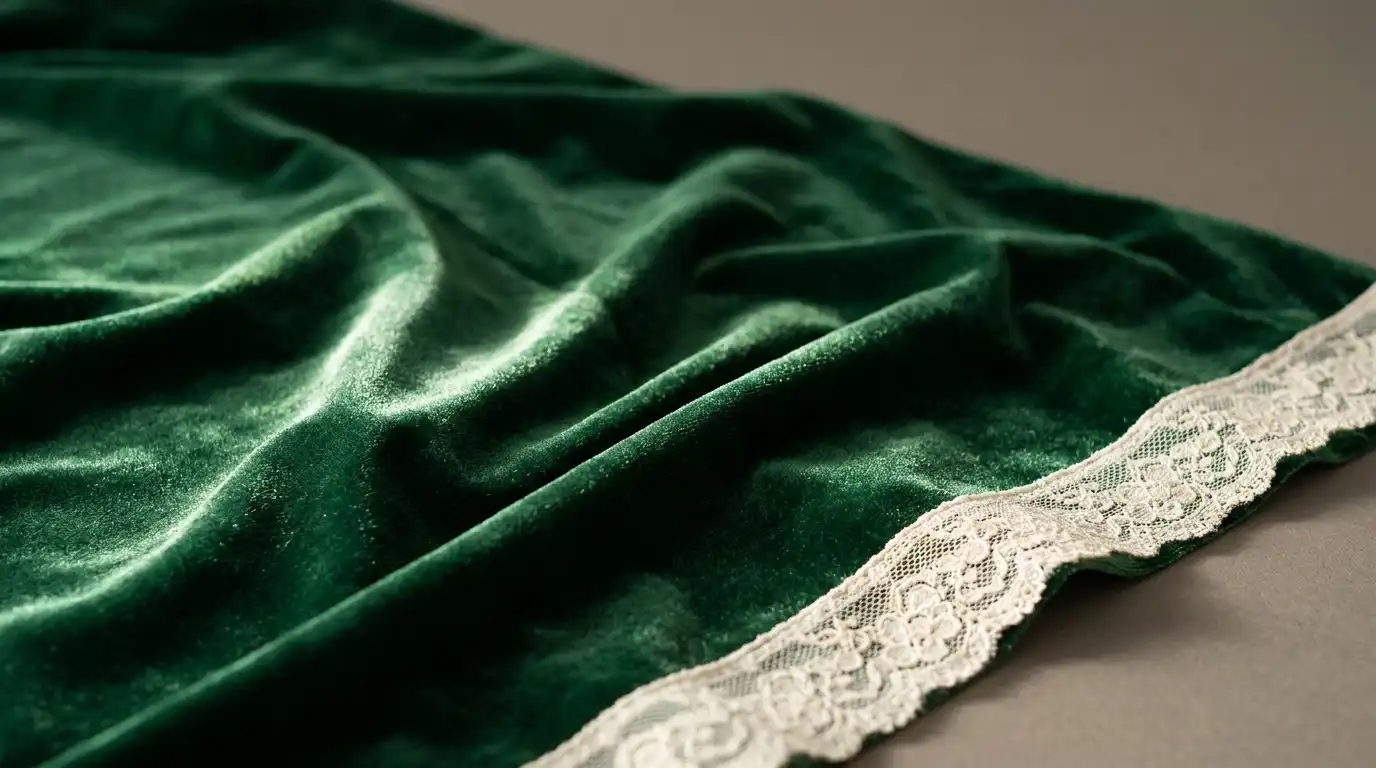
Velvet is often combined with lace in eveningwear, bridal accents and lingerie, for example lace sleeves on a velvet bodice, or a lace trim along a velvet slip. Because the two fabrics are made by different mills and dyed in different lots, approve their shades together under the same light. If you’re adding lace trim to velvet, our step-by-step guide on sewing lace trim onto fabric covers stitching and placement.
Caring for Velvet
Care depends on fiber, so follow the label first. In general:
- Silk, viscose and many woven velvets: dry clean, or spot clean with care. Water can leave marks and flatten the pile.
- Polyester and stretch velvets: many can be washed gently in cold water, inside out, and laid flat or hung to dry.
- Wrinkles and crushed pile: steam from the back or hang the garment in a steamy bathroom; brush the pile lightly in the direction of the nap once dry.
- Storage: hang on padded hangers with space around the garment. Folding and pressure leave marks that can be hard to lift.
Is Velvet Sustainable?
It depends almost entirely on the fiber. Polyester and nylon velvets are petroleum-based, though recycled versions exist; if a supplier claims recycled content, ask for certification under the Global Recycled Standard (GRS). Viscose velvets come from wood pulp, so where the pulp is sourced matters; that is what initiatives like Canopy’s Hot Button ranking assess for viscose producers. For any velvet worn against skin, an OEKO-TEX Standard 100 certificate shows the finished fabric was tested for harmful substances.
On labels, remember that “velvet” isn’t a fiber. In the US, garments must list the actual fibers by percentage under the FTC’s Textile Act rules (16 CFR Part 303), so a velvet dress is labeled something like “82% polyester, 18% elastane”, not “velvet”.
What to Put on a Velvet Spec Sheet
Because “velvet” covers so many fabrics, write down the details that decide performance:
- Woven or knitted, and the velvet type (plain, crushed, panne, stretch, devoré)
- Fiber content of pile and base, in exact percentages
- Weight (g/m²) and usable width (cm)
- Pile height or density, if your supplier specifies it
- Stretch and recovery by direction, for stretch velvet
- Nap direction marked on rolls, and your chosen direction for cutting
- Color standard and the light source for approval
- Required certifications and care instructions
Weights, pile heights and stretch figures vary by mill and finishing, so treat any numbers as the supplier’s own specification and verify them on a physical sample.
FAQ
Is velvet a natural or synthetic fabric?
It can be either. Velvet is a structure, not a fiber, so it can be made from silk or cotton, from semi-synthetic viscose, or from synthetics like polyester and nylon. Check the fiber percentages on the label.
Is velvet warm to wear?
Usually, yes. The dense pile traps air, so velvet feels warmer than a flat fabric of similar weight. Light velvets on sheer bases, and breathable fibers like silk or cotton, feel less warm than heavy polyester velvet.
Does velvet stretch?
Woven velvet has little stretch. Stretch velvet is knitted, usually with elastane, and stretches easily in at least one direction.
Why does velvet look like two different colors?
That’s the nap. Light reflects differently depending on which way the pile leans, so pieces cut in opposite directions look like different shades. Cutting all pieces in the same direction avoids it.
Can you iron velvet?
Not directly. Press from the back over a needle board or another piece of velvet, or steam it without touching the surface. Direct pressure crushes the pile.
Pairing Velvet With Lace
Velvet and lace often end up on the same garment, and the hardest part is making them look like they belong together: matching shade, sheen and weight. Fuyuan Knitting doesn’t produce velvet, but we make the lace fabric and lace trim that often goes with it, and our in-house dye house can dye lace to match a velvet you’ve already chosen. Send us a velvet swatch and we’ll suggest lace to test against it.