What Is Power Mesh Fabric? Specs, Power Net Differences, and How to Choose
Ask three suppliers to quote power mesh, and you may get three weights: 70 GSM, 120 GSM, 230 GSM.
Nobody is lying. The name just isn’t regulated.
This guide is for lingerie, activewear, and swimwear buyers, plus small-batch designers. By the end, you’ll know how to read a power mesh spec, tell it from power net, and match it to a garment.
What Is Power Mesh Fabric?
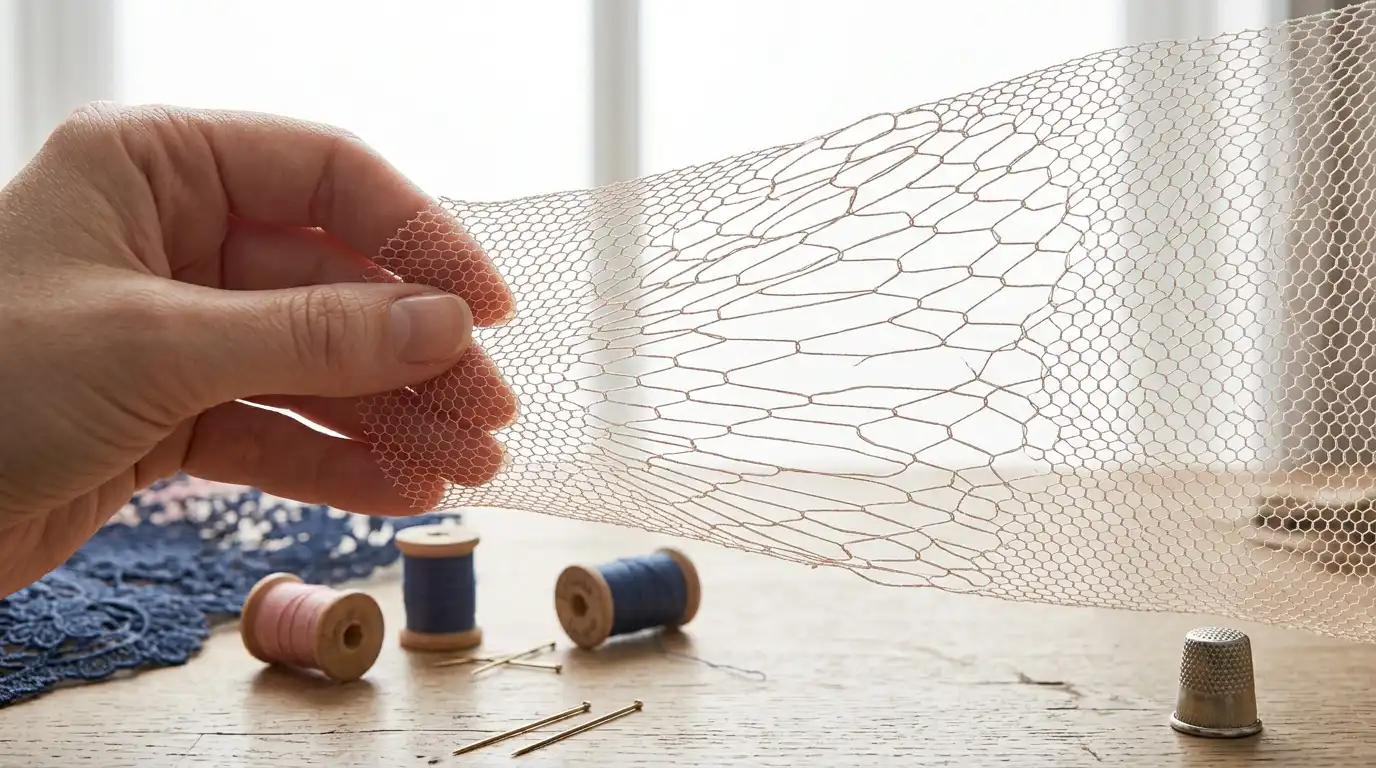
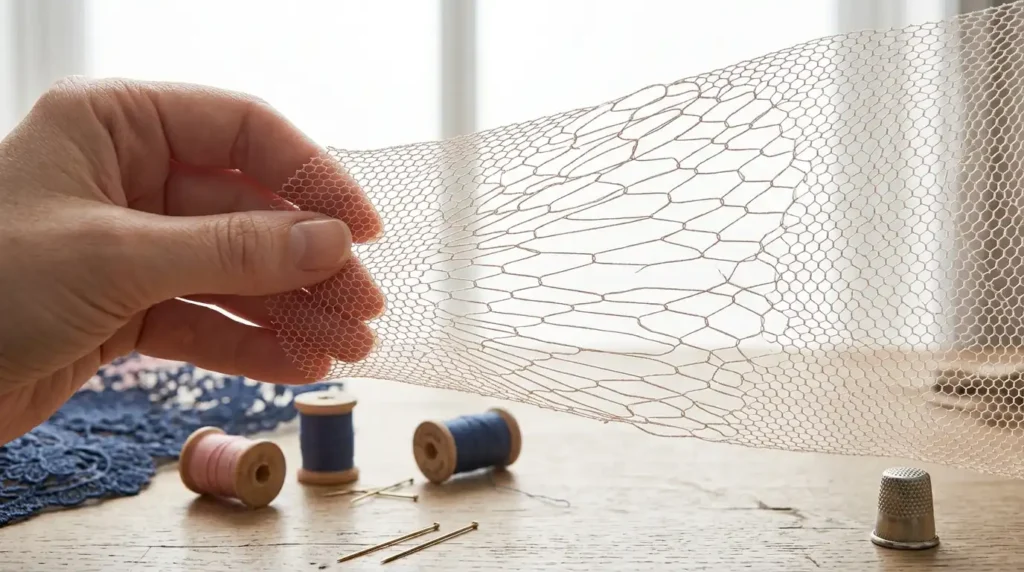
Power mesh is a lightweight, sheer, warp-knitted fabric made from nylon or polyester blended with spandex. It looks like fine netting and stretches in four directions.
It goes by other names too: stretch mesh, compression mesh, and sometimes powernet. None of them is a trademark. They’re trade terms for a mesh with more snap-back than ordinary net.
That snap-back is the point. It’s why power mesh ends up inside bras, waistbands, and shapewear.
The elastic fiber is spandex, also sold as elastane. Our guide to elastane fabric covers how it behaves in a blend.
Power Mesh Specs: Fiber, Weight, Stretch and Width
Most power mesh runs roughly 80–95% nylon or polyester, with the rest spandex. A common rule of thumb: about 10% spandex gives around 20% stretch lengthwise and 30–35% crosswise.
Treat that as a starting point. Weight, spandex share, and knit density don’t move together neatly.
Here’s how that plays out across our own warp knit mesh range:
| Style | Composition | Weight | Typical use |
|---|---|---|---|
| Fine lining mesh | 85% nylon / 15% spandex | 60 GSM | Soft lingerie lining |
| High-spandex mesh | 68% nylon / 32% spandex | 90 GSM | Sportswear, technical panels |
| General mesh | 95% nylon / 5% spandex | 100 GSM | Panels, linings, light support |
| Shapewear mesh | 75% nylon / 25% spandex | 140 GSM | Firmer shaping panels |
| Performance mesh | 90% nylon / 10% spandex | 160 GSM | Activewear, technical garments |
Compare the 68/32 row with the 90/10 row. The 68/32 mesh is lighter at 90 GSM, yet it carries three times the spandex of the 160 GSM mesh. Weight alone tells you almost nothing about stretch.
Width is simpler. Most power mesh comes in at roughly 150–160 cm, so confirm the cuttable width after finishing.
That’s why quotes drift apart. Listings we reviewed applied the name to fabrics from about 70 to 230 GSM.
Trade convention puts power mesh around 90–150 GSM and power net around 150–220+ GSM. That’s a guide, not a standard, and figures vary by mill and finishing. Our mesh fabric guide lays out the full GSM bands.
💡 Pro Tip: When two quotes disagree, ask each supplier for the spandex percentage and the knit structure. Those two answers usually explain the gap.
How Power Mesh Behaves
Specs only matter if you know what they do on a body. In practice, power mesh behaves like this:
- Breathable. The open holes let heat and moisture escape, so it feels cooler than solid synthetics.
- Strong recovery. Good power mesh returns to shape after repeated stretching, which keeps support zones from sagging.
- Light, but easy to snag. It handles stretch well. It handles zippers, hooks, and Velcro badly.
- Sensitive to heat. High heat weakens spandex, so keep it away from hot dryers and hot irons.
- Not warm. It shapes and supports. It won’t insulate.
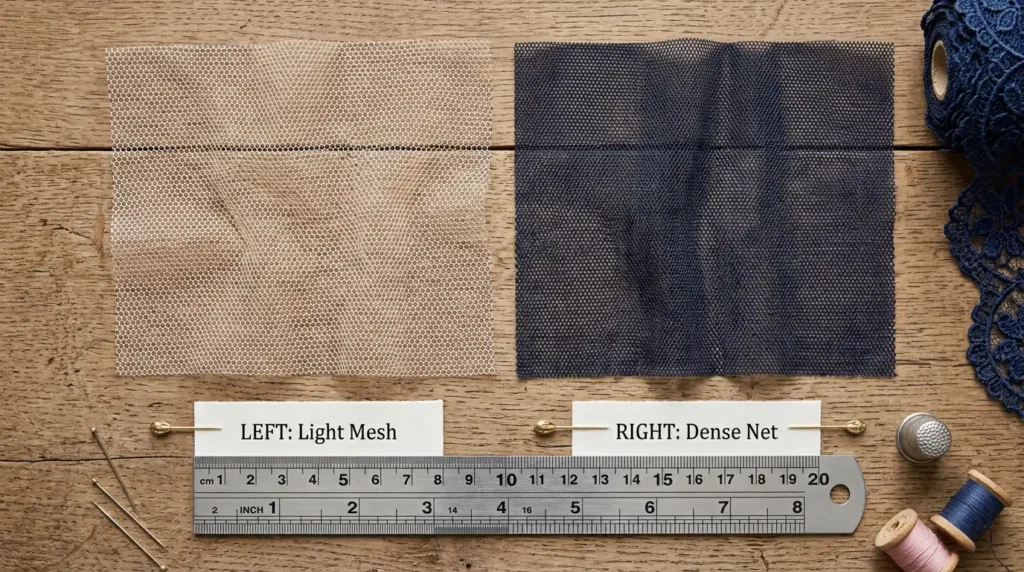
- Sheer, and sheerer when stretched. The holes open under tension, so opacity changes as the fabric moves.
⚠️ Warning: Judge opacity with the mesh stretched, over the actual lining or skin tone. A swatch that looks fine on a table can look very different on a body.
Power Mesh vs Power Net
This is where the naming gets messy. Some sources say power mesh and power net are the same fabric. Others treat them as two.
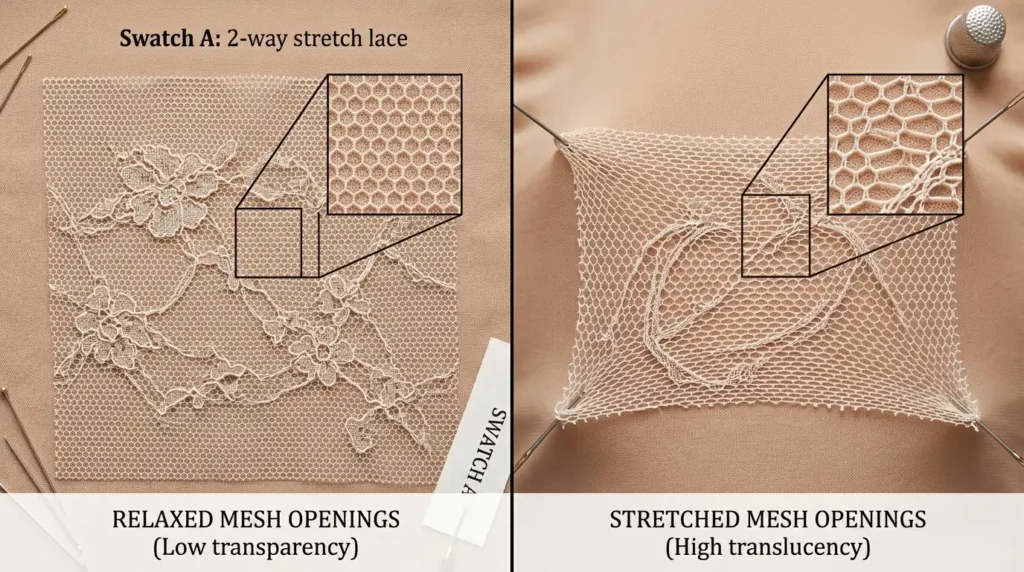
Our read: power net is the heavier, tighter-knit end of the same family.
| Power mesh | Power net | |
|---|---|---|
| Typical weight (trade convention) | ~90–150 GSM | ~150–220+ GSM |
| Knit density | Finer, more open | Tighter, smaller holes |
| Stretch | Higher | Lower |
| Hold | Moderate support | Firm support |
| Hand | Softer | Firmer |
| Typical use | Linings, waistband layers, light shaping | Bra bands, corsetry, high-compression shapewear |
| Machine | Raschel, or tricot for lighter versions | Raschel, since heavy constructions can’t run on tricot |
Don’t try to tell them apart by hole shape. Sources disagree on whether power net holes are square, rectangular, or hexagonal.
If a quote says “power net,” expect firm. If it says “power mesh,” ask which end of the range it means.
⚠️ Warning: Nobody polices these names. Confirm by GSM, spandex percentage, and stretch, never by the label alone.
Power Mesh vs Tulle and Other Mesh Fabrics
Plenty of “net” fabrics look alike on a screen. They behave very differently.
| Fabric | Stretch | Hand | Built for |
|---|---|---|---|
| Power mesh | High, 4-way | Soft to medium | Support and shaping |
| Standard stretch mesh | Moderate | Thinner, more fluid | Light layers, overlays |
| Tulle | Little to none | Crisp | Volume, veils, tutus |
| Bra tulle | Some | Soft, drapey | Cup linings |
| Plain nylon or polyester mesh | Little to none | Varies | Industrial and technical uses |
Tulle is the one buyers confuse most. It’s built for volume, not support, and it has almost no snap-back. Our guide to tulle fabric explains the structure.
Standard stretch mesh sits in between. It’s thinner and more fluid than power mesh, with less rebound.
One buying trap deserves a line. “Metal mesh” sometimes means steel window screening. Fine for a handbag detail. Not for a bra.
Where Power Mesh Is Used
It helps to sort uses by how much support the job needs.
Light support
- Linings inside stretch dresses and skirts
- Illusion and ventilation panels
- Swimwear linings
Medium support
- Inner layers in activewear waistbands
- Sports bra panels
- Dancewear and costume underlayers
Firm support
- Bra bands and wings
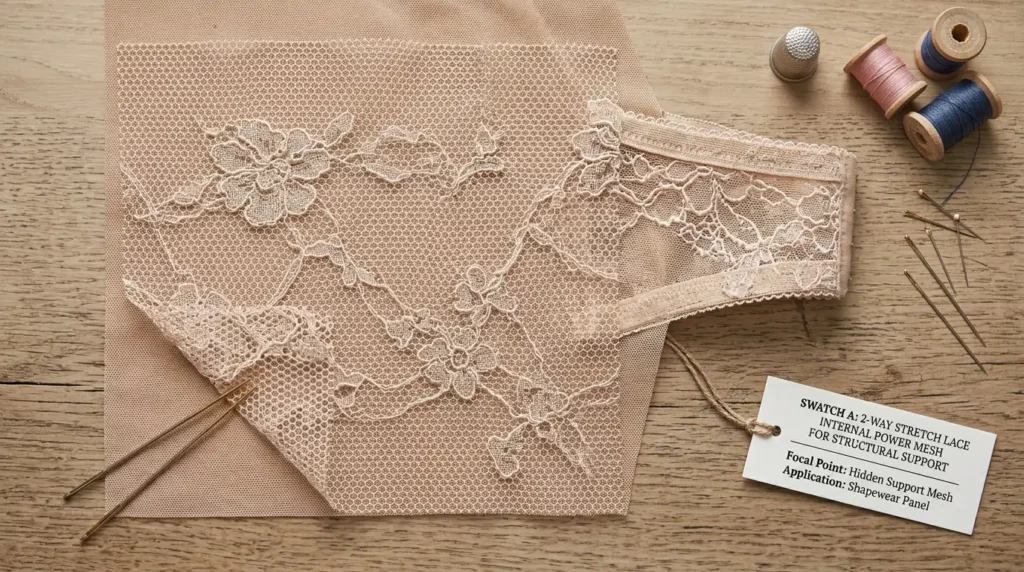
- Tummy-control panels
- Shapewear, where power net is often the better pick
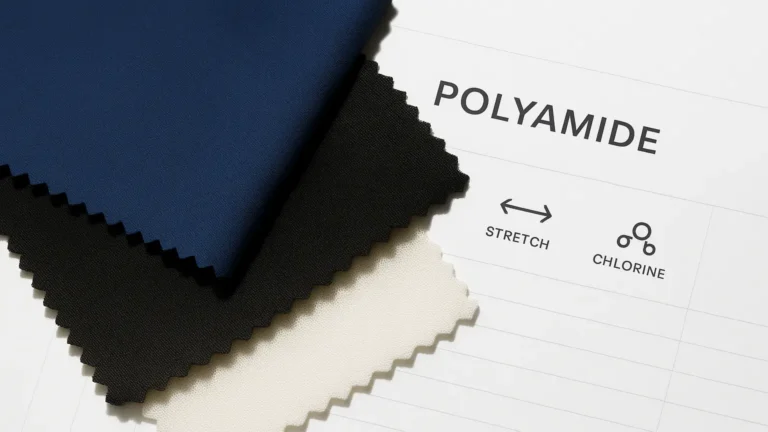
Swimwear needs one extra check: chlorine. Polyester-spandex versions usually handle it better, while nylon-spandex feels softer on skin.
Pros and Cons of Power Mesh
No fabric wins everywhere. Here’s the honest tally.
What it does well
- Breathes better than most synthetics
- Recovers strongly after stretching
- Gives support without bulk
- Resists wrinkling, so it rarely needs ironing
Where it falls short
- Snags on hardware and rough surfaces
- Weakens under high heat
- Sheer, so it often needs layering
- Offers little warmth
- Mostly nylon or polyester, which are petroleum-based
Our view: power mesh is one of the most efficient parts of a garment, as long as it’s matched correctly. Failures almost always come from mismatched stretch or the wrong weight, not from the fabric itself.
How to Choose the Right Power Mesh
Work through these in order. Each step narrows the field.
- Define the job. Is it coverage, light support, or firm control?
- Set a weight band. Roughly 60–100 GSM for light layers, 90–150 for power mesh support, and 150+ for power net.
- Choose the fiber. Nylon-spandex feels softer against skin. Polyester-spandex handles chlorine better.
- Match stretch to the outer fabric. The mesh should stretch at least as much as the fabric it supports.
- Check opacity under stretch. Test over the real lining or skin tone.
- Test it in the real construction. Sew it to the actual fabric and elastic, not just a flat swatch.
Step six catches the most problems. Mesh can look stable on a table and still shift under a presser foot. Our guide to mesh sewing trials shows what to check.
For the full spec-sheet approach, including hole size and recovery testing, see our warp knit mesh GSM and stretch guide.
Pairing Power Mesh with Stretch Lace
Power mesh and lace rarely work alone. In most intimates, they split the job.
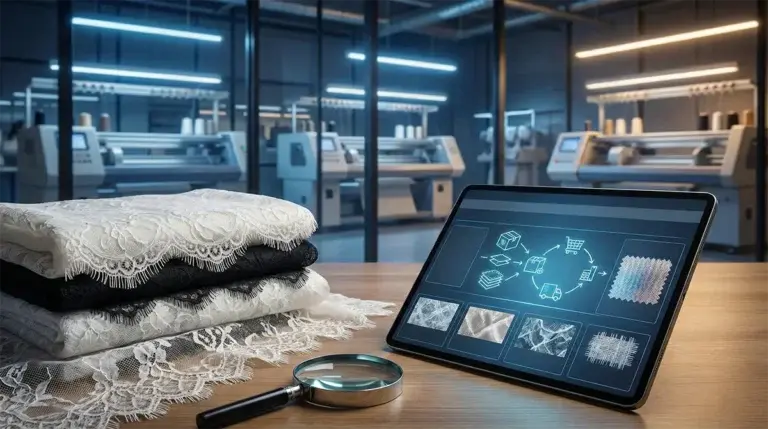
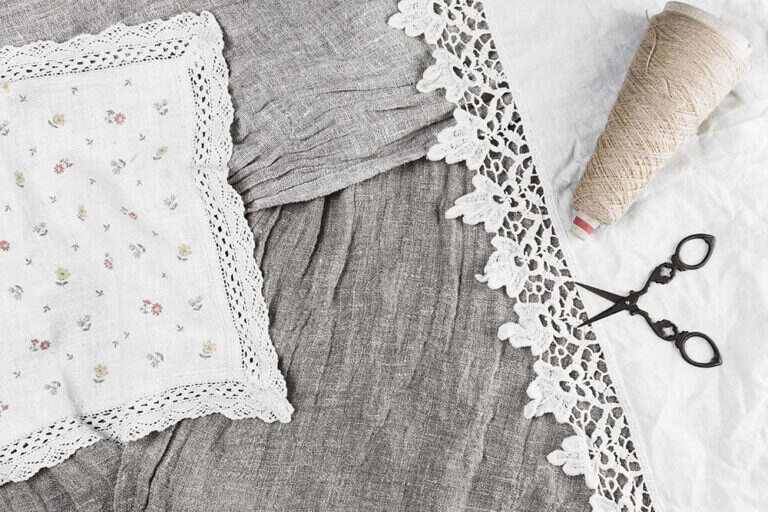
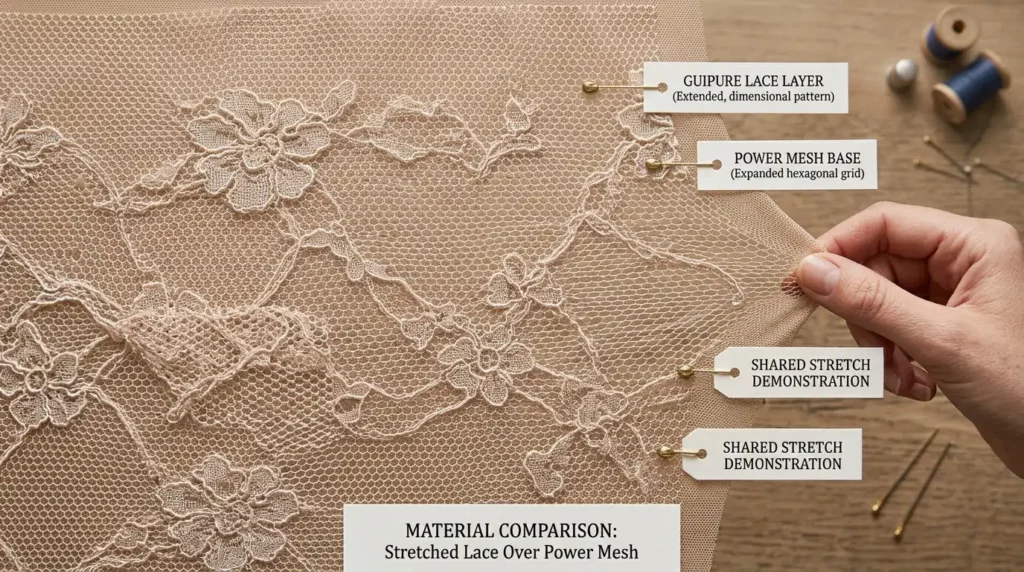
Lace takes the focal points: cups, center panels, decorative edges. Power mesh takes the functional zones: side wings, back bands, linings. Our lace vs. mesh comparison explains the logic behind that split.
Three pairings come up again and again:
- Lace cups with power mesh wings. The lace gets seen. The mesh holds the frame.
- Lace overlay on a power mesh base. The mesh adds support and keeps the lace from sagging.
- Power mesh lining behind lace. Useful in fitted dresses and bodysuits, where lace alone has little hold.
Before you approve any pairing, check three things:
- Stretch direction. Align the mesh’s main stretch with the lace’s, usually around the body.
- Recovery. If one fabric snaps back faster than the other, seams wave and the lace puckers.
- Weight and hand. A heavy power net under delicate lace can feel harsh against skin.
Stretch direction is the one people forget. A non-stretch lace laid over stretch mesh cancels the stretch. The garment only gives as much as the lace does.
Before You Send the PO
Power mesh looks simple. It isn’t. Weight, spandex share, knit density, and the lace it sits next to all change the result.
Fuyuan Knitting runs warp knit mesh production with in-house dyeing, from light linings to firmer shaping weights. One example: our power mesh style is 100 GSM, 95% nylon and 5% spandex, 160 cm wide. The rest of the warp knit mesh range is there to browse.
Send us your garment, the support level you need, and the lace you’re pairing it with. We’ll suggest a mesh weight and spandex share, then send swatches to approve together.