Lace Fabric Shrinkage: How to Test Before Bulk Orders
Lace fabric can look correct when it arrives as a fresh swatch, then behave differently after relaxation, steaming, cutting, or sewing. The issue is not always a dramatic wash shrinkage problem. More often, buyers face smaller changes: edges wave, motifs shift, panels become slightly shorter, or the fabric no longer matches the sample pattern placement after garment construction.
For brands ordering custom lace fabric, shrinkage should be treated as a development check, not a surprise discovered after bulk cutting. This article explains how to review lace fabric shrinkage in a practical way before approving production.
What shrinkage means for lace buyers
In lace sourcing, shrinkage is not only about washing. It can include relaxation shrinkage after the fabric is taken off the roll, steam response during pressing, heat reaction during garment finishing, and shape change after sewing tension. A lace with raised motifs, scalloped edges, or open grounds may respond differently across the width than a smooth knit fabric.
That is why a single percentage is rarely enough. Buyers need to know when the change happens and whether it affects the final product. A small length change may be acceptable for allover lace sold by the yard, but the same movement can create a visible issue when the motif must align at a neckline, sleeve edge, or center front seam.
Let the sample relax before measuring
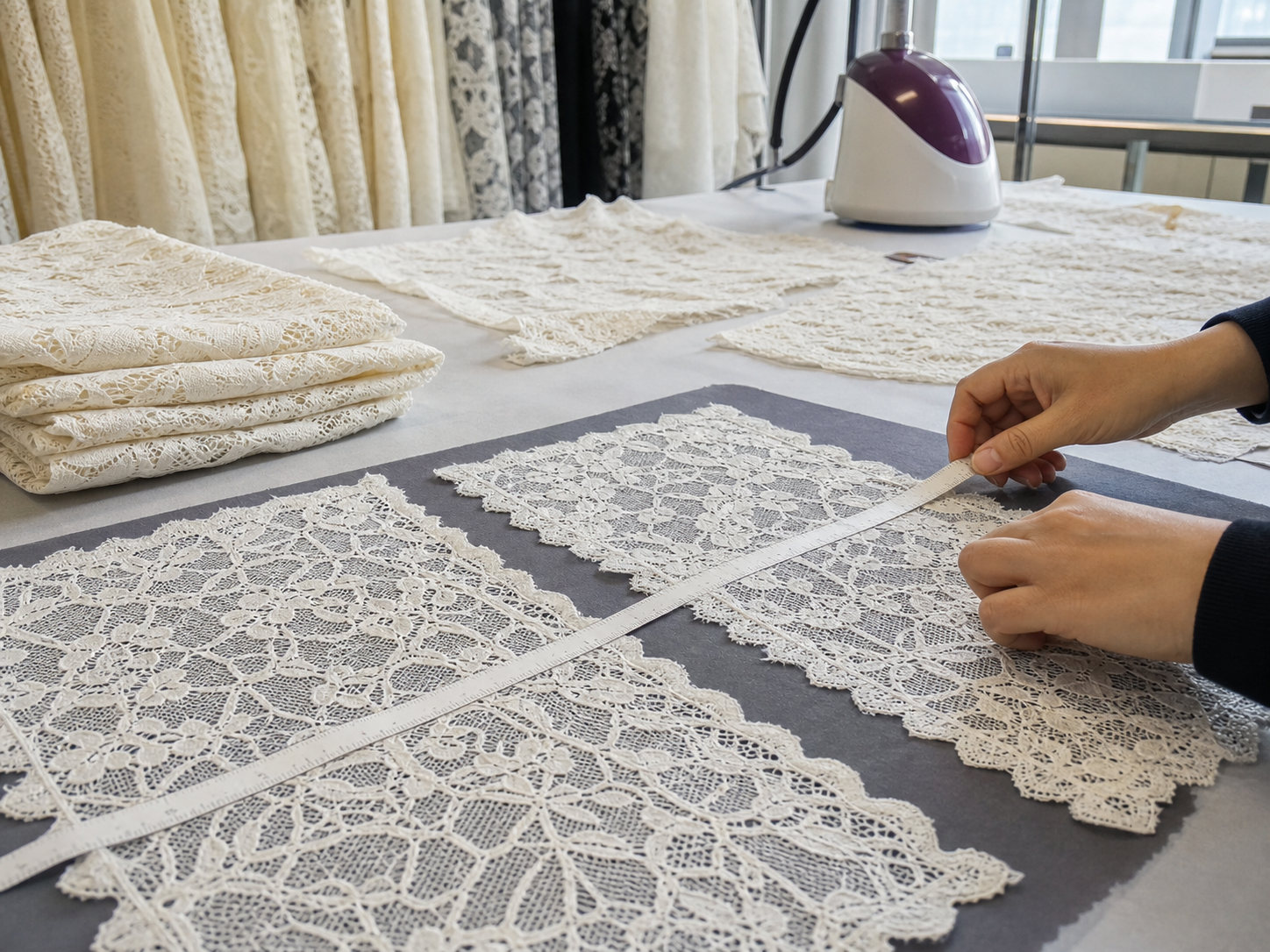
Freshly packed lace can hold roll tension. If the buyer measures it immediately after opening, the result may not represent the fabric after it sits in the cutting room. Before recording dimensions, place the swatch flat and let it relax. For delicate lace, avoid pulling the edges straight by hand because that can hide waviness that will return later.
A practical buyer-side method is simple: mark a measured square or rectangle, let the sample rest, then measure again. The goal is to see whether the fabric releases tension in length, width, or both. If the lace has scalloped borders, check the edge separately because border areas can behave differently from the ground.
This step is especially useful for buyers comparing factory samples from different suppliers. Two lace fabrics may look close in motif and color, but one may relax more after unrolling. That difference can affect yield calculations and cutting markers.
Check steam response before garment sampling
Many lace garments are pressed or steamed during sample making and final finishing. If steam changes the fabric shape, the pattern team needs to know early. Ask the factory to show a small steam or pressing response check, or run a buyer-side test using the same care level planned for the final product.
The test should be gentle and realistic. Overheating a delicate lace swatch may create a problem that would not happen in normal production. The purpose is to learn whether the lace tightens, softens, waves, or changes edge behavior after light steam. If the article is for bridal, eveningwear, lingerie, or decorative panels, also review the appearance after the fabric cools down.
Measure motif placement, not only total size
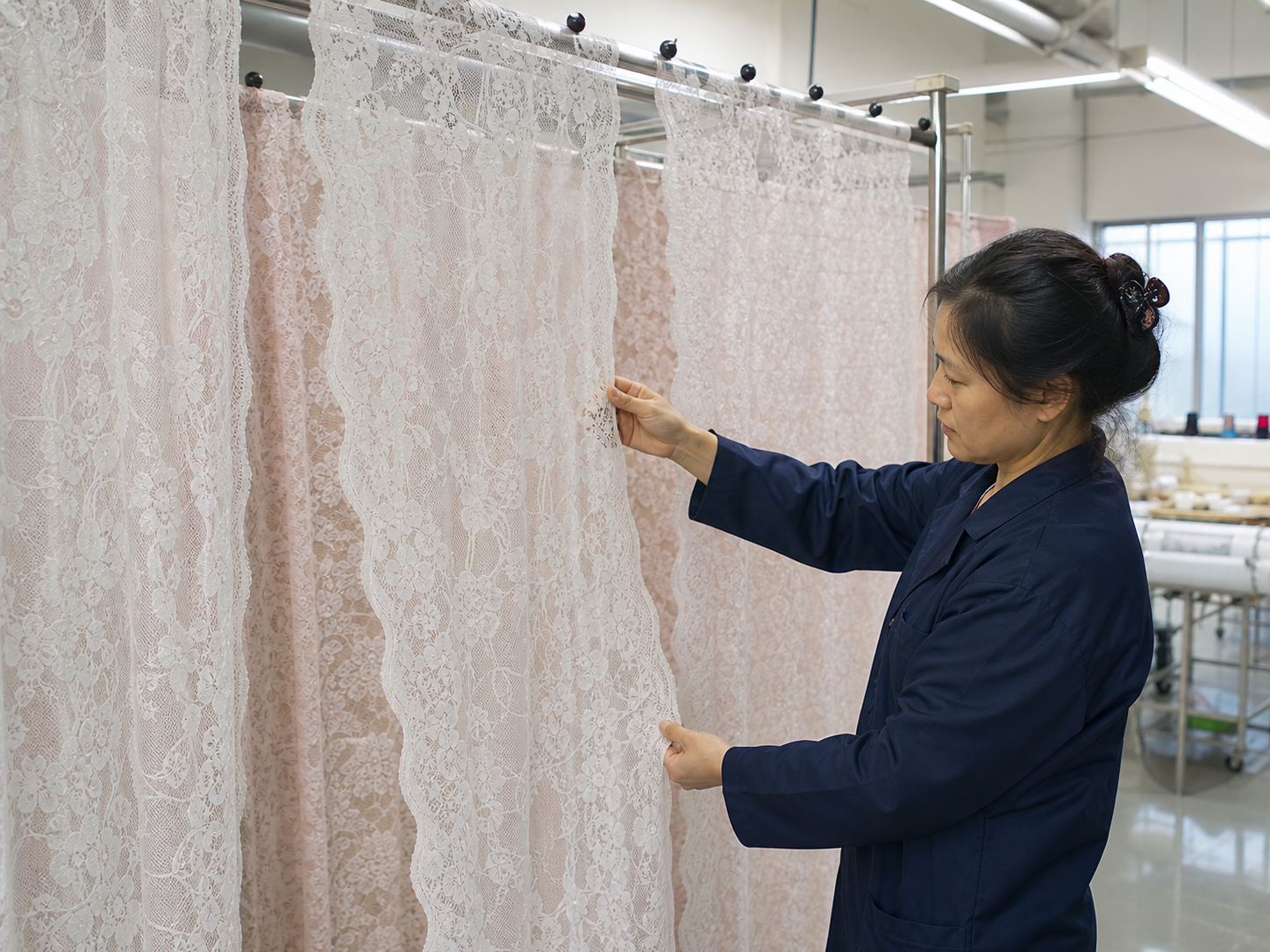
Total shrinkage can look acceptable while motif placement still causes a garment problem. For example, a floral repeat may move just enough that a neckline border no longer sits where the designer expected. A scalloped edge may shorten slightly and make left-right matching harder. An eyelash edge may lose its intended fringe position after relaxation.
When approving floral scalloped lace fabric, mark key motifs before and after the relaxation or steam check. Compare the distance between motifs, the border depth, and the stability of the edge. This is more useful than measuring only a plain square because lace is purchased for its visual structure.
Build a small testing record
| Stage | What to Record | Decision Question |
|---|---|---|
| Before relaxation | Length, width, border depth, motif spacing | Does the fresh sample match the requested quality? |
| After rest | Any release in length or width, edge waviness | Will cutting markers need allowance? |
| After light steam | Surface change, tightening, softening, curl | Is normal pressing safe for this lace? |
| After mock sewing | Seam distortion, motif shift, puckering | Does the fabric work with the planned construction? |
| After final review | Approved tolerance and comments for bulk | Can bulk be cut with the current pattern plan? |
Test sewing tension before bulk cutting
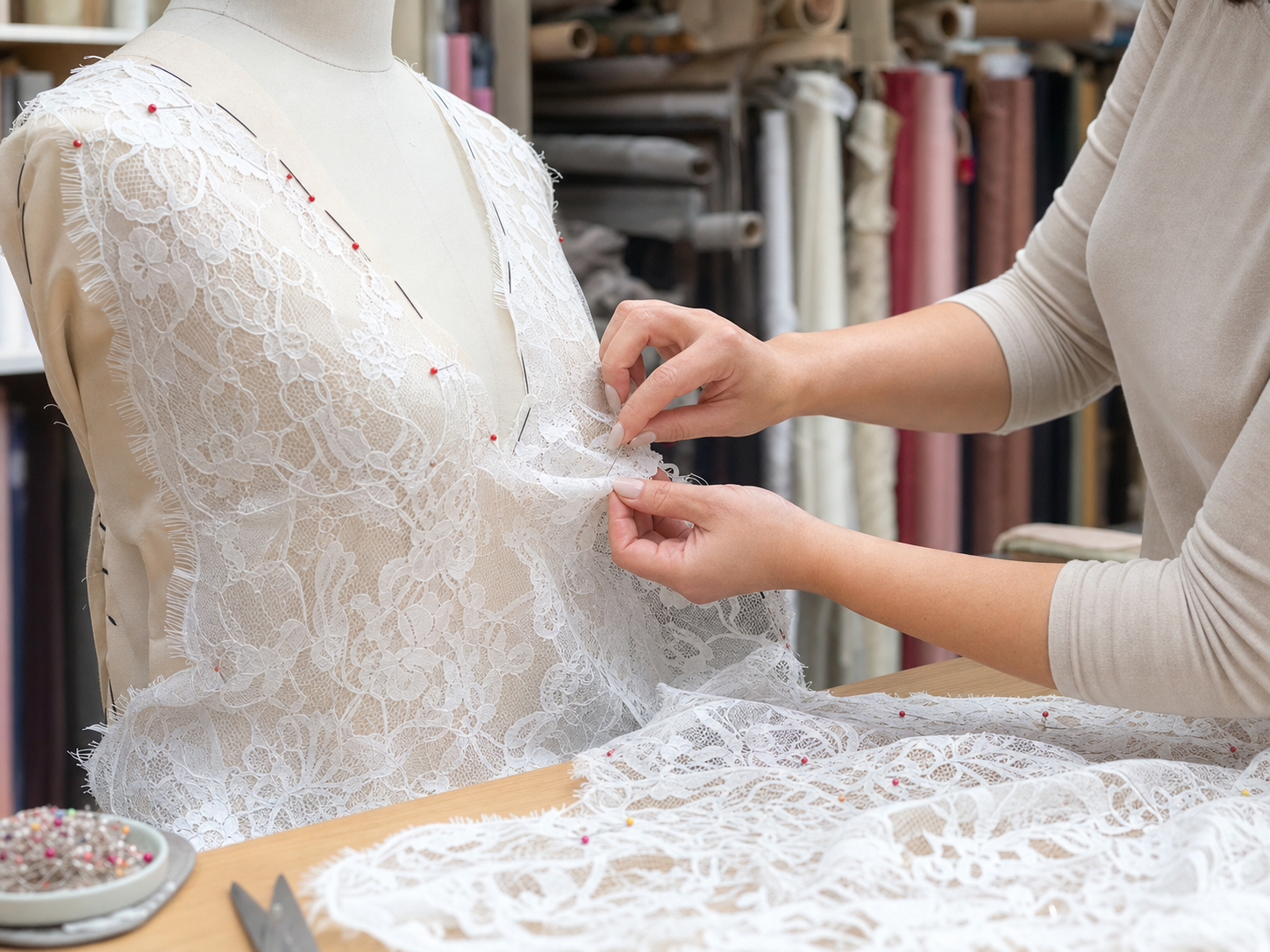
Lace shrinkage often becomes visible when the fabric is sewn to another material. A stable lace swatch may pucker when attached to lining. A soft stretch lace may grow under the presser foot and recover unevenly. A scalloped edge may wave if the sewing tension is too strong.
Before bulk approval, sew a small mock panel using the same lining, seam type, thread, and handling method planned for production. This is not a full garment test. It is a quick way to see whether the lace fabric changes shape during construction. If the panel is for bridal or fashion placement, also check whether the motif still sits correctly after the seam is finished.
Buyers who are new to lace sourcing can also review Fuyuan’s guide on how to source lace fabric from China for the broader supplier communication process. Shrinkage testing then becomes one part of the sample approval package.
Common mistakes in lace shrinkage approval
- Only checking wash shrinkage. Lace may change during relaxation or steam before washing is even relevant.
- Measuring a plain area only. Motifs, borders, and scallops are often where fit and placement problems appear.
- Ignoring edge behavior. Curl, waviness, and fringe movement can affect sewing even when the main fabric size is stable.
- Testing without the final lining. Lace often behaves differently when attached to another fabric.
- Approving photos instead of physical samples. Dimensional change needs direct handling and measurement.
How to brief the factory
When asking for lace fabric by the yard or custom development, include the garment use, lining plan, motif placement requirements, and finishing process. If the garment will be steamed, say so. If scalloped edges must match across panels, make that clear before sampling. The factory can then advise whether the chosen structure is suitable or whether a more stable construction is needed.
If you are sourcing related trims, the same thinking applies to lace trim: width, edge stability, and repeat placement should be reviewed before bulk orders. The earlier these points are discussed, the easier it is to adjust quality, cutting allowance, or sewing method.
Final approval advice
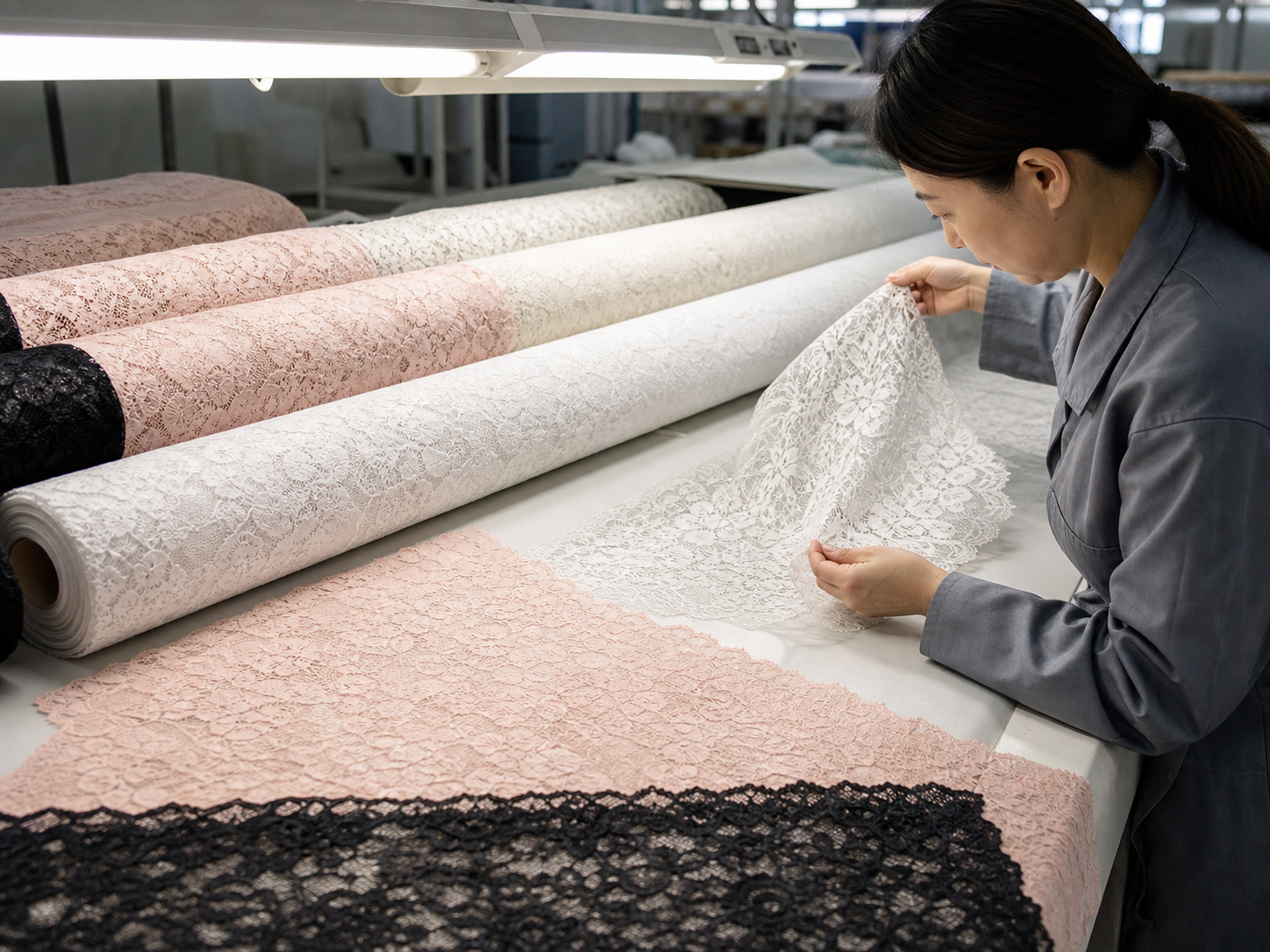
Good lace approval is practical. Measure the sample after rest, check light steam response, compare motif placement, and sew a small mock panel. Keep photos and notes with the approved swatch so the bulk team understands what has been accepted.
A lace fabric does not need to be perfectly motionless to be usable. It needs to behave within a range that the garment pattern, cutting plan, and sewing method can handle. When buyers confirm shrinkage and relaxation early, they reduce the risk of expensive corrections after bulk fabric arrives.