What Is Mohair Fabric? A Complete Guide
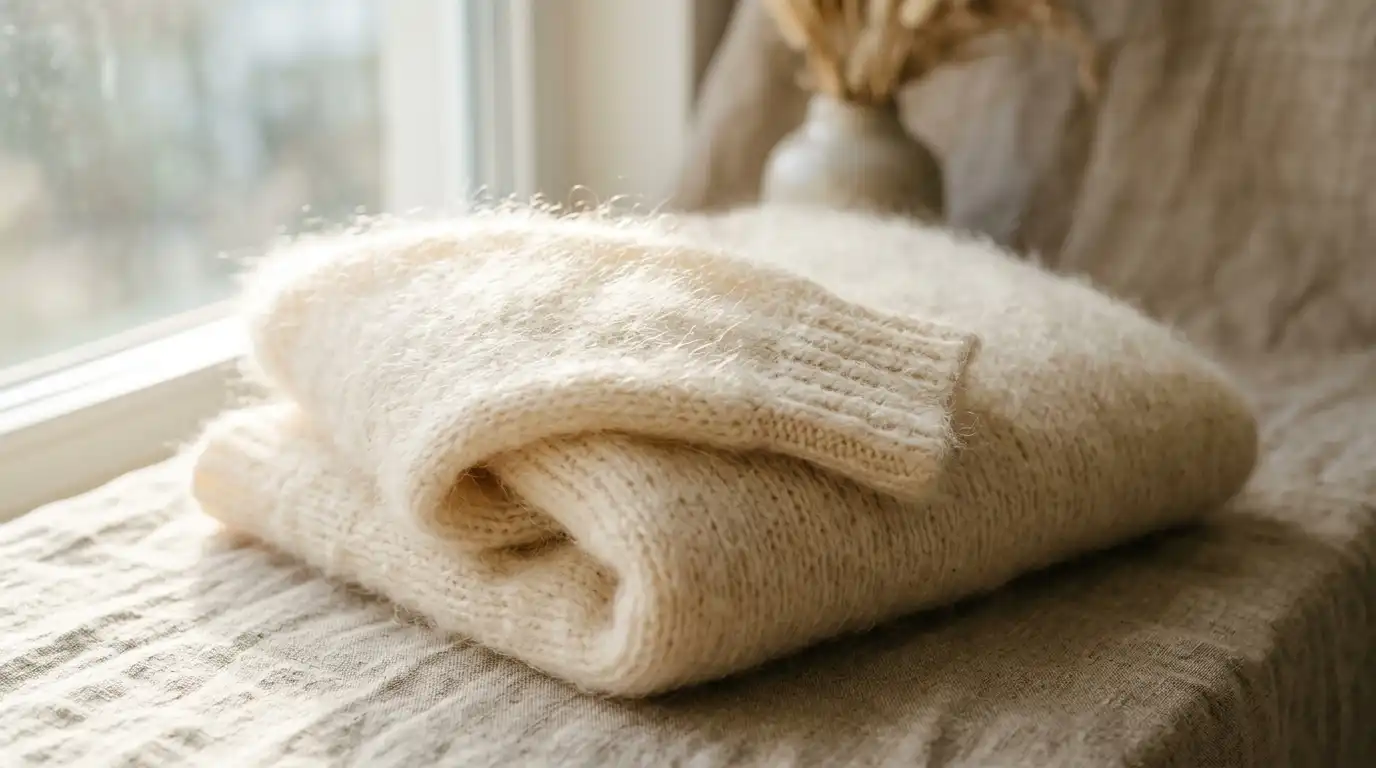
Pick up a mohair sweater and two things happen. First, you notice how little it weighs. Then you tilt it toward the light and the surface seems to shift color, almost like it’s lit from inside. That glow is why the textile trade nicknamed mohair the “diamond fiber” — and why a good mohair piece often costs three times what a wool one does. But the name causes real confusion. Mohair is not angora. It doesn’t come from rabbits or sheep. And a lot of what’s sold as “mohair” online contains no mohair at all. This guide sorts out what the fabric actually is, where it shines, where it falls short, and how to check that you’re paying for the real thing.
What Is Mohair, Exactly?
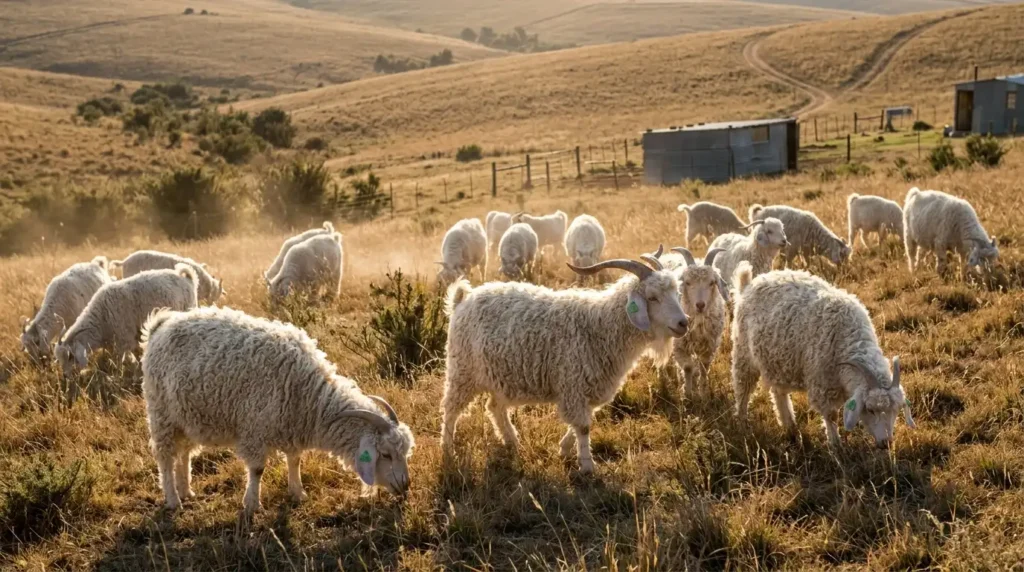
Mohair is the hair of the Angora goat, spun into yarn and then knitted or woven into fabric. Like sheep’s wool, it’s a protein fiber made of keratin, but the two behave differently. Wool fibers are covered in raised scales; mohair’s scales are flatter and lie close to the shaft. That smooth surface is what reflects light so well.
One point trips people up constantly, so let’s settle it early: mohair comes from Angora goats, while angora wool comes from Angora rabbits. Two different animals, two different fibers, one confusingly shared name (both trace back to Ankara, the Turkish city). If a label says “angora,” you’re looking at rabbit hair, not mohair.
The word itself comes from the Arabic mukhayyar, roughly meaning “choice” or “select.” Angora goats are shorn twice a year, and a single goat yields around 5–7 kg of fiber annually — far less than a commercial wool sheep, which partly explains the price.
Where Mohair Comes From
The Angora goat is thought to have originated on the Tibetan plateau before making its way to the Ankara region of Turkey, where it was raised for centuries. Turkey guarded the breed closely and held a near-monopoly on mohair until the mid-1800s, when raw fiber began shipping to English mills and breeding stock spread to other continents.
Today most of the world’s mohair is produced in South Africa’s Eastern Cape, with Texas ranching a distant second and Turkey still producing smaller quantities of notably long fiber. The fabric has had its cultural moments too — in 1960s Britain, shiny wool-mohair “Tonik” suiting became the uniform of the Mod scene, a look that still resurfaces in tailoring today.
What Makes Mohair Special
Mohair earns its luxury status through a specific mix of traits that few fibers combine:
- Natural luster. The flat scale structure reflects light, giving yarn and fabric a soft two-tone sheen that deepens with dye.
- Warm but light. Mohair insulates as well as wool at a noticeably lower weight, and it wicks moisture, so it stays comfortable across a wide temperature range.
- Strong and springy. The fiber resists stretching out of shape, bounces back from creasing, and wears well over years of use.
- It doesn’t felt. Because the scales are underdeveloped, mohair won’t matt into felt the way wool can when washing goes wrong.
- Takes dye beautifully. Pure mohair yarns are known for unusually vivid, saturated color.
- Naturally flame-resistant. Like other protein fibers, it’s hard to ignite and doesn’t melt.
Mohair Grades and Types
Not all mohair feels the same, and the difference is mostly the goat’s age. Fiber diameter (measured in microns) increases as the animal grows, and the industry grades the clip accordingly.
| Grade | Fiber Diameter | Typical Age | Common Uses |
|---|---|---|---|
| Fine kid / kid | 25–30 microns | First shearings, under ~18 months | Soft sweaters, scarves, luxury knitting yarn |
| Young goat | 30–34 microns | ~2 years | Mid-weight garments, suiting blends |
| Fine adult | 35–36 microns | Mature goats | Outerwear, upholstery |
| Adult / strong | 36+ microns | Older goats | Carpets, rugs, heavy furnishing fabric |
Grading ranges based on the classing standards of the Australian Mohair Marketing Organisation (AMMO), aligned with South African industry practice. Source: ausmohair.com.au
Beyond age grades, you’ll see mohair sold in a few distinct forms:
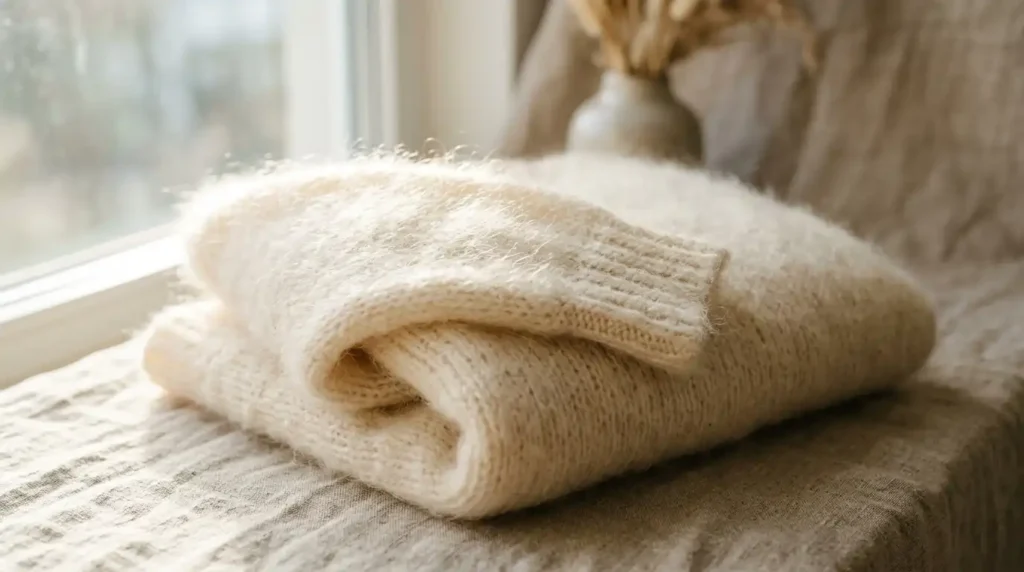
- Brushed mohair — yarn brushed to raise the signature fuzzy halo, common in fashion knitwear.
- Mohair velvet — a dense woven pile fabric, historically the standard for high-end upholstery.
- Mohair blends — mohair mixed with wool, silk, or nylon. This is the norm, not the exception: pure mohair fiber is slippery and hard to spin alone, so nearly every “mohair sweater” is actually a blend. A silk-mohair mix, for instance, pairs the halo with a stable, fine core thread.
Mohair vs Wool, Cashmere, and Angora
How does mohair stack up against the fibers it’s most often confused with?
Against sheep’s wool, mohair is shinier, lighter for the same warmth, and immune to felting — but it has less natural crimp, so it feels crisper and less cushiony. Wool is cheaper and easier to find.
Against cashmere, mohair loses on pure softness; cashmere’s ultra-fine fibers feel more buttery against the skin. But mohair is considerably stronger, holds its shape better, and resists pilling in a way cashmere never will. A cashmere sweater babies you; a mohair sweater outlives you.
Against angora (rabbit), mohair is longer-stapled, more durable, and sheds far less. Angora is fluffier and warmer per gram but fragile.
The right choice depends on what you’re making. Next-to-skin softness points to cashmere or kid mohair; durability and sheen point to mohair; budget points to wool. The same logic applies to any fabric decision — construction and fiber content together determine how a material behaves, a point we’ve covered in our guide to types of lace materials.
What Mohair Is Used For
Mohair’s grade range makes it unusually versatile:
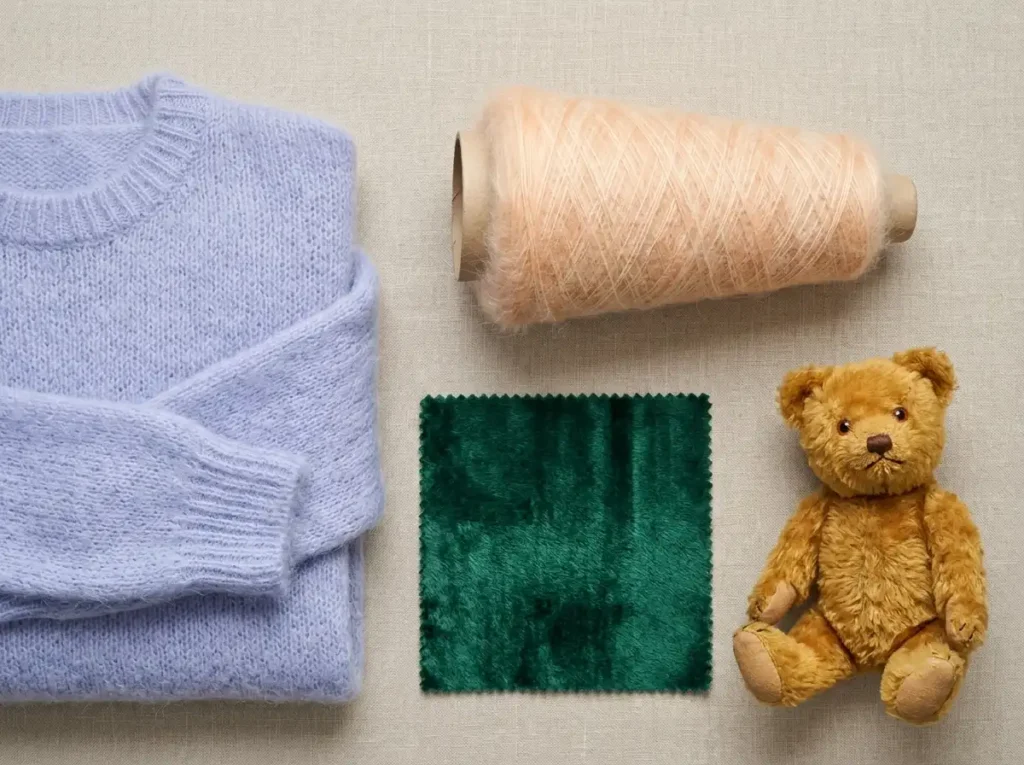
- Knitwear — sweaters, cardigans, scarves, and hats, usually in brushed kid mohair blends.
- Hand-knitting yarn — lace-weight mohair-silk yarns are a staple for knitters who want an airy halo.
- Suiting — wool-mohair blends produce crisp, breathable summer suits and sharp eveningwear with a subtle sheen. Lightweight drape is a big part of the appeal, much as it is with chiffon fabric in womenswear.
- Upholstery and home textiles — mohair velvet sofas, throws, curtains, and long-wearing carpets made from adult grades.
- Specialty uses — collectible teddy bears, doll wigs (the fiber resembles fine human hair), faux-fur alternatives, and even climbing skins for ski touring.
The Downsides Nobody Mentions
Mohair is a genuinely good fiber, but it isn’t for everyone, and most guides skip the annoying parts. Here they are:
- It sheds. Brushed mohair leaves fine fibers on whatever it touches. A quick trick: a few hours in the freezer (in a sealed bag) helps set the fibers and reduces shedding.
- It can feel prickly. Coarser adult grades — and cheap garments that use them — can irritate sensitive skin. If mohair has ever made you itch, try kid mohair or a silk blend before writing it off.
- Moths love it. Like all protein fibers, mohair needs protected storage in the off-season: clean it first, then seal it away with cedar or lavender.
- It’s expensive, and rarely pure. Global production is small, so prices run high, and 100% mohair garments are almost nonexistent. Check the fiber content percentage, not just the word “mohair” on the tag.
- It’s unforgiving to knitters. The halo locks stitches together, which makes mohair projects notoriously difficult to unravel and redo.
How to Tell Real Mohair from Fake
Fluffy acrylic and nylon yarns imitate the mohair look convincingly in photos, and plenty of listings lean on that. A few checks separate the real thing from “mohair-style”:
- Read the label first. “Mohair-like,” “mohair touch,” or a fiber list showing only acrylic, polyester, or nylon means no mohair. Genuine blends state a percentage, e.g., “40% mohair, 40% acrylic, 20% wool.” Synthetics aren’t inherently bad — engineered fibers like polyamide outperform natural ones in stretch and swimwear applications — but you shouldn’t pay mohair prices for them.
- Feel and look. Real mohair is light, springy, and shows a subtle two-tone luster as it moves. Acrylic imitations tend to look uniformly shiny or flat, feel slightly plasticky, and build static.
- The burn test (on a loose sample fiber only). Protein fibers like mohair burn slowly, smell like burnt hair, and leave a crushable ash. Acrylic melts, smells chemical, and hardens into a bead. The same logic separates natural from man-made cellulose fibers such as viscose.
- Sanity-check the price. Kid mohair yarn and garments carry real raw-material costs. A “100% mohair” sweater at a fast-fashion price is almost certainly mislabeled.
- Look for certification. The Responsible Mohair Standard (RMS) tag indicates the fiber was sourced from audited farms, which also speaks to authenticity.
图片 Prompt 4: Side-by-side macro comparison photograph: left side genuine mohair yarn with long silky lustrous halo fibers, right side acrylic imitation yarn with uniform matte synthetic fuzz, clean white background, labeled lighting-neutral product photography, 16:9
Summary
Mohair is the lustrous, resilient hair of the Angora goat — a fiber that traveled from Tibet through Ottoman Turkey to today’s farms in South Africa and Texas. It’s graded by fineness, from soft kid mohair used in sweaters and yarn to sturdy adult grades woven into velvet and carpet, and it’s almost always blended with other fibers to be spinnable and wearable. Its case rests on a rare combination: wool-level warmth at a lighter weight, a sheen no other hair fiber matches, and durability that beats cashmere by a wide margin. Its honest drawbacks — shedding, occasional prickle, moth appeal, and a high price — are manageable if you buy the right grade and store it well. And because imitations are everywhere, the label, the luster, and the price tag are your three best tools for making sure the mohair you buy is mohair at all.
FAQs
Is mohair itchy to wear against the skin?
It depends on the grade. Kid mohair (under ~30 microns) feels soft to most people, especially blended with silk. Coarser adult mohair can prickle, so check the grade or blend before buying anything worn next to skin.
Is mohair warmer than wool?
Weight for weight, yes — mohair insulates slightly better than sheep’s wool while weighing less, and its moisture-wicking keeps it comfortable indoors too. That’s why it appears in both winter knitwear and summer suiting.
Why is mohair fabric so expensive?
Supply is small: global output is a fraction of wool production, each goat yields only a few kilograms a year, and the fine kid grades that fashion wants are the scarcest part of every clip. Slippery fiber that’s hard to spin adds processing cost on top.
What’s the difference between mohair and angora?
Mohair comes from Angora goats; angora wool comes from Angora rabbits. Mohair is stronger, longer, and shinier; angora is fluffier but fragile and sheds heavily.
How do you wash a mohair sweater at home?
Hand-wash cold with a gentle wool detergent, don’t wring, and dry flat away from heat. Mohair won’t felt like wool, but heat and agitation can still distort the knit. Once dry, shake it out or brush lightly to revive the halo.