Deep Comparison of Lace vs Mesh: Differences Besides The Perforations
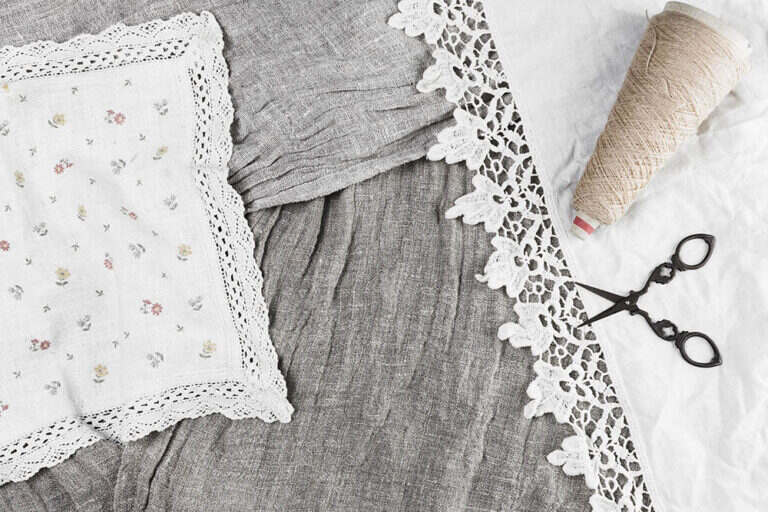
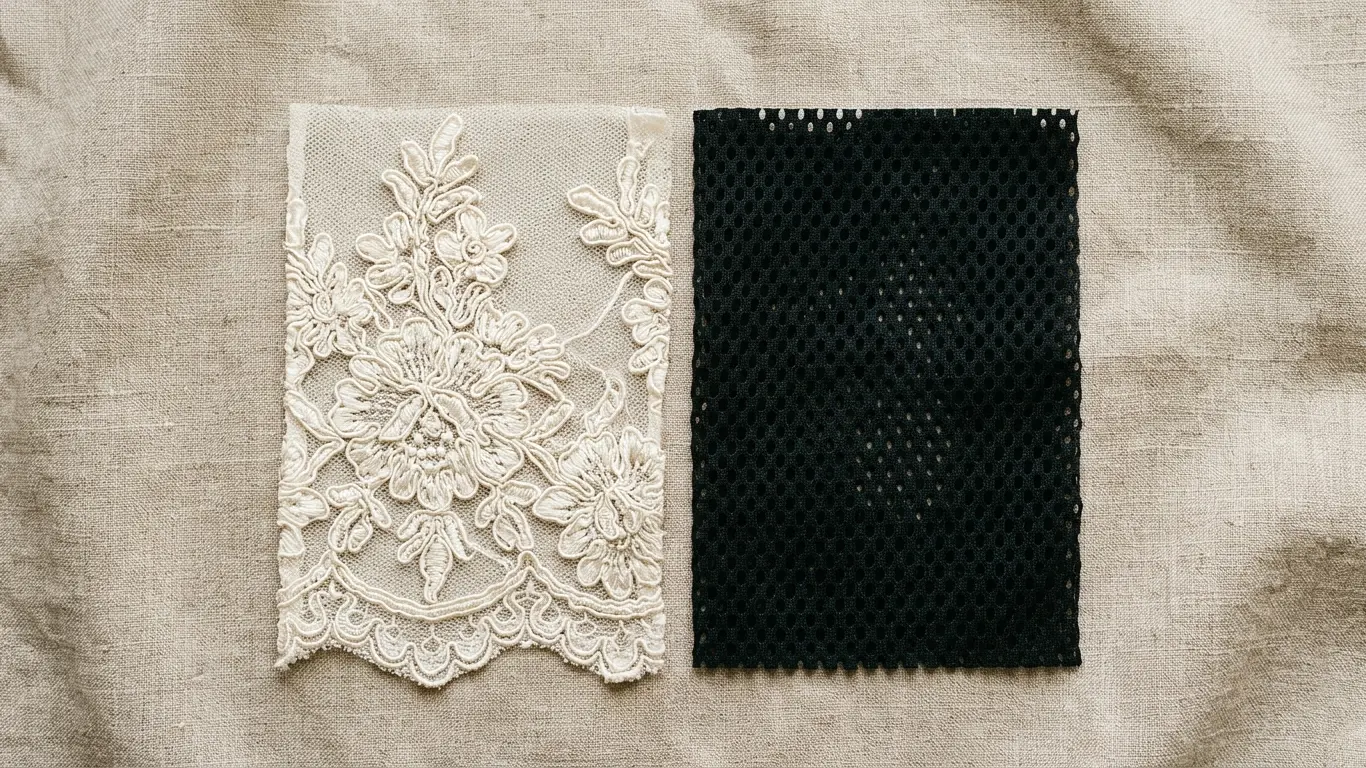
Lace and mesh are both defined by the empty spaces that they have. They are made of open-weave structures with visible gaps and they consist of equal parts thread and air. However, despite the fact that these two fabrics share this trait of being produced from the same materials, they could not be more different from each other after only five minutes of using them.
Lace has been a symbol of culture for centuries, as it was originally so valuable that, rather than wash the garments made out of lace, people would cut it off the garment and preserve the lace fabric. Mesh was developed for industrial purposes — it is a standardized, efficient material that is breathable and capable of performing. Where lace is used to make a statement, mesh is used to solve an issue.
This article will cover additional areas related to both lace and mesh including, what the materials of each fabric ‘truly’ consist of at the fiber level; what gives rise to differences in emotional responses of different individuals that wear each of these fabrics; what the health implications are of synthetic textiles for both types of fabrics.
Two Fabrics, Two Origins, Two Philosophies
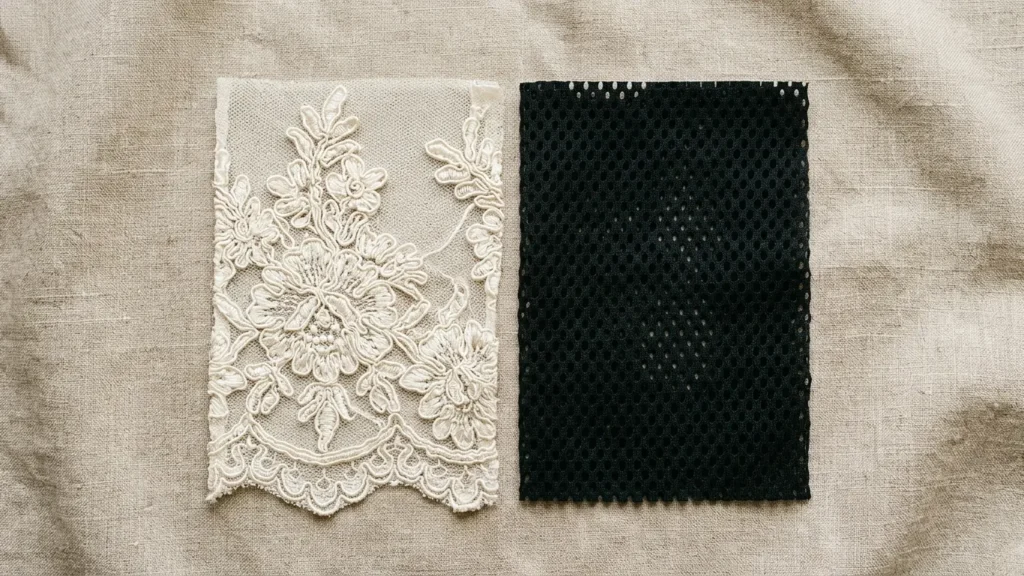
Originally a type of excess, lace was used in 16th Century Europe to display a household’s level of wealth through hand-made lace (whether made by bobbin lace or needlepoint) and was created manually, taking hundreds of hours to produce. Therefore, the intentional labor behind lace was a form of statement when it was worn.
The opposite can be said with mesh due to the Industrial Revolution outpacing the demand for textile production within the bounds of economic factors (speed/low cost). The intended function of mesh was to provide ventilation, light weight, and flexibility; aesthetics did not play a role.
These gaps in origin can still be felt in today’s use of both lace and mesh (i.e., lace is marketed towards emotion/heritage, whereas mesh is marketed towards function/practicality. For example: when a company uses the term “lace,” it uses terms such as elegance/romance/craftsmanship, whereas when a company uses the term “mesh,” it uses terms such as breathability/support/movement). In fact, the differences in how the two fabrics are marketed truly reflects the difference in the intentions of designing from the beginning when originally created.
Material Composition
Most modern lace and mesh are made from the same two fibers: nylon (polyamide) and spandex (elastane). But the ratio, the yarn structure, and the weave method create wildly different results.
Lace Compositions
Stretch lace typically runs 90% nylon and 10% spandex. The spandex content gives it moderate recovery — it moves with the body but doesn’t aggressively snap back. This blend is common in lingerie, where the fabric needs to conform without compressing.
Non-stretch lace is 100% nylon. It holds its structure better, which makes it useful for structured garments like corset panels or bridal overlays where dimensional stability matters more than flexibility.
Mesh Compositions
Standard performance mesh mirrors lace in its basic ratio — often 90% nylon, 10% spandex — but the uniform grid construction means the stretch is more even and consistent across the fabric. There are no pattern interruptions, so it performs predictably under stress.
Heavy compression mesh pushes the spandex content significantly higher — some formulations reach 79% polyamide and 21% spandex. This is not a fabric that moves with you subtly; it actively supports and shapes. Sports bras, compression garments, and structured swimwear use this version.
Same Ingredients, Different Outcomes
Fabrics made with the same fibre ratio will act in a completely different manner based on how they were constructed, and the method of construction makes all of the difference.
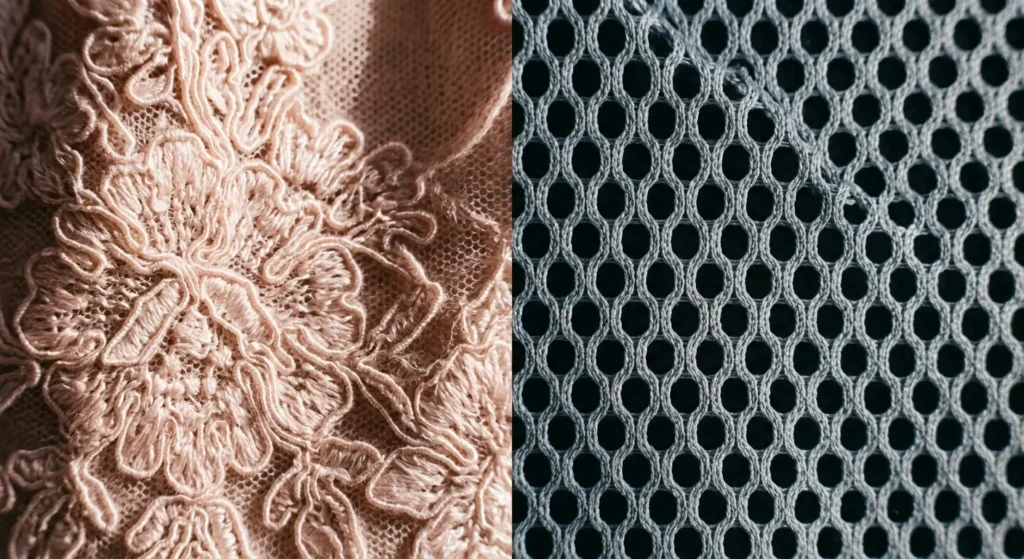
With lace, it has both a complex pattern (the lace) and its interlocking loops and crossing loops are the construction. Therefore, when you touch one part of the lace, you affect all parts of the lace. For this reason, lace needs to be handled with great care and can easily become distorted with excessive washing. Lace’s beauty and fragility both have their origins in the same method of construction.
In contrast, mesh is a simple, regular grid. It has uniformly sized openings and all of its threads go in the same direction. Therefore, mesh has excellent dimensional stability, because it is easily laundered, stretches uniformly, and recovers quickly. Since there is no complex pattern, there are no intricate threads to snag or distort.
Here is a direct comparison of the main composition types:
| Fabric Type | Composition | Stretch | Best Use |
| Stretch lace | 90% nylon / 10% spandex | Moderate, pattern-dependent | Lingerie, soft garments |
| Non-stretch lace | 100% nylon | Minimal | Bridal overlays, structured panels |
| Standard mesh | 90% nylon / 10% spandex | Even, consistent | Activewear, linings, outerwear |
| Compression mesh | 79% polyamide / 21% spandex | High, controlled recovery | Sports bras, compression wear |
What to Look for on Labels
When buying either fabric, the label ratio gives you a rough guide but not the full picture. A few practical points:
- Any lace labeled 100% polyester should be avoided for anything worn against skin — polyester lace tends to pill quickly and sits rough against the body.
- For mesh, a higher spandex percentage means firmer compression. If you want a lightweight mesh layer rather than a shaping garment, keep spandex under 15%.
- Neither fabric will tell you its weave density on the label. For lace, hold it up to light — tighter patterns offer more coverage; looser ones are more sheer. For mesh, check the hole size; smaller holes mean less ventilation but more opacity.
Why These Fabrics Feel So Different
When deciding whether to use lace or mesh as a fabric, people make their decision based on how they feel about each option; not how well they work. It’s important to understand this difference because it can help us narrow our choices.
Why Lace Reads as Precious
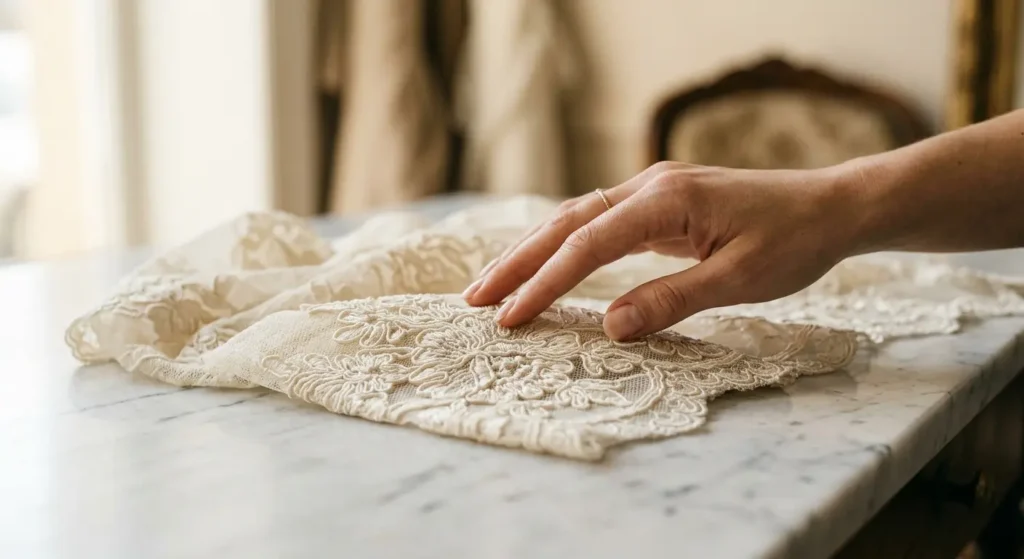
You can feel lace’s texture. It’s an interruption to the contact between skin and fabric and so there’s a tactile awareness. In a well-made lace there is enough soft yarn to be just noticeable, but it is noticeable.
The presence of the lace triggers a reaction in consumers. There have been studies that indicate the more ornate or “crafted” a product the richer it is perceived to be, because the complexity of a crafted product indicates the effort that was put into creating it. When feeling the pattern of the lace garment on your skin, your brain will interpret this as being intentional or of having been “made” rather than “manufactured”. This response will not necessarily change whether the lace was handmade by an artisan or mass produced.
In addition to the tactile and textured reaction, lace has a cultural component and is typically associated with notable events (i.e. weddings, formal occasions, personal events). Due to that long-standing association, the materials have a significant amount of emotional meaning attached to them and cases of women experiencing emotions from wearing lace can be perceived as both a memorable experience as well as creating a long-lasting memory.
Why Mesh Reads as Modern
The concept of “invisibility.” With good-quality mesh you will have a fabric that has very little friction. It will lie against your body without announcing its presence. This is one reason why so many people want to wear a fabric that is virtually unnoticeable when wearing everyday clothes.
The effect to “appear” is a major goal of design for performance or active clothing, and the goal of clothing manufacturers is to provide you with clothing made from fabric that you forget that you’re wearing. Fine mesh has the appearance of simply being an extension of your body and is produced through fine, consistent construction. It does not grab onto you, nor will it catch or tear, and it moves freely without resistance.
Flat fine mesh provides a level of comfort superior to the raised styles of lace, especially for those who have sensitive skin or are prone to irritation from raised fabrics.
Two Different Relationships with the Body
Mesh can help you forget, whereas lace will remind you of who you are; one does not supercede the other… they both have a place and purpose in two different times, places and moods. The choice to wear lace for a special occasion, regardless of consciousness, subconsciously creates a feeling of being dressed. The choice to wear mesh on Tuesday mornings creates the opposite feeling, or no feeling whatsoever, which is a different type of comfort.
This split in the psychology of the two textiles helps us understand why they remain separate even though they are made from similar chemistries; they do not compete within the same emotional realm.
Functional Properties at a Glance
Most comparative guides spend the bulk of their space here. We’ll keep it concise — a reference rather than a thesis.
| Property | Lace | Mesh |
| Breathability | Good, varies with pattern density | Excellent, consistent airflow |
| Stretch recovery | Moderate; depends on spandex % | High; uniform grid recovers well |
| Durability | Delicate; prone to snags | Resilient; holds shape through washing |
| Care | Hand wash or delicate cycle in laundry bag | Machine washable, easy care |
| Opacity | Variable — pattern-dependent | More predictable; fine mesh is sheer |
| Under clothing | Textured pattern may show through | Clean profile under fitted clothing |
| Moisture wicking | Limited | Strong in performance grades |
When observing most comparisons, there is one point that most people miss; mesh usually sits flatter against thin or form-fitting clothing. When choosing what to wear under fitted dresses or sheer blouses, lace will show its raised texture through lightweight garments because of this reason.
The Effects of Microplastics on The Skin
This is a topic that barely appears in most fabric comparisons, even though both lace and mesh are predominantly synthetic. It deserves honest attention.
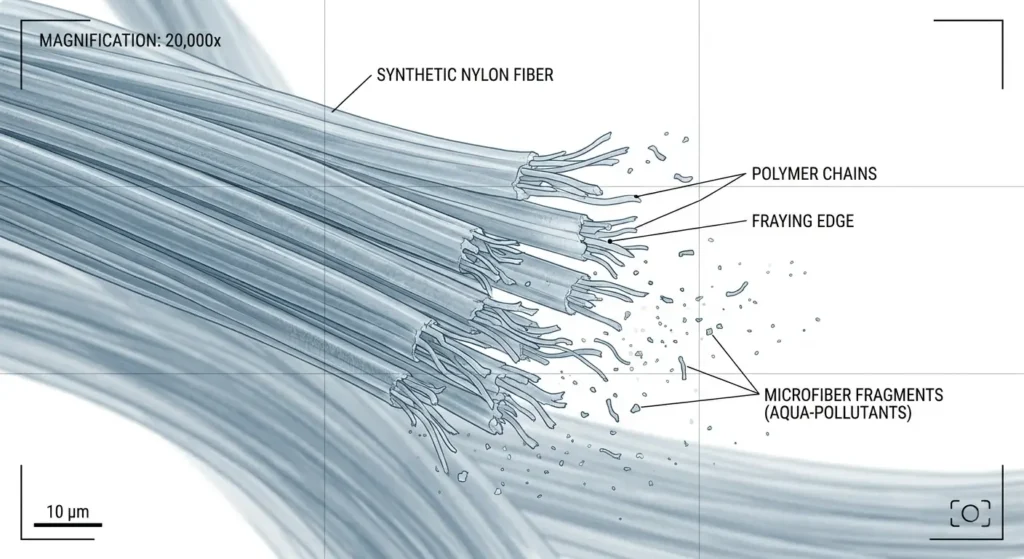
Both Fabrics Shed Microplastics
Nylon and spandex are both synthetic materials. Like any other synthetic fabric, both lace and mesh will shed tiny fibers when worn and washed. These microplastic particles will end up in wastewater, household dust, and recently reported – human tissue.
The real concern is not only the particles, but the chemicals that accompany these fibers in the form of additives, such as dyes, plasticizers, and finishing agents. Many of these additives can leach out of the fibers due to body heat and sweat, and it has been found that they can leach more readily in articles of clothing tight to the skin for a long period of time.
Does Structure Make a Difference?
There is not much research about comparing fiber shedding due to wearing either lace or mesh because of its differences in structure; however, it can reasonably be hypothesized that mesh (which has an even grid) will produce more consistent friction than lace due to its more random and complex pattern of loops and connections. Because of the equal distribution of repeated stresses to the same area of the fabric as you move in a mesh garment, if it is in contact with skin, each instance will be a similar level friction. With lace, the extreme variance in tension caused by the pattern means that different areas of the garment will shed differently; the areas of high tension will shed more than areas that are protected by lower tension.
Previously mentioned, one of the key differences between mesh and lace is the contact between the garment and the body. Mesh has a smoother, even surface making it create a low-friction surface between it and the body which creates a consistent zero-friction surface, while lace creates many individual contact points between the body and lace and because of that, creates alternate contact points between the raised portion of the lace and the skin. For people with sensitive skin, eczema or other skin conditions, the raised portions of the lace will irritate the skin without regard to fabric chemistry.
The Inner Wear Consideration
The question of synthetic chemistry is of greater importance for long-wear garments such as underwear, bras, and base layers as compared to outerwear as the moisture on these types of fabrics facilitates a higher migration rate of chemicals from the synthetic fabric to the skin.
This doesn’t mean avoiding lace or mesh entirely. It means a few practical things:
- The OEKO-TEX Standard 100 certification is invaluable for testing for harmful substances, including certain dyes, heavy metals, and finishing chemicals. While the certification does not test for microplastic shedding, the certification does assess the safety of the chemicals that may directly contact the skin.
- New synthetic garments should be washed prior to the first use, as washing will effectively remove a significant number of residual manufacturing chemicals from a garment.
- The use of fine, smooth mesh is likely to produce less mechanical irritation to sensitive skin than the use of lace with texture if the chemical make-up is similar.
- Natural fiber lace (cotton or silk) will completely eliminate the concerns associated with synthetic polymer, but will significantly alter the performance characteristics of the garment.
Why Designers Combine Them
Whenever you walk through the lingerie or activewear section of any store, you’ll see that lace and mesh rarely exist alone as the two materials work together to create the most beautiful and innovative pieces of clothing. This is not a compromise; rather it is a conscious design decision.
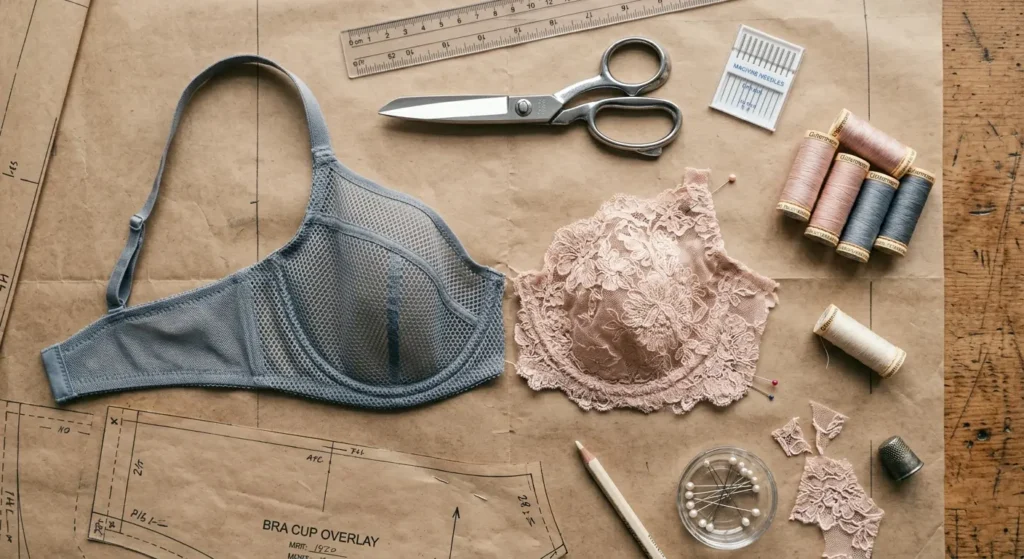
Structure and Surface
Mesh is a material that can be used for many things, including construction. It is constructed with a uniform knit, so it provides even tension, shape support, and moisture management without drawing attention to itself. In an engineered bra, the structural function is carried out by the mesh panels on the side wings and backside of the bra by controlling stretch, resisting distortion, and holding the frame.
The lace is either used on the cup or on the front and it provides a visual statement. It is the outer layer of the bra; you can see it and remember it. The intricate pattern of lace will give you depth and visual interest that normal mesh cannot give you.
This division of labour where construction is provided by mesh and lace is used to give surface appeal is so commonly used in the design of intimate apparel that it has become an architectural standard; once you see it you cannot stop seeing it.
The Visual Grammar of Placement
There’s a consistent logic to where each fabric appears in mixed designs:
- Lace occupies focal points: cups, center front panels, shoulder straps, decorative edges
- Mesh fills functional zones: side panels, back bands, gussets, any area where coverage and support matter more than decoration
- Contrast between the two — a lace overlay on a mesh base — creates visual depth without adding weight or bulk
The Business Logic
A fabric design’s commercial dimension is heightened when developing mixed fabric garments. A garment made entirely of lace will appeal to a buyer focused on the aesthetics of the garment, and to a buyer seeking a garment for occasion wear. Buyers who prioritize comfort and performance will purchase a mesh (only) garment. However, if a mesh and lace garment is constructed, it will appeal to both markets concurrently.
This is especially evident when looking at the ‘athleisure’ and ‘comfort lingerie’ categories, because brands want the items to be considered suitable for both active days and intimate nights. Developing garments with mixed fabrics is a way to address, and provide design solutions for, a marketing issue.
Application Guide
Lingerie and Underwear
Lace and mesh fabrics are popular because they offer a variety of functional styles. Depending on your lifestyle and the purpose for which you are wearing the garment will affect your decision.
Lace underwear, specifically modern stretch lace, provides more than just an interesting visual to wear daily. Modern construction techniques have made lace underwear significantly softer than it was 10 years ago, making many styles of well-structured lace underwear more comfortable to wear, especially styles that are finished with smooth edges or bonded seams. Although comfortable to wear, the one downside of lace underwear is that it retains warmth more than mesh underwear due to the way in which the designs are created (i.e., lace will trap heat; whereas, mesh will allow for increased airflow).
Mesh underwear provides for all-day comfort and is usually the go-to choice when you live in a warmer climate or run hot (i.e., perspire). The fine mesh styles created in nude or skin tones are more invisible under clothing than lace styles, which usually show through thin outer garments. Mesh is also more forgiving for sizing because the fabric evenly stretches to accommodate smaller and larger bodies than the designs of lace underwear, which more closely follow a body’s natural shape.
For plus-size women, engineered mesh with additional spandex offers more support without the pressure points that structured lace panels (or designs) sometimes create.
Bridal Wear
This is lace’s home territory, and no other fabric has come close to displacing it.
The dominant lace types in bridal applications each have distinct characteristics:
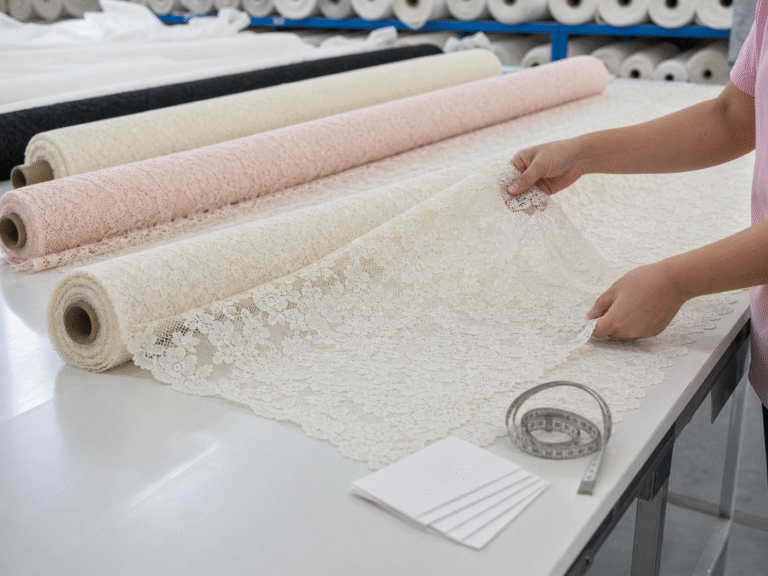
- Chantilly lace — fine, lightweight, with flowing floral motifs on a hexagonal net ground. Favored for veils and overlay skirts where movement matters.
- Alençon lace — heavier, with a raised cord outlining the pattern. Substantial and structured, it’s used for fitted bodices and as a statement overlay on ball gowns.
- Guipure (Venetian) lace — no net backing; the pattern elements connect via small bars. Three-dimensional and bold, suited to modern minimal silhouettes or as accent panels.
What most people don’t realize is that mesh is essential to nearly every lace bridal gown — just hidden. The inner corset structure, the boning channels, the cup linings, and often the full underskirt lining are mesh. The lace creates the experience; the mesh makes it work structurally.
Activewear and Sportswear
Mesh is a superior athletic material due to its ability to provide airflow while wicking away moisture through its open, consistent structure. And, because it is dimensionally stable under the stresses of jumping, lunging, and rotating, it is an optimal choice for performance sport.
While lace is available in activewear (especially in yoga or dance), the complexity of its patterns causes unpredictable stretch behaviour, which may not suit athletic performance. Additionally, lace may snag on gym apparatus, hardware, and anything else it comes into contact with. So although lace may be appropriate for lower-intensity movements, or perhaps as a fashion accessory over mesh, mesh is the only effective choice for performance.
Quick Reference
| Context | Recommended | Notes |
| Everyday underwear (cool climate) | Lace or mesh | Personal preference; both viable |
| Everyday underwear (warm climate) | Mesh | Superior ventilation |
| Occasion / date night lingerie | Lace | Visual impact; occasion wear logic |
| Sports bra / compression | Mesh | Performance requirements |
| Bridal gown outer fabric | Lace | No substitute in this context |
| Bridal gown structure / lining | Mesh | Invisible but essential |
| Yoga / dance / light activity | Either (or combined) | Mixed fabric performs well here |
| Base layer under thin clothing | Mesh | Cleaner silhouette |
Summary
The functional distinctions between lace and mesh truly exist, however, they are not definitive. Both fabrics can be comfortable. Both can be used for the same types of garments. The most common modern commercial versions of both fabrics are made primarily out of synthetic fibers and therefore have similar environmental impacts.
Choose lace when visual impact and formal function are important. Choose mesh when performance, comfort and versatility are important. Use both if you want the garment to be visually interesting and structurally intact.