What Is Chiffon Fabric? Types, Properties, and Everything You Need to Know
Pick up any evening gown, bridal veil, or flowy blouse and there’s a good chance the fabric drifting through your fingers is chiffon. It’s one of those materials that looks expensive without always costing much — sheer, lightweight, with a drape that moves almost like water. But “chiffon” is not a single fabric. It’s a broad category that includes silk, polyester, nylon, cotton, and rayon versions — all woven in the same way, yet behaving quite differently in your hands and on your body. This guide covers what chiffon fabric actually is, how it’s made, how the main types compare, where it works (and where it doesn’t), and what to look for when buying it.
What Is Chiffon Fabric?
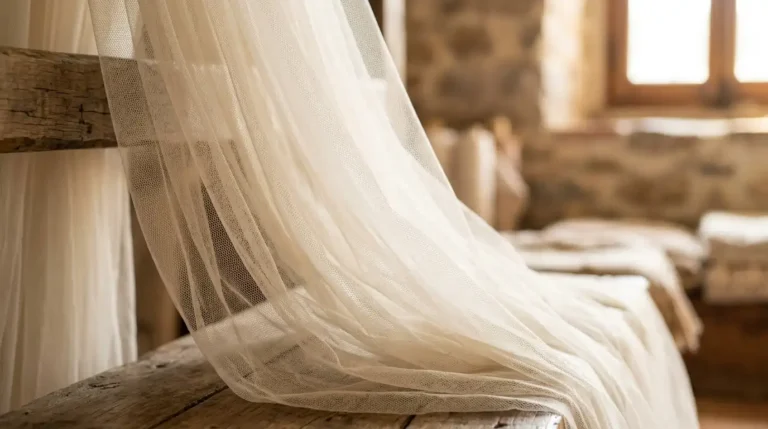
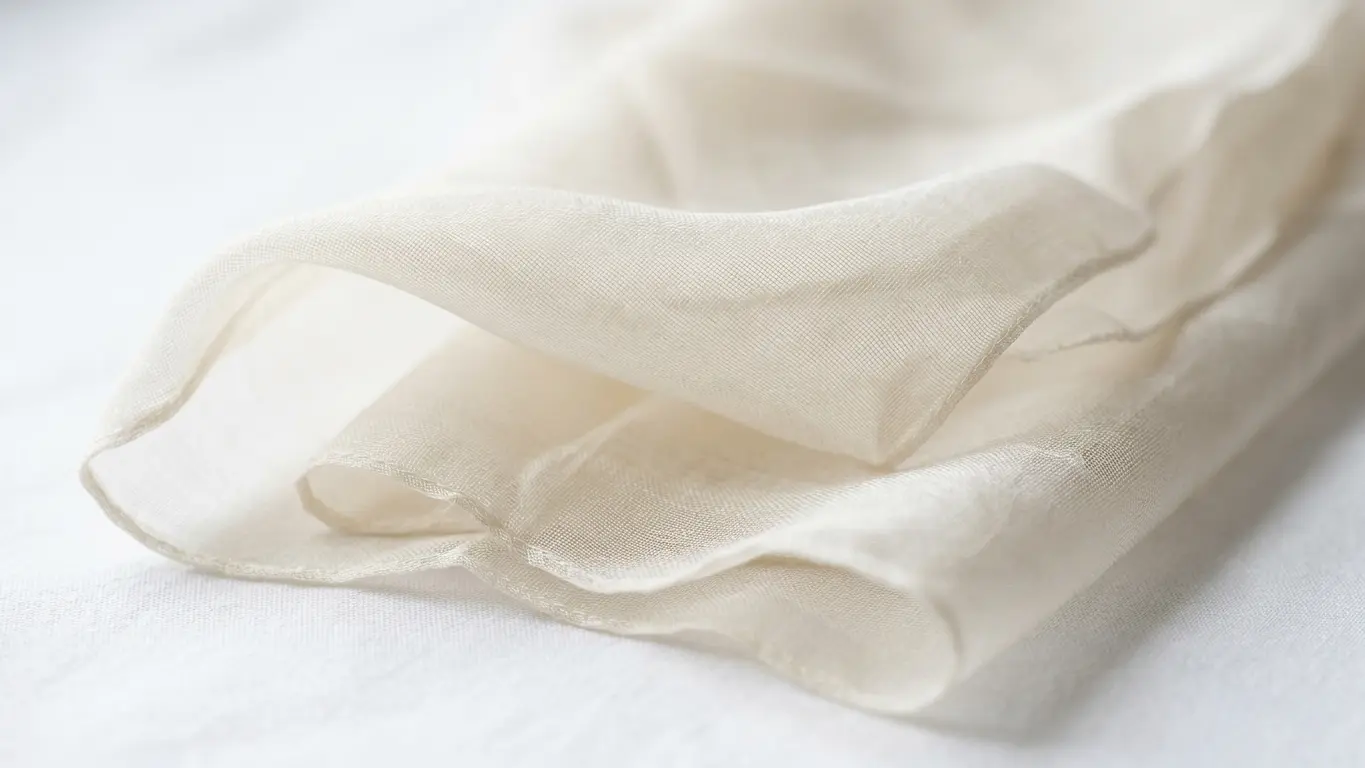
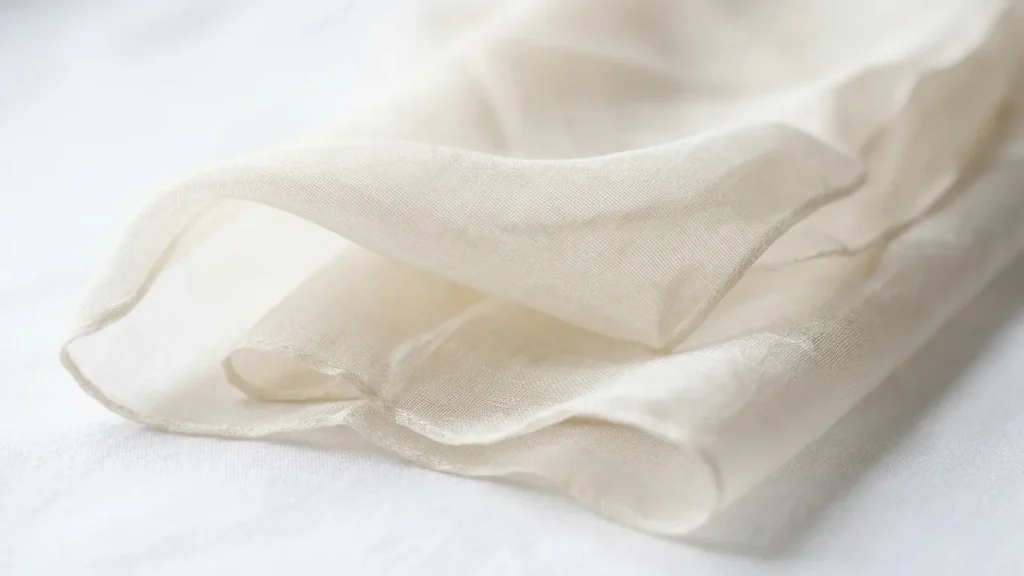
Chiffon is a plain-weave, lightweight sheer fabric made from tightly twisted yarns. The word comes from the French chiffe, meaning “cloth” or “rag” — a humble origin for a fabric that became a symbol of luxury.
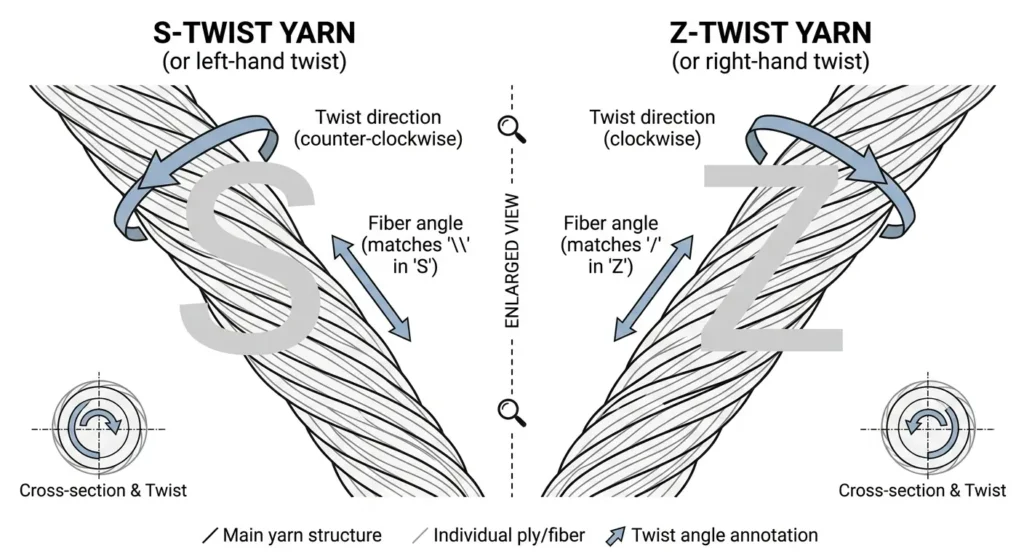
What makes chiffon distinct is not the fiber it’s made from, but the way it’s woven. Alternating S-twist and Z-twist crepe yarns are woven together in a balanced plain weave. This creates a fabric with:
- A slightly puckered, textured surface
- A fine, mesh-like appearance when held to the light
- A characteristic soft sheen and semi-transparency
- A flowing, draped quality with a slight stretch
Chiffon was originally made exclusively from silk. Today, most chiffon on the market is polyester, which costs far less and holds up better in daily use.
A Brief History of Chiffon
Chiffon’s roots go back to ancient China, where fine silk gauzes were woven as early as the Han dynasty. The technique made its way to Europe through trade routes, and by the 18th century, silk chiffon had become fashionable among European aristocracy.
Key milestones:
- Late 1800s — Chiffon is produced in France as a luxury silk fabric; widely used for lingerie and evening gowns among upper-class women
- 1938 — Nylon chiffon is introduced, making the fabric more affordable
- 1958 — Polyester chiffon arrives; this version becomes dominant and remains so today
- Present — Rayon, cotton, and blended chiffons offer a range of price points and properties
Silk chiffon is still produced, but it now sits firmly in the premium segment of the market.
How Is Chiffon Made? Weave Structure Explained
The production method is what gives chiffon its identity. Regardless of fiber type, the process follows the same logic.
The S-and-Z twist system
Yarns are twisted in two opposing directions before weaving:
- S-twist — twisted clockwise (the yarn spirals like the center of the letter S)
- Z-twist — twisted counter-clockwise (the yarn spirals like the letter Z)
These two types of yarn are alternated in both the warp (vertical) and weft (horizontal) directions during plain weaving. After weaving, the opposing tensions cause the fabric to pucker slightly in all directions. This gives chiffon its distinctive:
- Slightly rough hand (despite the delicate appearance)
- Faint crinkled texture
- Stretch in multiple directions
From yarn to finished fabric
- Raw fiber is spun into high-twist yarn
- Yarns are wound onto bobbins, alternating S and Z twist
- The fabric is woven on a loom — often slowly, to avoid breaking delicate threads
- After weaving, the fabric is scoured to allow the twist to relax and the puckering to form
- It is then dyed, finished, and wound onto bolts
Silk chiffon often involves hand-weaving at specialist mills in China, France, and India. Polyester chiffon is machine-produced at scale, primarily in China.
Types of Chiffon Fabric
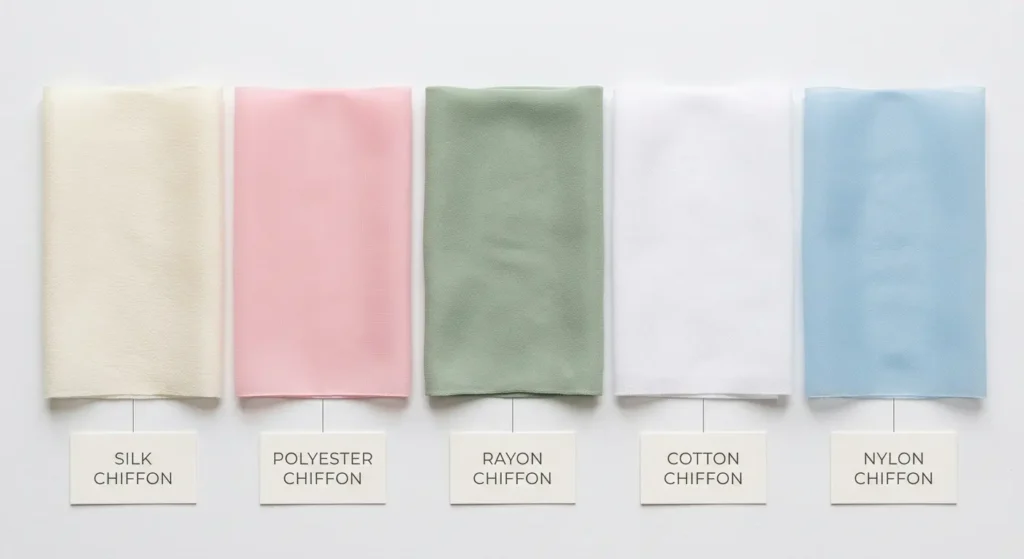
The fiber content determines how chiffon looks, feels, drapes, and costs. Here’s a breakdown of the main types:
| Type | Fiber | Feel | Drape | Price Range | Care |
|---|---|---|---|---|---|
| Silk chiffon | Natural silk | Soft, smooth | Excellent | $15–$80+/yard | Dry clean |
| Polyester chiffon | Synthetic polyester | Slightly plastic-like | Good | $2–$12/yard | Machine wash (gentle) |
| Nylon chiffon | Synthetic nylon | Smooth, slight stretch | Good | $3–$15/yard | Machine wash (gentle) |
| Rayon chiffon | Semi-synthetic rayon | Soft, similar to silk | Very good | $4–$15/yard | Hand wash |
| Cotton chiffon | Natural cotton | Matte, soft | Moderate | $5–$18/yard | Machine wash |
Silk chiffon is the benchmark. It breathes well, accepts dye beautifully, and drapes better than any synthetic. The downside is price and fragility.
Polyester chiffon is the most widely used. It’s durable, resists wrinkles, and is easy to care for. The trade-off is that it traps heat and can feel less natural against skin.
Rayon chiffon sits between the two — softer and more breathable than polyester, less expensive than silk. It’s prone to shrinkage if not washed carefully.
Cotton chiffon is less shiny, more matte, and less floaty than the others. It’s a practical choice for warm-weather garments where you want the airy weight without the sheen.
Nylon chiffon offers more stretch than the others and handles well in dance and performance costumes.
Beyond fiber type, chiffon also comes in structural variations:
- Jacquard chiffon — woven on a jacquard loom with built-in patterns (florals, geometric)
- Lurex chiffon — includes metallic thread for a glittery effect
- Pearl chiffon — has a subtle iridescent sheen
- Crepe chiffon — higher twist, more texture, easier to sew
Properties and Characteristics of Chiffon
| Property | Description |
|---|---|
| Weight | Very light — typically 17–50 g/m² |
| Transparency | Semi-transparent to sheer; usually requires lining |
| Texture | Slightly rough due to puckered weave, despite delicate appearance |
| Drape | Fluid and flowing; conforms to the body without clinging |
| Stretch | Moderate; polyester has less stretch than silk or nylon |
| Breathability | High for silk and cotton; lower for polyester and nylon |
| Dye uptake | Excellent for silk; moderate for polyester (requires high-heat dyeing) |
| Durability | Moderate; silk and rayon are more delicate than polyester and nylon |
Chiffon’s semi-transparency is both a selling point and a practical consideration. Most chiffon garments need either a lining or a layered construction to be fully wearable.
Pros and Cons of Chiffon Fabric
What works in its favor
- Moves beautifully. The drape and flow of chiffon is hard to replicate. It catches light and air in a way that suits formal and bridal wear particularly well.
- Versatile color options. Silk chiffon takes dye with exceptional richness. Polyester chiffon is available in hundreds of colors at low cost.
- Lightweight. It’s comfortable to wear in warm weather and doesn’t add bulk when layered.
- Works as an overlay. Chiffon is often used over a more opaque base fabric to add depth, movement, and a layered effect.
- Relatively affordable (in synthetic form). Polyester chiffon is one of the more budget-friendly sheer fabrics on the market.
Where it falls short
- Difficult to sew. The slippery surface shifts under a presser foot. Many sewers place tissue paper beneath the fabric when cutting and sewing to keep it in place.
- Frays quickly. Raw edges unravel fast. French seams or rolled hems are the standard finish.
- Snags easily. Rough surfaces, jewelry, and fingernails can pull threads.
- Usually needs lining. The sheer quality means most garments need an inner layer for opacity.
- Care requirements vary. Silk chiffon needs dry cleaning; synthetic versions are easier but still require a gentle approach.
- Not suitable for structure. Chiffon doesn’t hold shape on its own. It’s a drape fabric, not a construction fabric.
Chiffon vs Other Sheer Fabrics
Chiffon is frequently confused with — or compared to — several similar sheer fabrics. Here’s how they differ in practice:
| Fabric | Weight | Texture | Drape | Best Use |
|---|---|---|---|---|
| Chiffon | Very light | Slightly rough, puckered | Fluid, flowing | Evening wear, overlays, scarves |
| Georgette | Slightly heavier | Crinkled, grainy | Similar to chiffon but stiffer | Blouses, dresses, drapes |
| Organza | Light to medium | Smooth, crisp | Stiff, holds shape | Structured gowns, overlays needing volume |
| Tulle | Very light | Net-like mesh | Stiff | Veils, tutus, underskirts |
| Voile | Light | Soft, smooth | Fluid | Summer dresses, curtains |
| Silk | Variable | Smooth, lustrous | Rich, heavy | Luxury garments, linings |
Chiffon vs Georgette: Georgette is often called “chiffon’s heavier cousin.” It uses similar twisted yarns but with more twist and tighter weave, which results in a slightly grainy, less transparent surface. Georgette is a little easier to sew. If you want more opacity without switching to a different fabric category, georgette is the natural next step.
Chiffon vs Organza: Organza is also sheer, but it’s stiff. Where chiffon flows, organza holds structure. The two are often used together — organza for internal structure, chiffon as the outer layer.
Chiffon vs Tulle: Tulle has a visible net structure and is stiffer than chiffon. It’s the go-to for underskirts and wedding veils where body is needed.
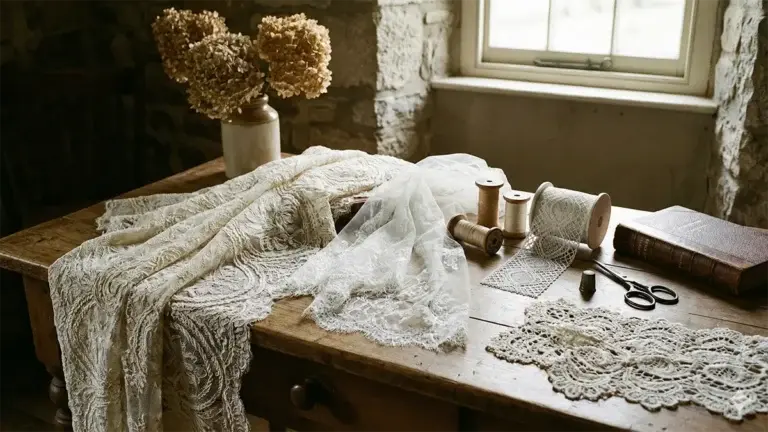
Chiffon is also frequently paired with lace fabric in bridal and evening wear — lace for detail and texture, chiffon for the flowing body of the garment.
Uses and Applications of Chiffon Fabric
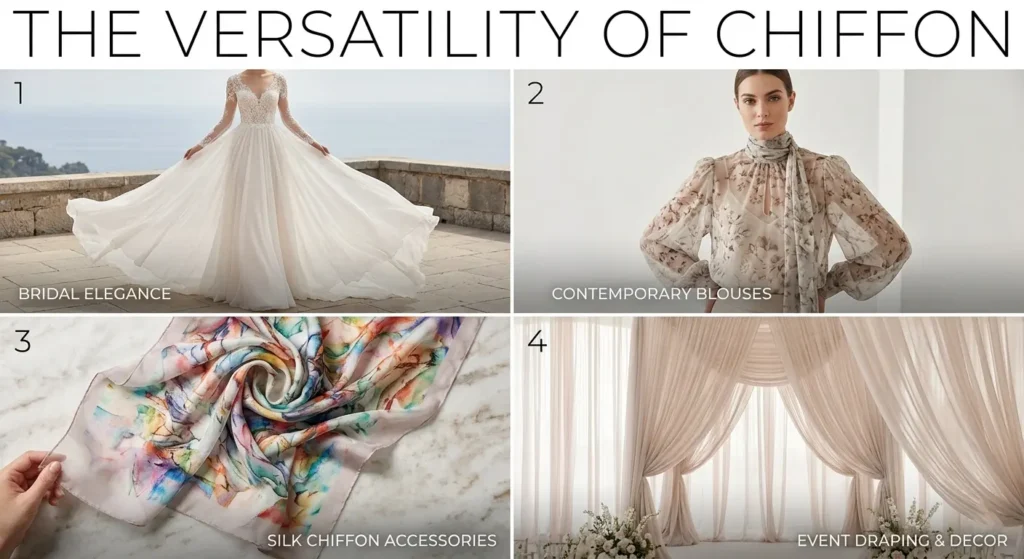
Chiffon shows up across a wide range of garments and settings:
Fashion and apparel
- Evening gowns and formal dresses — the most common use; chiffon’s movement reads as elegant on the floor
- Bridal gowns and bridesmaid dresses — particularly in overlay and skirt applications
- Blouses and tops — lightweight and flattering in summer
- Scarves and stoles — silk chiffon scarves are a classic accessory
- Lingerie and nightgowns — the sheer quality suits intimate apparel
- Dance and performance costumes — the movement enhances choreography
Accessories and home
- Hair accessories and ribbons
- Decorative draping at weddings and events
- Sheer curtains and table overlays in event design
For bridal applications, chiffon is often combined with lace trim along necklines and hems to add detail without adding weight.
Fabric Alternatives to Chiffon
Sometimes chiffon isn’t available, isn’t the right price point, or simply isn’t the best fit for a project. Here are the closest alternatives:
| Alternative | Why Use It | Trade-off vs Chiffon |
|---|---|---|
| Georgette | More opaque, easier to sew, similar drape | Less floaty, slightly heavier |
| Organza | Sheer like chiffon, more structure | Stiff, doesn’t drape as fluidly |
| Voile | Soft, lightweight, affordable | Less sheen, more cotton-like in appearance |
| Lawn (cotton lawn) | Breathable, matte, easy care | No sheen, less elegant drape |
| Chiffon lining (silk charmeuse) | Luxurious inner layer | Opaque, not a sheer alternative |
When georgette is the better choice: If you’re making a blouse or dress that needs to maintain shape without lining, georgette holds slightly better than chiffon and is less slippery to work with. You’ll find more about georgette’s fiber options in our guide to viscose fabric, since rayon georgette is one of the more popular options.
When voile makes more sense: For summer curtains or lightweight casual garments where budget matters and you don’t need the drape of chiffon, cotton voile is practical and easy to care for.
When organza is the right call: Structured bridal wear and gown overlays that need to hold a bell shape benefit from organza over chiffon. Organza also works well as a base for embellishment — which is one reason it appears alongside lace fabric in many bridal constructions.
How to Choose and Where to Buy Chiffon
Decide on fiber first
The fiber determines the price, feel, and care requirements:
- Budget projects / costumes / casual wear — polyester chiffon is the practical choice; it’s durable, washable, and widely available
- Elevated ready-to-wear or special occasions — rayon chiffon offers a softer hand at a moderate price
- Heirloom pieces, bridal, or high-end design — silk chiffon is worth the investment; no synthetic fully replicates its drape
Check the weight
Chiffon is sold by weight in grams per square meter (g/m²). Lighter weights (17–25 g/m²) are more transparent and delicate. Heavier weights (35–50 g/m²) have more substance and are easier to sew. For garments with structure or those that need to move predictably, a slightly heavier chiffon is easier to work with.
Look at width and yardage
Most chiffon is sold in widths of 44–60 inches. For garments with a lot of gathering or layering — like a full-length evening gown — plan for at least 1.5× your drafted yardage to account for the lightweight volume.
Price reference
| Type | Typical price per yard (retail) |
|---|---|
| Polyester chiffon | $2 – $12 |
| Nylon chiffon | $3 – $15 |
| Rayon chiffon | $4 – $18 |
| Cotton chiffon | $5 – $20 |
| Silk chiffon | $15 – $80+ |
Prices vary based on weight, dye quality, and supplier. China-based manufacturers typically offer the lowest wholesale prices on polyester and nylon chiffon.
Where to buy
- Fabric stores — good for touching samples before buying; limited in color range compared to online
- Online fabric retailers — wide selection, but you can’t assess drape until the fabric arrives; look for suppliers that offer sample swatches
- Wholesale / B2B suppliers — for production quantities; minimum order quantities (MOQs) apply but prices drop significantly
For sourcing warp-knit and sheer fabrics — including mesh and performance fabric — FuYuan Knitting’s shop offers a range of technical fabrics suitable for lingerie, bridal, and activewear applications.
Eco-conscious purchasing
If environmental impact matters:
- Look for OEKO-TEX certified chiffon, which confirms the fabric has been tested for harmful chemicals
- GRS (Global Recycled Standard) certified polyester chiffon uses recycled plastic rather than virgin petroleum
- Silk chiffon, when produced responsibly, is biodegradable — but the sericulture process has its own environmental considerations
- Cotton chiffon from organic sources is another option for buyers prioritizing natural fibers
Caring for Chiffon
Chiffon care depends on the fiber:
Silk chiffon
- Dry clean or hand wash in cool water with a gentle detergent
- Never wring — press water out gently between two towels
- Dry flat, away from direct sunlight
- Iron on the lowest setting with a pressing cloth between iron and fabric
Polyester and nylon chiffon
- Machine wash on a delicate cycle in a mesh laundry bag
- Use cold water and mild detergent
- Hang or lay flat to dry — avoid the dryer
- If ironing, use a low setting and keep the iron moving
Rayon chiffon
- Hand wash in cool water; machine washing risks shrinkage
- Dry flat; avoid heat
Cotton chiffon
- Usually machine washable on a gentle cycle
- Pre-wash before cutting to account for initial shrinkage
When sewing with chiffon, use sharp fine needles (size 60/8 or 65/9), reduce presser foot pressure, and consider placing tissue paper beneath the fabric. For finishing seams, French seams or rolled hems prevent fraying most effectively. For tips on sewing with lightweight fabrics and trims, see how to sew lace on fabric — many of the same techniques apply when working with sheer layers.
FAQ
Is chiffon fabric good for hot weather?
Silk and cotton chiffon are both breathable and work well in warm weather. Polyester chiffon is less breathable — it can trap heat, which makes it less comfortable in high temperatures despite being lightweight. If you’re making summer garments, silk or cotton chiffon will perform better than polyester.
Can you wash chiffon fabric at home without dry cleaning?
It depends on the fiber. Polyester and nylon chiffon can be machine washed on a gentle cycle in cool water. Rayon chiffon can be hand washed carefully. Silk chiffon is generally safer dry cleaned, though some silks tolerate cool hand washing — always check the care label first.
What is the difference between chiffon and satin fabric?
Chiffon is sheer, lightweight, and textured due to its crepe-twist weave. Satin is opaque, heavier, and has a smooth, high-gloss surface from its unique float weave construction. Both are used in formal and bridal wear but serve different functions: chiffon for flowing overlays and movement, satin for structured bodices and linings.
How do I keep chiffon from fraying when cutting?
Cut with very sharp scissors or a rotary cutter to get a clean edge. Apply a small amount of fray check or clear nail polish to raw edges immediately after cutting. Alternatively, cut slightly larger than your seam allowance and use French seams, which encase the raw edge completely. Keeping the fabric slightly damp while cutting also helps reduce slippage.
Is polyester chiffon the same quality as silk chiffon?
No. Polyester chiffon replicates the look of silk chiffon reasonably well but doesn’t match it in drape, breathability, or feel against skin. Silk has a more fluid, natural drape and a softness that polyester doesn’t fully replicate. That said, high-quality polyester chiffon is a perfectly good choice for most garment applications — the difference is mainly noticeable in direct comparison or in high-end contexts like couture bridal wear.