Warp Knit Mesh Fabric: GSM and Stretch Guide for Buyers
Why mesh fabric specifications need more than GSM
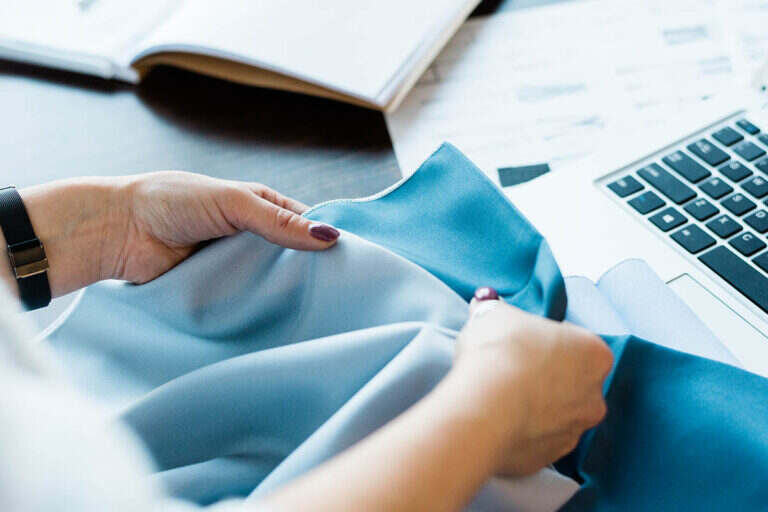
Warp knit mesh fabric is used across lingerie, sportswear, swimwear lining, fashion panels, costumes, bags, footwear, home textiles, and decorative applications. Buyers often begin with one number: GSM. That number matters, but it does not tell the whole story. Two mesh fabrics with the same GSM can feel completely different if the hole size, yarn, knit structure, finishing, and stretch recovery are different.
Most search results explain what mesh fabric is, list common uses, or compare polyester and nylon. This article focuses on a more useful question for sourcing teams: how should you describe warp knit mesh fabric so the factory can sample and produce the right material for your product?
What makes warp knit mesh different?
Warp knitting forms loops along the length direction of the fabric. Compared with many weft knit structures, warp knit mesh can offer good dimensional stability, controlled openness, and efficient production for consistent bulk orders. It can be light and transparent, firm and technical, soft and drapey, or elastic depending on yarn and construction.
For buyers, the main advantage is control. A mesh fabric factory can adjust yarn, machine gauge, hole shape, density, finishing, and elastic content to suit different applications. The challenge is that the buyer must describe the desired result clearly enough.
A practical GSM map
GSM means grams per square meter. It is useful for comparing weight, cost, coverage, and drape, but it should be read together with transparency and stretch. The ranges below are practical sourcing references, not fixed rules.
| Approx. GSM | Typical feel | Common use | Buyer caution |
|---|---|---|---|
| 20-45 GSM | Very light, sheer, delicate | Lingerie overlays, decorative panels, veil-like layers | Check tearing, snagging, and edge rolling |
| 45-80 GSM | Light but more stable | Intimate apparel, fashion panels, breathable lining | Confirm recovery and color consistency |
| 80-130 GSM | Medium, stronger hand | Sportswear panels, swim lining, bags, footwear upper layers | Balance ventilation with abrasion needs |
| 130+ GSM | Firm, structured, technical | Support zones, equipment panels, heavy decorative use | May feel too stiff for skin-contact apparel |
Hole size changes the result as much as weight
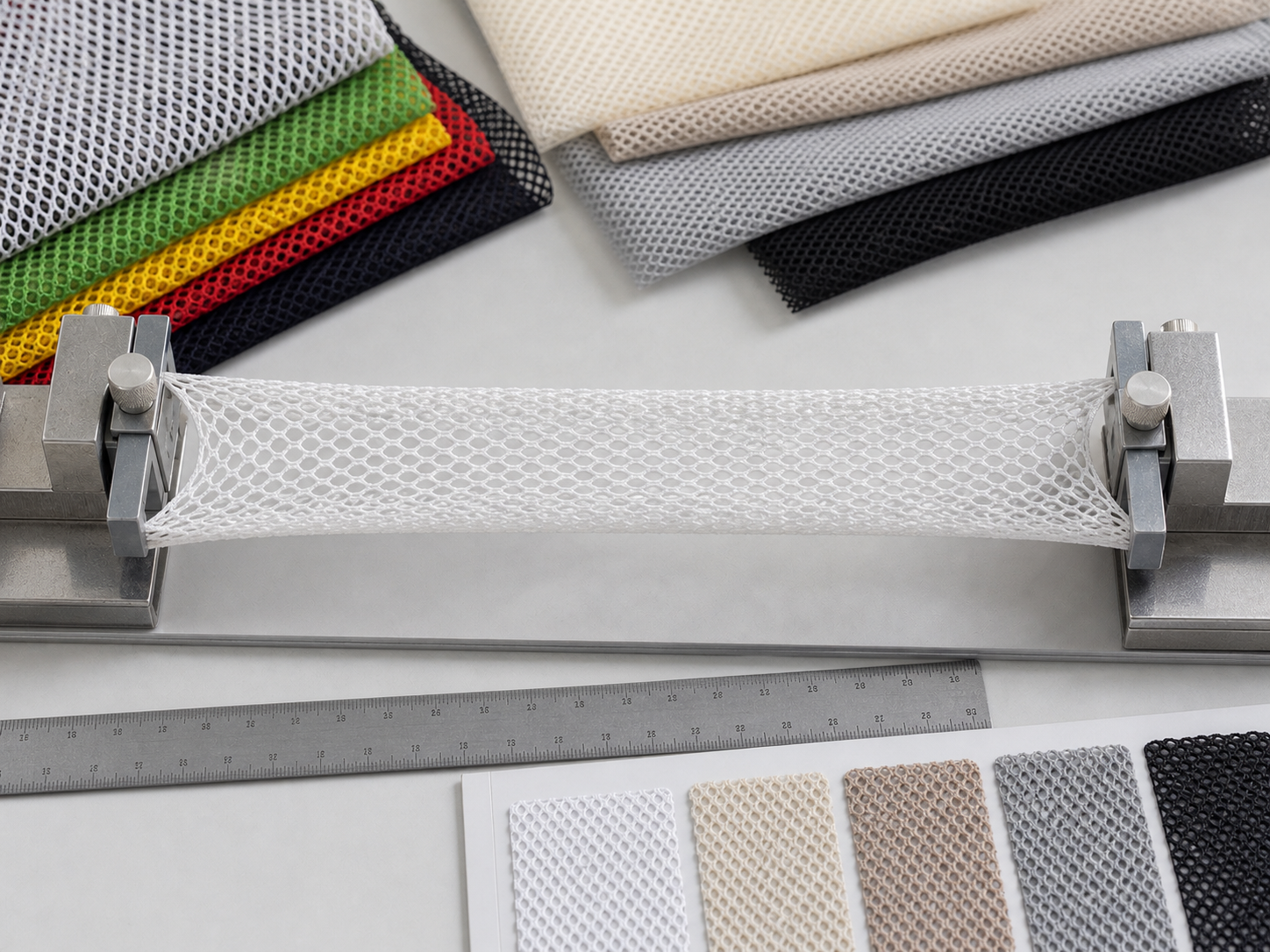
Mesh is defined by openness. A fine mesh with small holes may provide coverage and a smooth look while still allowing breathability. A large-hole mesh may look sportier and more technical, but it can catch on trims, zippers, hooks, or rough surfaces. For fashion use, hole shape also matters: diamond, hexagonal, square, and irregular floral openings create different visual effects.
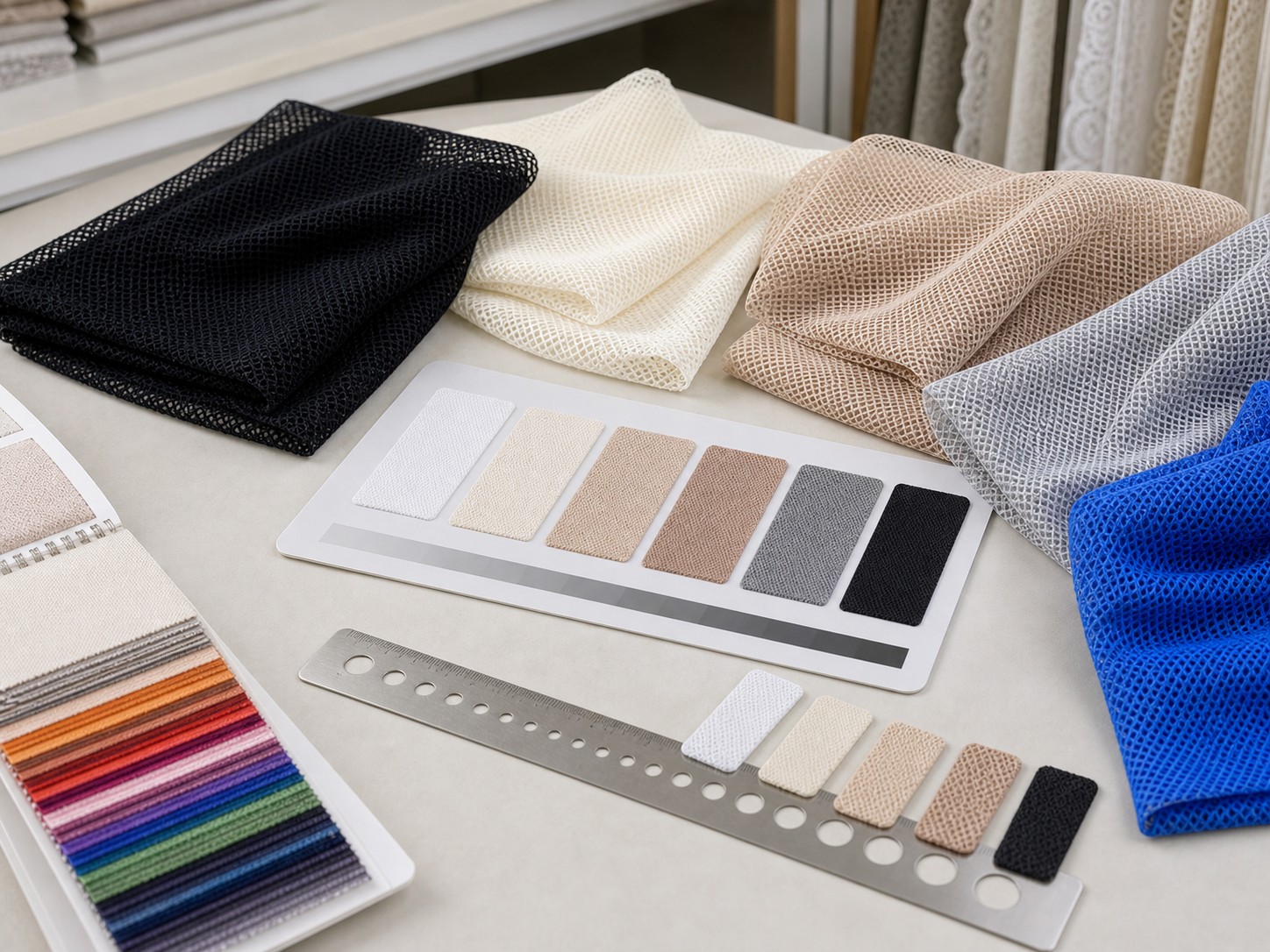
When requesting samples, ask for close-up photos with a ruler or scale card. For custom mesh fabric, confirm whether the hole size is measured before or after finishing, because heat setting, dyeing, and tension can slightly change the final appearance.
Stretch direction and recovery are separate questions
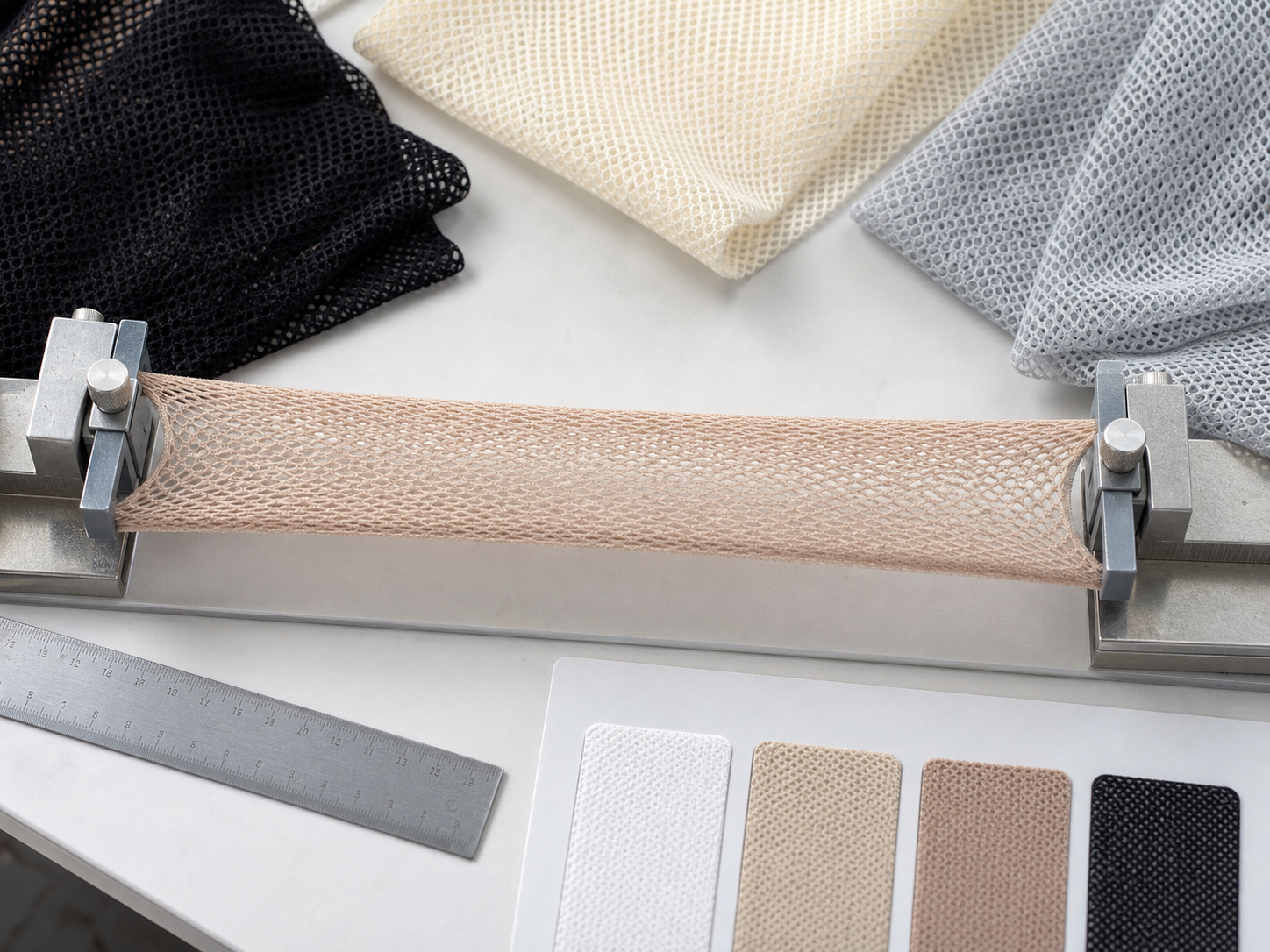
A mesh fabric may stretch in width, length, both directions, or very little. Stretch tells you how far the fabric can extend. Recovery tells you how well it returns after being stretched. For fitted garments, recovery is often more important than maximum stretch. A fabric that stretches a lot but does not recover can bag out, twist, or lose shape after wear.
- For lingerie: prioritize soft hand feel, skin comfort, stable recovery, and clean seam behavior.
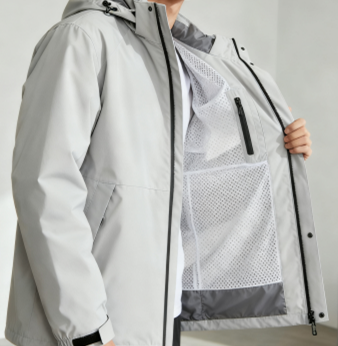
- For sportswear: balance ventilation, recovery, abrasion resistance, and sweat-management finishing.
- For swimwear lining: test stretch, colorfastness, opacity when wet, and compatibility with shell fabric.
- For bags or footwear: prioritize tear strength, abrasion, hole stability, and dimensional control.
How to test mesh quickly in a sample room
You do not need a full laboratory test to reject the wrong direction early. Cut a strip in the width direction and another in the length direction. Mark 10 cm on each strip, stretch gently to the expected use tension, hold for ten seconds, then release. Measure how close the strip returns to the original mark. Repeat after steaming or washing if the product will be laundered.
Next, sew the mesh to the actual base fabric or elastic. Mesh can look stable on a table but shift under a presser foot. Check whether the seam waves, whether the holes distort, and whether the edge needs tape, binding, lining, or a different stitch setting.
Choosing yarn: polyester, nylon, spandex, and blends
Polyester mesh is often selected for price, durability, colorfastness, and shape stability. Nylon mesh can offer a softer, smoother hand and is common in intimate apparel. Spandex or elastane is added when stretch and recovery are required. The right choice depends on the application, not on a universal ranking.
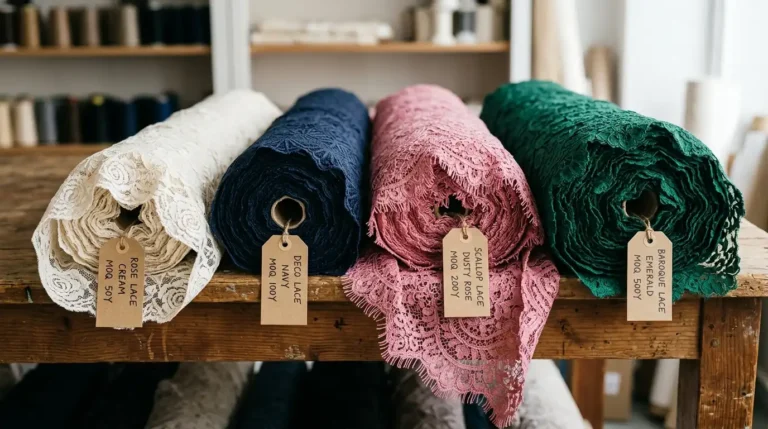
If the mesh will be used with lace fabric or lace trim, review the total garment feel. A soft lace over a harsh mesh can disappoint the customer. A firm mesh under a delicate lace may be useful for support, but it should be intentional. Ask for combined swatches, not only separate fabric samples.
Specification sheet for wholesale mesh fabric
| Item | What to write | Why it matters |
|---|---|---|
| Composition | Polyester, nylon, spandex content | Controls feel, stretch, dyeing, and care |
| GSM | Target and tolerance | Controls weight, cost, and coverage |
| Width | Cuttable width after finishing | Affects yield and marker planning |
| Hole size | Shape and approximate opening | Affects look, breathability, and snag risk |
| Stretch | Direction and expected extension | Controls fit and garment performance |
| Recovery | Acceptable return after stretch | Prevents bagging and distortion |
| Finish | Soft, wicking, anti-static, brushed, heat set | Changes hand feel and function |
| Color | Lab dip, standard, light source | Prevents shade disputes |
Common sourcing mistakes
The first mistake is approving mesh only by GSM. Weight alone does not show transparency, recovery, or snagging risk. The second mistake is ignoring the direction of use. If a garment panel is cut in the wrong direction, stretch and appearance may change. The third mistake is testing mesh alone instead of sewing it into the real product construction. The fourth mistake is forgetting wet or dark-color behavior. A mesh that looks opaque when dry may become more transparent when stretched, washed, or placed over skin-tone lining.
Another common mistake is ordering mesh fabric by the yard for sampling, then scaling to wholesale mesh fabric without rechecking roll width, lot shade, and packing. Bulk production introduces details that small sample cuts do not reveal.
Questions to send with a mesh development brief
A strong mesh brief does not need to be long, but it should be specific. Send the garment type, target GSM, composition preference, stretch direction, color, expected order quantity, and a note about whether the mesh touches skin directly. If the fabric is used with lace, elastic, lining, or printed panels, include those materials in the sample review. Mesh rarely works alone in a finished product, so it should not be approved alone.
For performance or fitted products, ask the factory to mark the fabric direction on the sample. This helps the pattern room avoid cutting the panel in the wrong orientation. For sheer fashion panels, ask for photos over white, black, and skin-tone backgrounds. The same mesh can look clean in one context and too transparent in another. For swim or activewear, request a simple wet review before bulk approval, especially when the color is light.
Finally, decide how much variation is acceptable before production starts. A practical tolerance for GSM, width, and shade gives both sides a shared standard. Without that standard, a technically usable fabric may still become a dispute because the buyer and factory are judging it by different expectations.
For repeat mesh programs, keep one approved roll label and one physical swatch from the bulk lot. The label helps trace yarn, dyeing, and finishing information; the swatch helps judge shade and hand feel during the next order. If the fabric is used in a fitted garment, also keep a sewn panel rather than only a flat swatch. A finished panel shows recovery, transparency, and seam behavior more clearly than a loose piece of fabric.
For repeat mesh orders, keep a small retained sample from the approved bulk lot and compare later shipments against it under the same lighting and stretch direction. This simple habit helps buyers catch silent changes in yarn tension, dye shade, aperture shape, or finishing softness before the fabric reaches cutting or assembly.
Action advice for buyers
If you are sourcing warp knit mesh fabric, do not begin and end with a photo. Build a short specification sheet that includes GSM, composition, width, hole size, stretch direction, recovery, finishing, color approval, and final application. Then test the mesh in the actual garment or product construction. A reliable mesh fabric factory can adjust many variables, but the best results come when the buyer defines the performance target clearly before bulk production.