What Is Tweed Fabric? The Complete Guide to History, Types, and Uses
Tweed has a way of outlasting nearly every trend that tries to replace it. It survived the synthetic revolution of the 1970s, made it through the fast-fashion era, and today shows up on both country estates and high-fashion runways. If you’ve ever picked up a jacket and noticed a dense, slightly rough, flecked wool cloth with an almost earthy smell — that’s tweed. This guide covers everything about tweed fabric: where it came from, how it’s made, the different types you’ll encounter, and how to choose and use it well.
What Is Tweed Fabric?
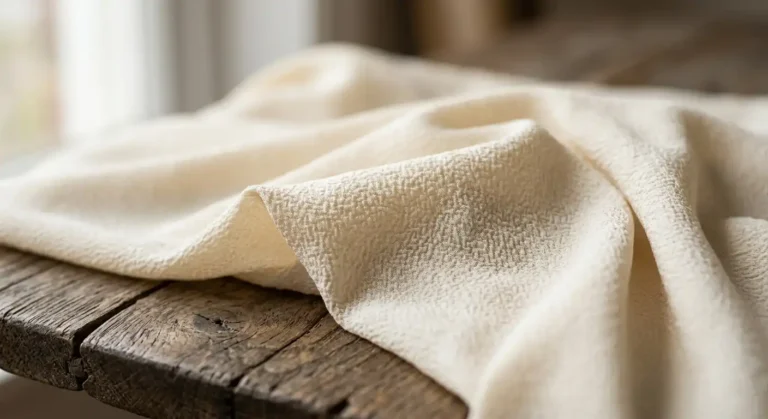
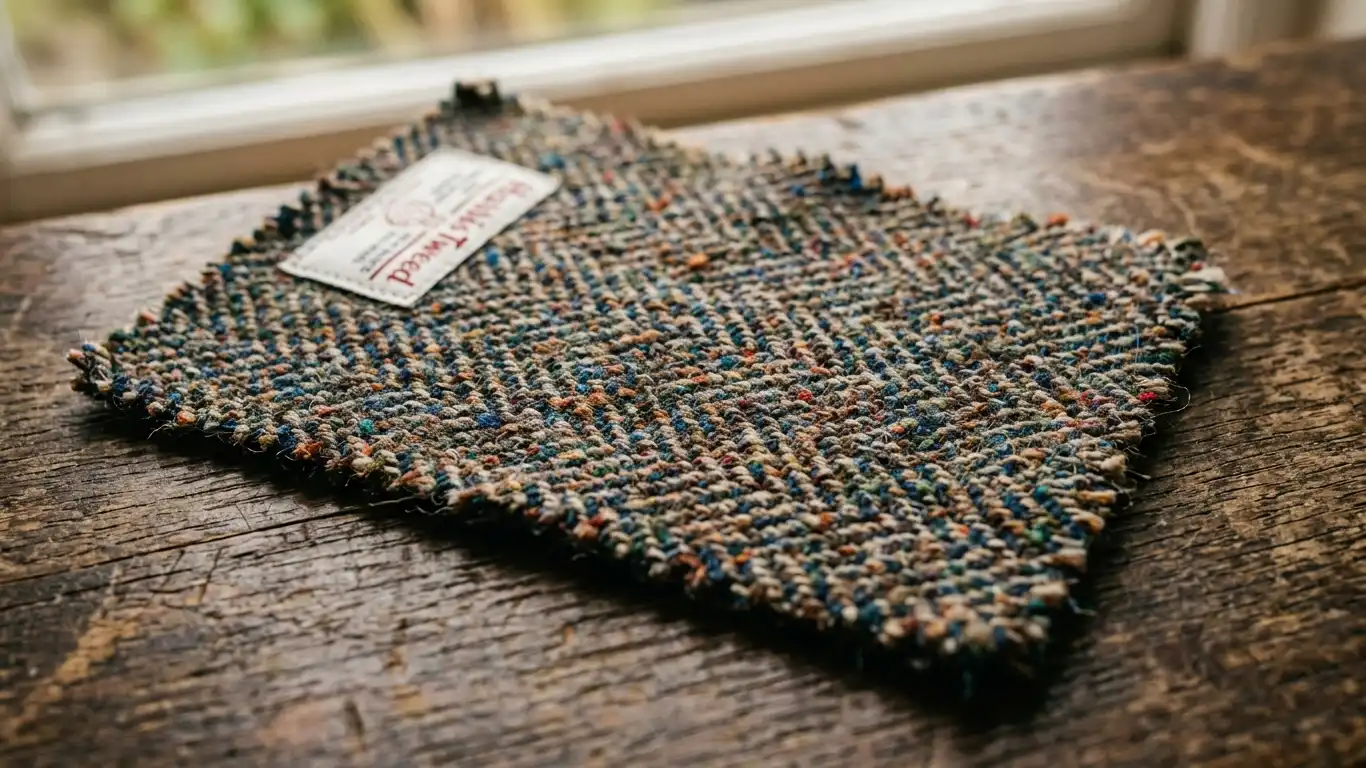
Tweed is a thick, textured woolen fabric known for its rough surface, mixed-color appearance, and exceptional durability. It’s woven — not knitted — usually from wool that has been dyed before spinning, which is what gives it that distinctive flecked, multi-tonal look rather than a flat, uniform color.
The fabric sits in the medium-to-heavy weight category. It’s stiff enough to hold structure in a jacket but not so rigid that it can’t drape at all. Touch a piece and you’ll notice a coarse, sometimes scratchy hand feel. That’s not a defect — it’s by design. Tweed was built to handle rain, wind, and repeated outdoor use without falling apart.
The History & Origin of Tweed
Tweed’s origins sit firmly in the Scottish Highlands and Irish countryside of the 18th and 19th centuries. Farmers and shepherds there wove a coarse, heavy wool cloth by hand to protect themselves against brutal damp winds. They called it Clò-Mór in Gaelic — “the big cloth.” It was purely functional: rough, thick, and built to last.
The name itself came from an accident. Around 1831, a London merchant received a letter from a Scottish mill offering “tweels” — the Scots word for twill weave. He misread the handwriting as “tweed,” assumed it referred to the River Tweed running through the Scottish Borders, and began selling it under that name. The error stuck.
The shift from workwear to fashionable fabric happened quickly once the British aristocracy took notice. When Queen Victoria’s consort Prince Albert purchased Balmoral Castle in 1848, he commissioned a distinct tweed pattern for the estate — giving every highland property owner a reason to design their own “estate tweed” to distinguish their staff during hunting parties. This turned tweed from a practical cloth into a marker of landed status.
The Industrial Revolution brought it further down the social ladder. As wool became cheaper to process, tweed spread to the urban middle class. By the early 20th century, it was everywhere from shooting jackets to suits.
The biggest moment in modern tweed history came when Coco Chanel adopted it for her iconic braid-trimmed suits in the 1920s and beyond. She softened the fabric, made it work for women’s tailoring, and turned a fabric associated with country sportsmen into a symbol of Parisian elegance. That reframing — from rugged outerwear to chic staple — is largely why tweed remains in fashion today.
How Is Tweed Fabric Made?
The production process varies between traditional handwoven methods and modern factory weaving, but the core steps are the same.
Step 1 — Shearing & Scouring Wool is shorn from sheep (usually Cheviot, Blackface, or Shetland breeds) and thoroughly washed to remove lanolin, grease, and debris.
Step 2 — Carding & Spinning Cleaned fibers are combed into long strands using a carding machine, then spun into yarn. Tweed yarn is relatively coarse and loosely spun compared to fine suiting wools.
Step 3 — Dyeing Here’s what makes tweed distinctive: the wool is typically dyed before spinning, at the fiber stage. Multiple colors of fiber are then blended together before being spun into a single yarn. This fiber-dyeing method creates tweed’s characteristic flecked, heathered appearance. Yarn-dyed or piece-dyed fabrics produce a flatter, more uniform color — which is why you can tell tweed apart from most other wools at a glance.
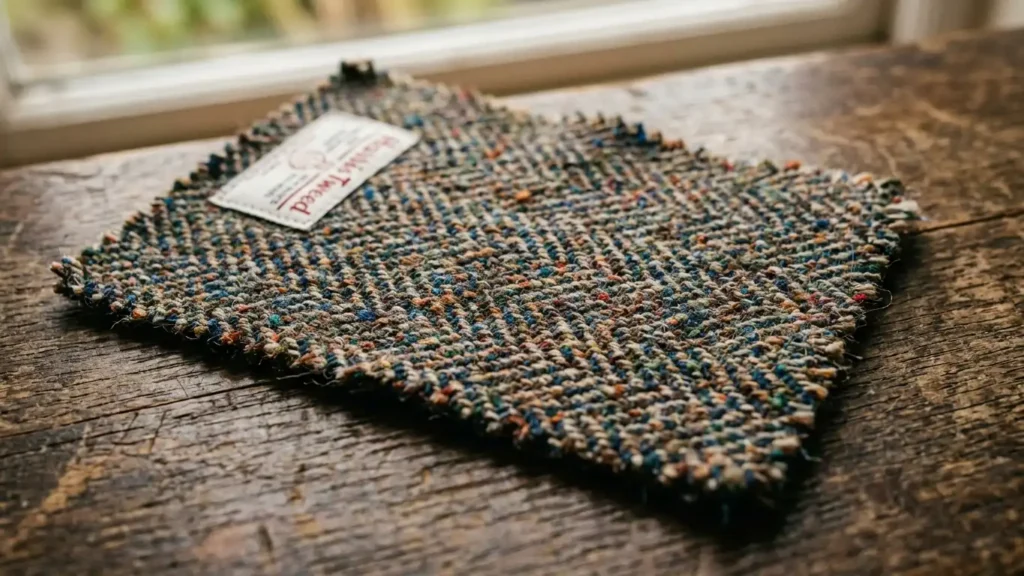
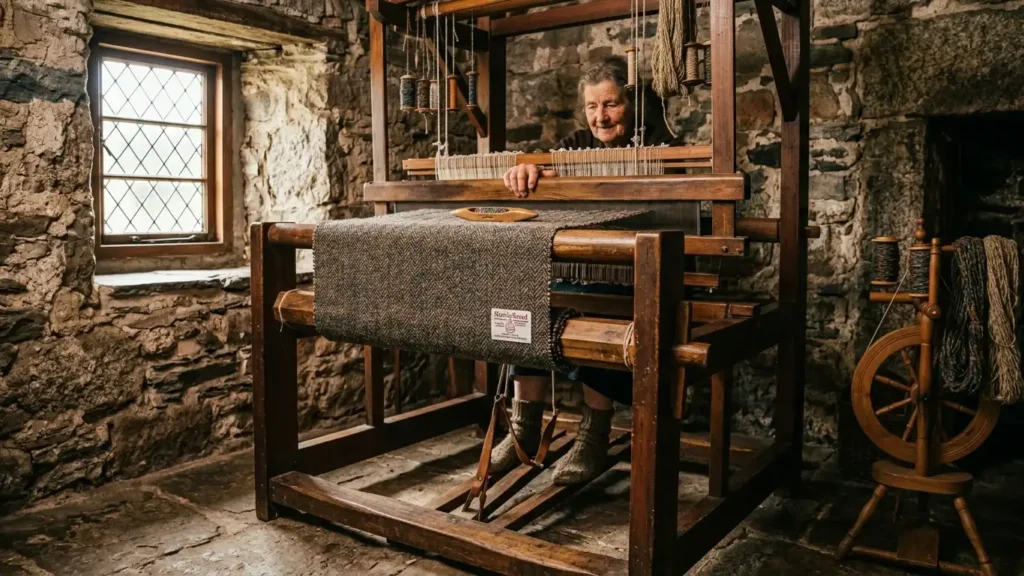
Step 4 — Weaving Yarn is woven on a loom using twill, plain, or herringbone structures. Traditional Harris Tweed is still handwoven on foot-powered treadle looms by islanders in their own homes. Most commercial tweed today is woven on power looms.
Step 5 — Finishing After weaving, the cloth goes through a fulling (or milling) process — soaked in water and agitated to tighten the weave and raise the surface. Then it’s pressed and steamed to set the final texture.
Types of Tweed Fabric
Tweed varieties are usually classified by where they come from or which sheep breed supplies the wool. Each has a distinct character.
By Region of Origin
| Type | Origin | Key Traits |
|---|---|---|
| Harris Tweed | Outer Hebrides, Scotland | Handwoven, legally protected, open twill, 15–21 oz weight, orb certification |
| Donegal Tweed | County Donegal, Ireland | Speckled “neps” throughout, coarse hand, 7–19 oz, casual feel |
| Shetland Tweed | Shetland Islands, Scotland | Lighter (12–14 oz), softer, slightly fluffy texture |
| Cheviot Tweed | Scottish Borders | Made from Cheviot sheep wool, rough and heavy, very durable, 15+ oz |
| Saxony Tweed | Saxony, Germany | Merino wool, much softer and finer than traditional tweeds, 10–14 oz |
| Linton Tweed | Cumbria, England | Soft, often bouclé-style, frequently used by Chanel |
| Bannockburn Tweed | Bannockburn, Scotland | Distinctive twisted yarn structure, mid-weight |
By Style or Purpose
- Estate Tweed — Custom patterns made for specific Scottish estates, often herringbone base with an overcheck
- Thornproof Tweed — Tightly woven with high-twist yarns, extremely wind-resistant
- Novelty Tweed — Modern variants that incorporate metallic threads, ribbons, or bouclé yarns for fashion use
Tweed Patterns & Weaves
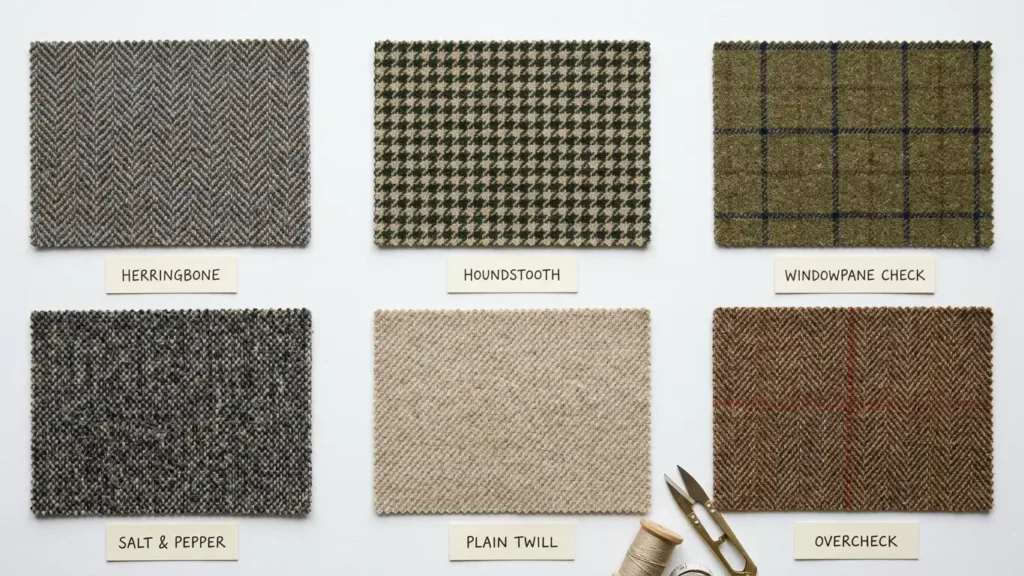
The pattern in tweed comes from two things: the weave structure and the color arrangement of the yarns. These are often combined.
| Pattern | Description | Common Use |
|---|---|---|
| Herringbone | Broken twill creating a V-shaped zigzag | Jackets, suits, most versatile |
| Houndstooth | Abstract four-pointed shapes, usually two-color | Coats, skirts, accessories |
| Plaid / Tartan | Horizontal and vertical stripes forming squares | Country wear, estate styles |
| Overcheck | Large check overlaid on a smaller base pattern | Estate tweeds, hunting jackets |
| Barleycorn | Tiny raised texture resembling grain kernels | Classic menswear |
| Salt & Pepper | Black and white yarns blended for a speckled neutral | Understated everyday wear |
| Plain Twill | Simple diagonal line, no complex pattern | Workwear, base for custom dyeing |
Tweed Fabric Properties & Characteristics
Understanding tweed’s physical properties helps you decide whether it suits a given project or garment.
Durability Tweed is among the most hard-wearing woven fabrics available. The dense structure resists tearing, abrasion, and distortion. A well-made tweed jacket, properly cared for, lasts decades.
Warmth Wool fibers trap air naturally, and tweed’s thick construction amplifies this. It performs well in cold, wet weather — which is exactly the climate it was designed for.
Water Resistance Raw wool contains lanolin, a natural wax that repels light moisture. Tweed doesn’t fully waterproof you in heavy rain, but it resists light drizzle and damp conditions far better than most natural fabrics. This is why it’s been trusted outdoor wear for generations.
Breathability Despite its weight, wool is breathable. It absorbs and releases moisture vapor, which prevents the clammy feeling you get with synthetic outerwear. You can wear a tweed jacket on a cool autumn walk without overheating quickly.
Texture The surface is rough and textured — this is a feature, not a flaw. That texture grips lint and light rain, holds structure, and ages handsomely. Over time, a worn tweed jacket softens slightly without losing its shape.
Weight Most traditional tweeds run between 12 and 21 oz per yard. Lightweight Shetland and Saxony tweeds (12–14 oz) work for jackets and skirts. Heavier Cheviot and Harris tweeds (15–21 oz) suit overcoats and country outerwear.
Pilling The coarser surface of tweed is prone to pilling in areas of repeated friction — underarms, seat, elbows. Regular brushing and careful storage minimize this.
Pros & Cons of Tweed Fabric
Pros
- Extremely durable — outlasts most other natural fabrics by years with basic care
- Naturally warm — excellent insulation without synthetic fill
- Weather-resistant — handles wind and light rain well
- Timeless aesthetic — rarely looks out of date
- Biodegradable — wool breaks down naturally, unlike synthetic alternatives
- Improves with age — softens and develops character over time
Cons
- Heavy — not suited for warm climates or lightweight garments
- Can feel scratchy — especially on sensitive skin without a lining
- Requires dry cleaning — machine washing typically causes shrinkage and distortion
- Prone to pilling — particularly in high-friction areas
- Higher cost — genuine wool tweeds cost significantly more than synthetic look-alikes
- Bulky seams — requires more skill when tailoring due to the fabric’s thickness
Tweed vs Other Fabrics
Choosing between tweed and another fabric usually comes down to weight, purpose, and season. Here’s a direct comparison across the fabrics most often confused or compared with tweed.
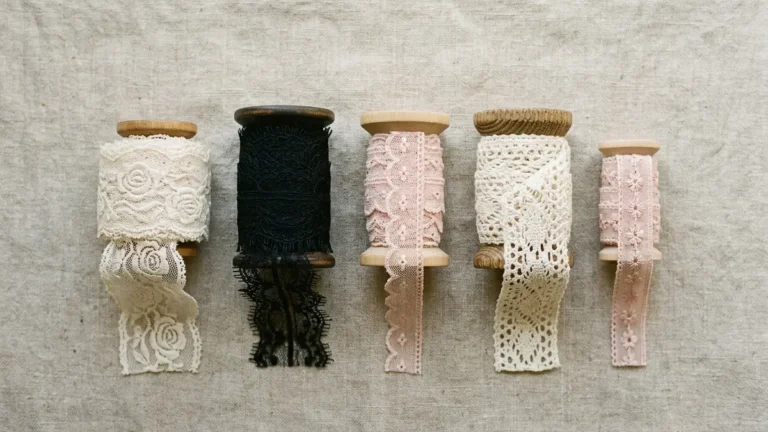
Just as understanding the differences between fabrics matters for tailoring decisions, it’s equally useful when choosing trims and accents — our guide to what is lace trim walks through how to pair delicate finishing materials with structured woven fabrics.
| Fabric | Weight | Warmth | Texture | Best For | Care |
|---|---|---|---|---|---|
| Tweed | Medium–Heavy | High | Rough, textured | Outerwear, suits, accessories | Dry clean |
| Flannel | Light–Medium | Medium | Soft, brushed | Shirts, trousers, casual wear | Machine wash (gentle) |
| Bouclé | Medium | Medium | Loopy, soft | Fashion jackets, Chanel-style pieces | Dry clean |
| Corduroy | Medium | Medium | Ribbed, velvety | Trousers, casual jackets | Machine wash |
| Plain Wool | Light–Heavy | Medium–High | Smooth | Suits, dresses, year-round wear | Dry clean |
| Chiffon | Very light | None | Sheer, delicate | Evening wear, blouses, layering | Hand wash |
For a deeper look at how lightweight fabrics compare in structure and application, see our breakdown of what is chiffon fabric — the contrast with tweed is stark and instructive.
If you’re evaluating performance fabrics for activewear or outerwear linings, our polyamide fabric guide covers how synthetic options stack up against natural fibers like tweed wool.
Tweed vs Bouclé deserves a specific note: these two are often mentioned together, particularly in fashion contexts. Bouclé has a looped yarn surface that’s softer and more flexible. Tweed is stiffer and coarser. They’re frequently combined — “tweed bouclé” is a real category — but they’re not interchangeable. Bouclé drapes; tweed structures.
How to Use Tweed
Fashion & Apparel
Tweed’s primary home is outerwear and tailoring.
Jackets and Coats The tweed sport coat is probably the fabric’s most iconic form. Originally designed for shooting and hunting — activities where weather resistance and durability matter — the tweed jacket became formal enough for city wear by the mid-20th century. A single-breasted tweed blazer in herringbone or houndstooth works as a smart-casual staple.
Suits A full tweed suit is a statement. It reads as confident and slightly unconventional — appropriate for creative industries, autumn events, or anyone who finds navy wool suits too predictable.
Skirts and Trousers Tweed skirts (knee-length or midi) and tweed trousers are practical and polished. The fabric’s structure means these garments keep their shape all day without creasing badly.
Accessories Flat caps, bags, and belts in tweed are common. The fabric is durable enough for high-use accessories and adds texture contrast when paired with smoother materials like leather.

Home Décor
Tweed is increasingly used in interior applications — upholstery for armchairs and sofas, cushion covers, and curtain fabric. Its durability makes it practical for heavy-use furniture, and its earthy tones work well in traditional or “country house” interiors.
Styling Tips
- Pair a tweed jacket with plain knitwear underneath — the texture already does the visual work
- Earth tones (olive, rust, camel, forest green) coordinate naturally with tweed’s heathered palette
- Leather accessories complement tweed’s rustic quality
- A tweed coat works over tailored trousers or a simple dress — no need to match fabric to fabric
- Avoid pairing two heavily textured pieces; let the tweed be the focal point
How to Buy Tweed Fabric
Tweed ranges from inexpensive fabric-mill yardage to legally protected handwoven cloth that commands a significant premium. Here’s how to navigate that range sensibly.
Identify Genuine Harris Tweed
Harris Tweed is the only tweed protected by an Act of Parliament (Harris Tweed Act, 1993). Authentic Harris Tweed must be:
- Handwoven by islanders at their homes in the Outer Hebrides
- Made from pure virgin wool dyed and spun in the Outer Hebrides
- Stamped with the Orb Mark — a certification logo issued by the Harris Tweed Authority
If there’s no Orb Mark, it’s not Harris Tweed. That’s not necessarily a problem — plenty of excellent tweeds come without it — but don’t pay Harris Tweed prices for something that isn’t.
Understand Weight and Its Implications
| Weight (oz/yd) | Typical Use |
|---|---|
| 10–13 oz | Lightweight jackets, skirts, fashion wear |
| 14–16 oz | Standard jackets, suits, everyday outerwear |
| 17–21 oz | Heavy coats, country outerwear, upholstery |
Check the Fabric by Hand
Run your hand across the surface. Quality tweed should feel dense and firm, not loosely woven or limp. Hold it up to light — the weave should be even with no thin spots. Rub a corner between your fingers; excessive shedding of fibers indicates poor construction.
Price Reference
| Category | Approximate Price Range (per yard) |
|---|---|
| Commercial / blended tweed | $8–$25 |
| Mid-grade pure wool tweed | $25–$60 |
| Scottish mill tweed (Shetland, Cheviot) | $40–$90 |
| Authentic Harris Tweed | $60–$130+ |
Where to Buy
- Specialist fabric retailers carry the widest range of tweed weights and patterns, often with swatch samples
- Scottish and Irish mills sell direct (online and in-person), with traceability by region
- Vintage and deadstock sources offer interesting estate tweeds and limited patterns at lower cost
- Fashion fabric platforms stock modern tweed blends (wool-cotton, wool-polyester) at accessible price points
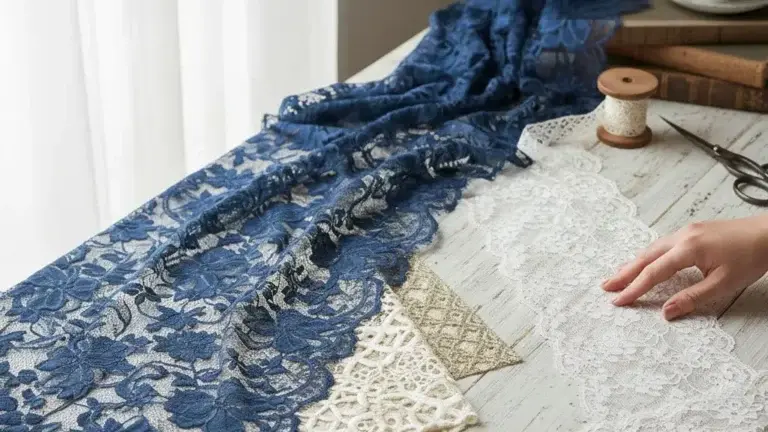
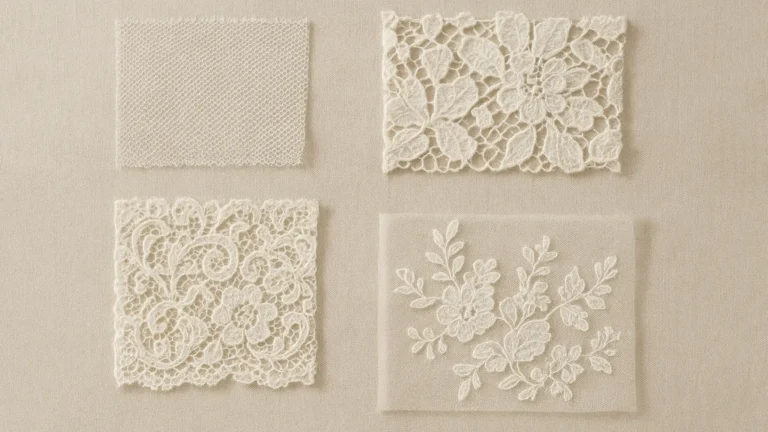
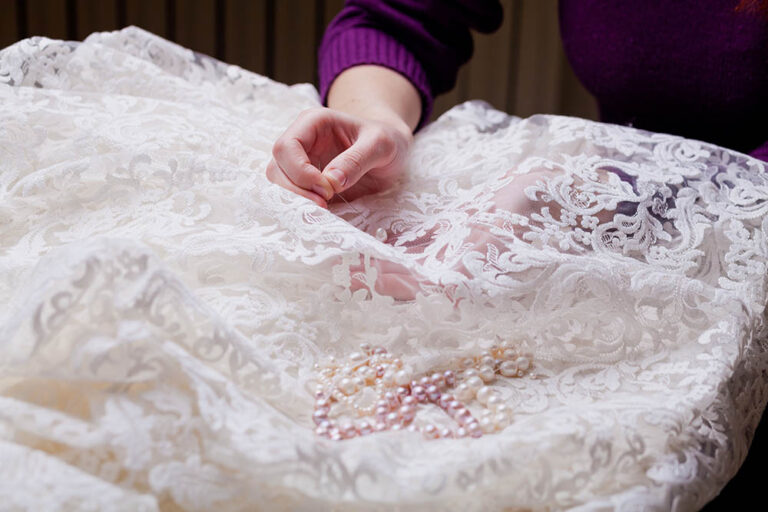
For those sourcing fabrics for fashion production, it’s worth exploring how different textile categories — from structured woolen cloths like tweed to delicate lace fabrics and performance mesh — can work together in a single collection.
Conclusion
Tweed is a fabric with genuine staying power — not because it’s fashionable in a seasonal sense, but because it does things other fabrics can’t. It keeps you warm in real weather, holds its structure through years of wear, and carries a visual richness that comes directly from how it’s made. Whether you’re sourcing cloth for a bespoke jacket, choosing upholstery for a living room chair, or just trying to understand what’s in your wardrobe, knowing tweed’s properties, types, and proper care helps you get more out of it. It’s one of those rare fabrics where the more you understand it, the more useful and interesting it becomes.
FAQ
Is tweed fabric itchy to wear?
Traditional wool tweed can feel scratchy, especially against bare skin. The coarser the wool (as in Cheviot or Harris Tweed), the more pronounced the texture. Lining your garment fully resolves this for most people. Softer varieties like Saxony or Shetland tweed are noticeably gentler. If sensitivity is a concern, look for blended tweeds that incorporate fine merino wool or silk.
Can you wash tweed fabric at home, or does it always need dry cleaning?
Most traditional wool tweeds should be dry cleaned. Machine washing typically causes irreversible shrinkage and distorts the weave structure. Some modern blended tweeds — particularly those with synthetic fibers — may tolerate gentle hand washing in cold water, but always check the care label first. When in doubt, dry clean.
What is the difference between Harris Tweed and regular tweed?
Harris Tweed is a specific legally protected fabric handwoven by islanders in the Outer Hebrides of Scotland using locally dyed and spun virgin wool. It carries the Orb Mark certification and is subject to the Harris Tweed Act of 1993. Regular tweed is a broader category covering any wool fabric woven in the tweed style — it can be machine-made, from any region, and using various wool blends. The authentication and production method are what set Harris Tweed apart, not just the look.
Is tweed fabric sustainable and eco-friendly?
Tweed’s sustainability depends on how it’s produced. Wool itself is renewable, biodegradable, and recyclable — advantages over synthetic fabrics. Traditional hand-production methods like those used for Harris Tweed have a low environmental footprint. Concerns around wool include sheep farming practices (land use, methane emissions) and chemical dyeing. Overall, a well-made tweed garment worn for many years has a lower environmental impact than cheaper alternatives replaced frequently.
What is the best tweed fabric for a suit versus an overcoat?
For a suit, lighter weights (12–16 oz) work better — they allow movement and won’t be excessively heavy when worn all day indoors. Shetland, Saxony, or lighter Donegal tweeds are good choices. For an overcoat worn outdoors in cold weather, heavier weights (17–21 oz) like Cheviot or Harris Tweed provide the durability and insulation needed. The weave matters too: herringbone suits are more refined, while plain or overcheck patterns lean more casual.