Eyelash Border Lace: Control Fringe, Repeat, and Dye-Lot Risk
Eyelash border lace looks delicate, but sourcing it well requires discipline. The soft fringe creates a premium edge, while the scallop repeat can reduce sewing work and improve garment appearance. The same features can also create risk if the buyer does not control fringe length, usable width, repeat placement, dye-lot behavior, and handling.
For buyers sourcing from a lace trim supplier, the key is to treat eyelash border lace as a functional edge, not only as decoration. It must look soft, but it also has to survive cutting, sewing, packing, and normal handling.
Why Eyelash Lace Needs a Different Brief
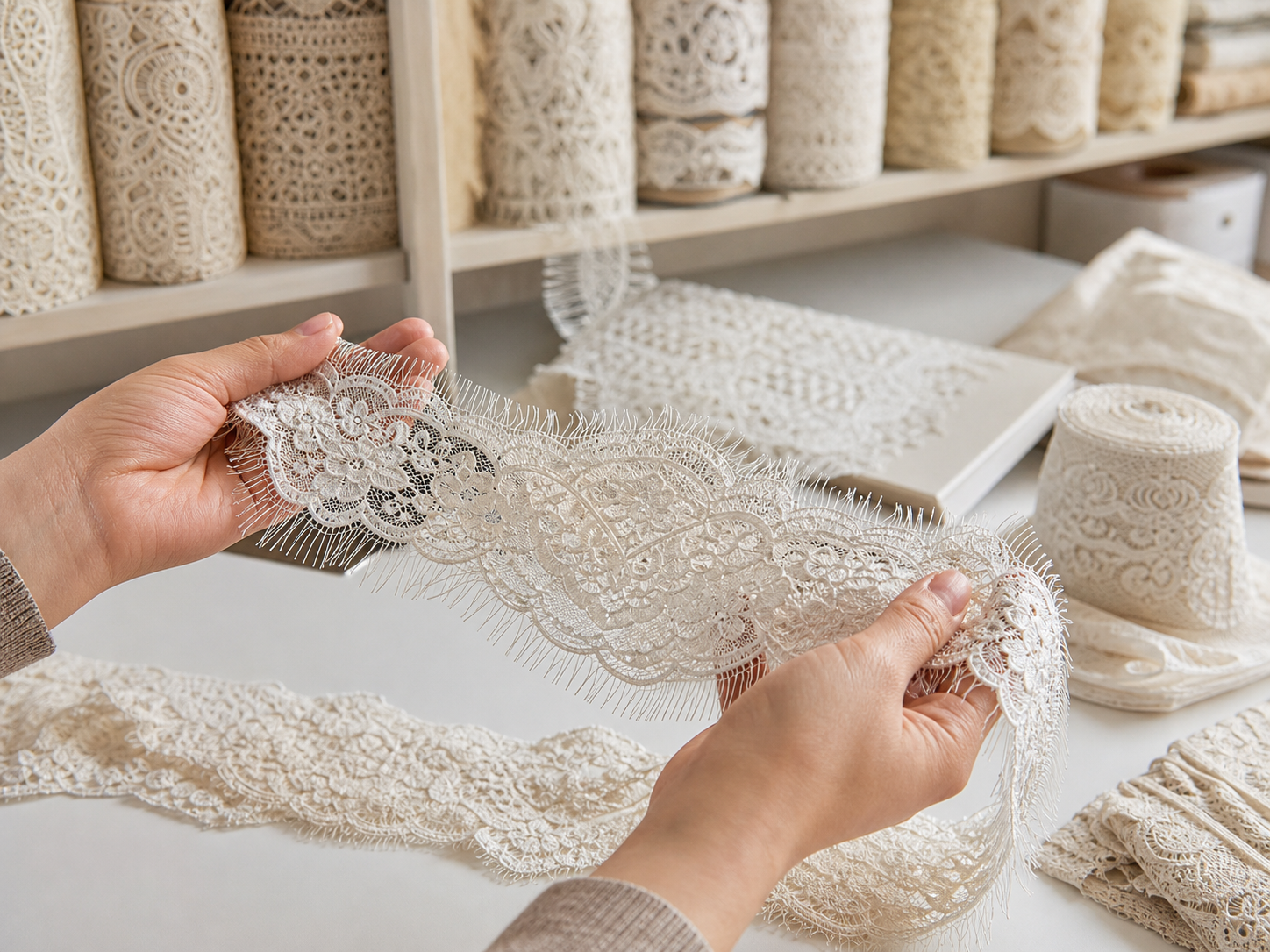
A standard trim brief may include width, color, and motif. Eyelash lace needs those details, plus edge behavior. The loose fibers are part of the visual value, but they are also the part most likely to show variation. If the fringe is too long, it can tangle or look untidy. If it is too short, the eyelash effect disappears. If it sheds easily, the garment may fail visual inspection even when the base lace is acceptable.
Describe where the lace will be used: neckline, hem, sleeve edge, lingerie panel, robe edge, overlay seam, accessory, or packaging detail. Each placement creates a different tension on the border. A neckline may need clean curvature. A hem may need repeat balance. A lingerie panel may need softer touch and tighter shade control.
Measure Usable Width, Not Only Total Width
For eyelash border lace, nominal width can be misleading. The fringe may extend beyond the stable knitted area, so buyers should ask for three measurements: stable base width, fringe extension, and total visual width. If the pattern requires a seam allowance, the stable base width is often more important than the full decorative width.
| Control Point | Question to Ask | Production Impact |
|---|---|---|
| Fringe length | What range is acceptable across the roll? | Controls softness, neatness, and shedding risk |
| Usable width | Does width include fringe or stable lace only? | Prevents costing and pattern errors |
| Scallop repeat | Where must the motif align? | Reduces cutting loss and imbalance |
| Edge direction | Is the eyelash edge one-sided or two-sided? | Changes marker planning and placement |
| Color route | Will the fringe and ground approve together? | Controls shade and edge clarity |
Check Fringe Before Approving Color
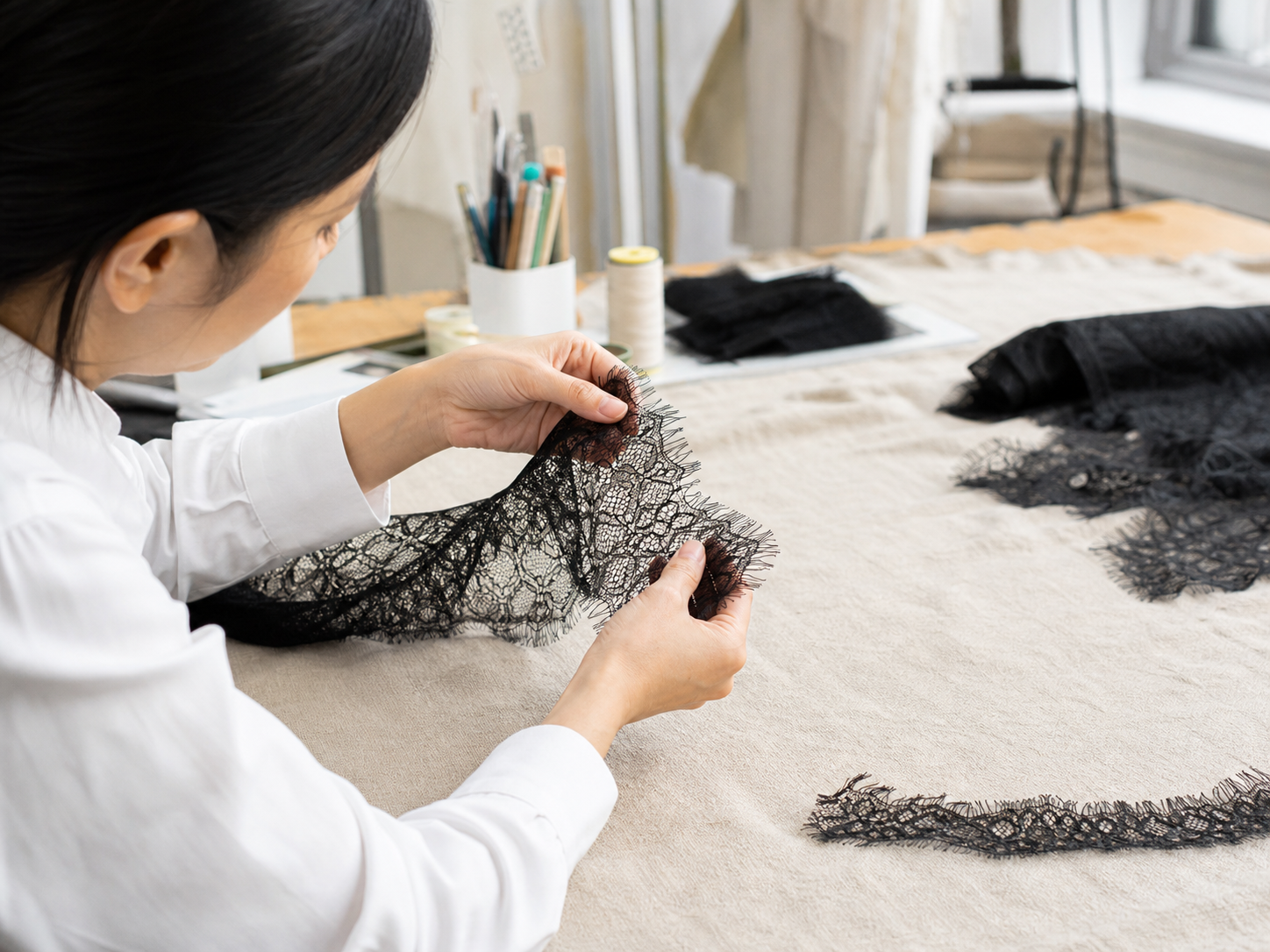
Color is easy to notice, so buyers often review it first. For eyelash lace fabric and border trim, fringe behavior should be checked just as early. Fold the edge, rub it lightly, place it over the intended base fabric, and review whether the soft fibers remain clean. The goal is not to make the edge rigid. The goal is controlled movement.
If the trim will be sewn into a garment, ask for a quick mock-up. A loose piece of lace may look beautiful on a table but wave, twist, or stretch differently when attached to curved fabric. A small sewing test can reveal more than another loose sample photo.
Plan the Scallop Repeat Around Cutting
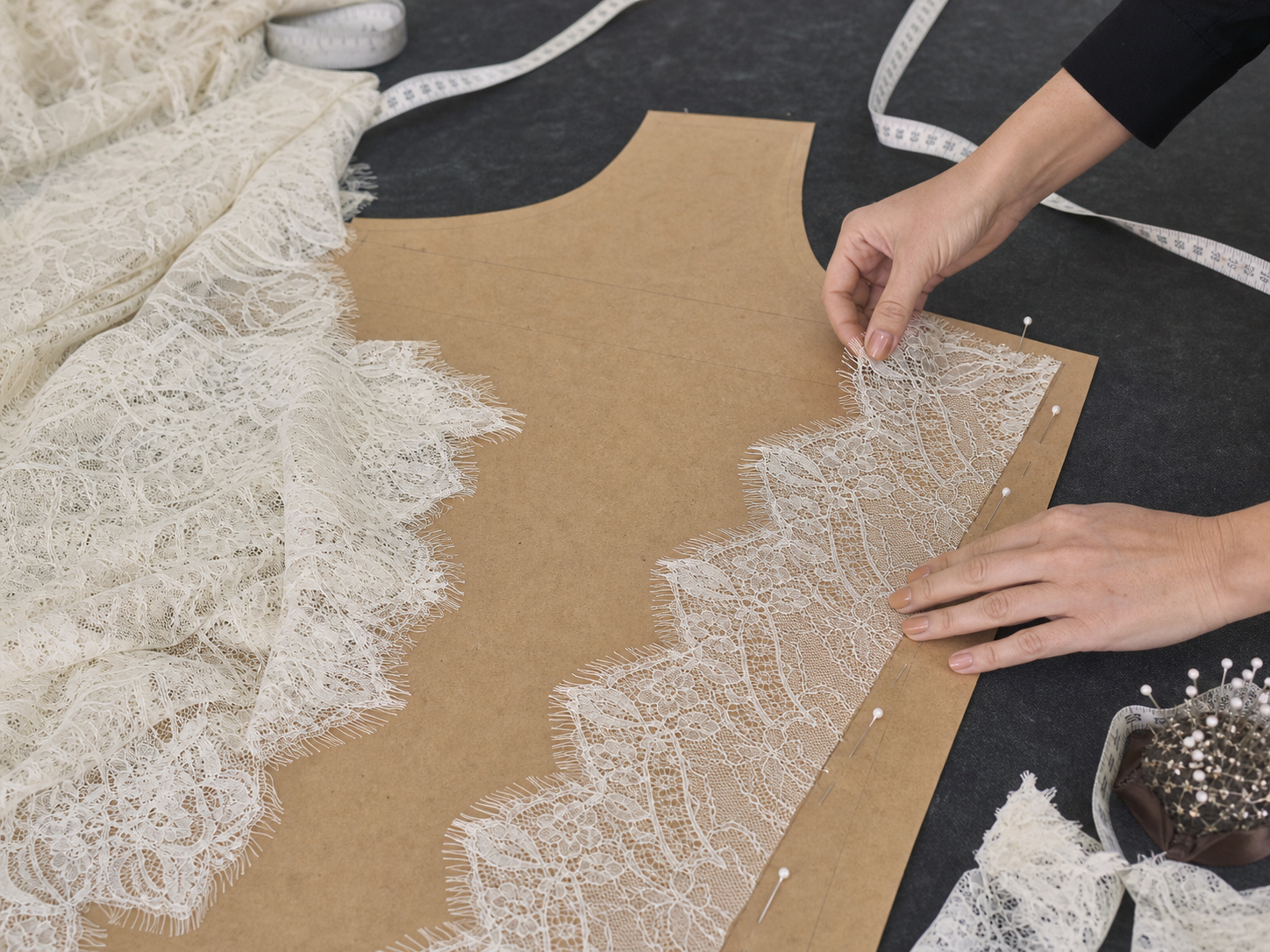
Border lace is bought by length, but it is consumed by placement. A repeat that looks efficient on a roll may waste material if it must align at center front, side seams, cups, sleeves, or paired panels. Before approving a lace trim wholesale order, ask how the scallop repeat fits the garment marker.
This is especially important when the same trim appears on left and right pieces. Some motifs look balanced when mirrored; others do not. If the motif direction matters, the buyer should confirm it before bulk, not during cutting.
Dye-Lot Risk Is Higher at the Edge
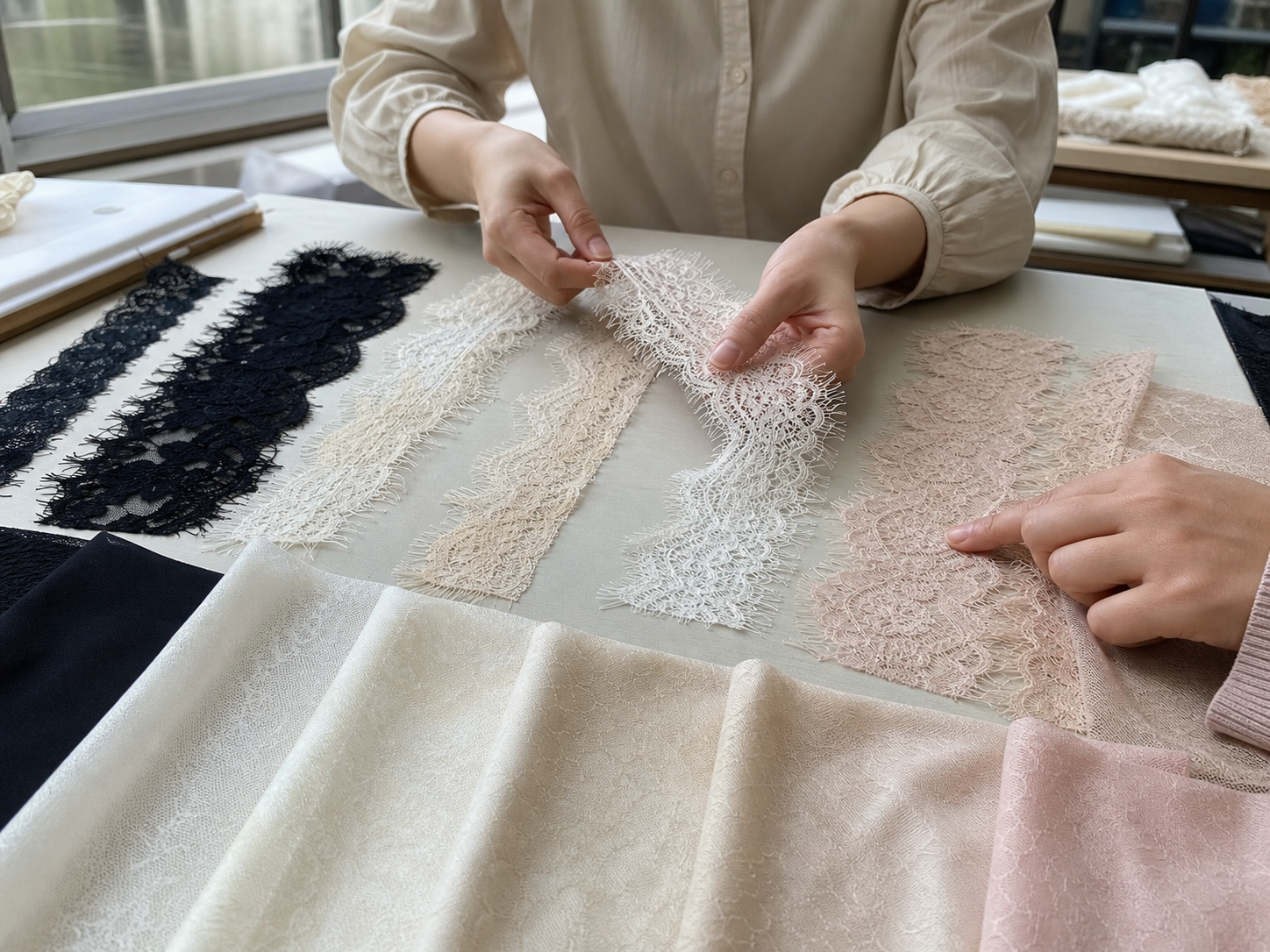
Eyelash fringe can reflect light differently from the base lace. Even when fiber content is similar, the loose edge may appear lighter, darker, shinier, or drier because the structure catches light differently. For neutral colors, the risk may be undertone. For dark colors, the risk may be edge clarity and rubbing. For fashion colors, the risk may be consistency between fringe and ground.
Review the actual lace construction in the target color when shade matters. If the lace must match a body fabric, place them together under the same light. Buyers comparing decorative trim options can also review Fuyuan’s B2B lace trim guide and the lace trim by the yard checklist for broader sourcing controls.
Inspection Steps That Make Feedback Clear
- Measure fringe length at several points, not only at the roll start.
- Check whether the fringe tangles after light handling.
- Compare stable width, fringe extension, and full visual width.
- Place the lace over the intended base fabric before approving shade.
- Review scallop repeat against the garment pattern or panel size.
- Test a short sewn mock-up when the edge will be visible.
Final Takeaway
Eyelash border lace works best when the sourcing brief connects design with production. Define fringe behavior, usable width, scallop repeat, color approval, and sewing use before bulk. A reliable China lace fabric and lace trim supplier can then adjust construction and finishing around the product goal, giving the border a soft look without letting it become unpredictable in production.