Best Lace Fabric for Skirts: A Buyer’s Guide from Fabric to Finished Hem
A buyer pulls two swatches off the same “lace for skirts” shelf. One is a near-transparent wisp you could crumple into a fist. The other has real weight, a raised corded pattern, and a fringe edge that moves on its own.
Both are technically correct answers to “lace fabric for skirts.” Neither works for every skirt.
This guide is for skirt and dress brand buyers, small-batch pattern makers, and independent designers sourcing lace for skirts specifically — not dresses, not veils. We’ll build a framework for matching lace to skirt, then apply it to a real product at the end.
What “Best” Actually Means for Skirt Lace
“Best” depends on four things, not one.
- Type — the construction (corded, guipure, stretch, embroidered) that sets weight and texture.
- Weight (GSM) — how heavy the fabric is, which decides whether it needs lining or stands on its own.
- Edge — how the lace finishes, which affects whether you’re designing around a hem or cutting into a panel.
- Occasion — where the skirt gets worn, which should drive every choice above it.
Skirts span more silhouettes than almost any other garment — pencil, A-line, tiered, bubble, midi, mini. That range is exactly why “best” needs a framework instead of a single recommendation.
The Lace Types That Keep Showing Up on Skirts
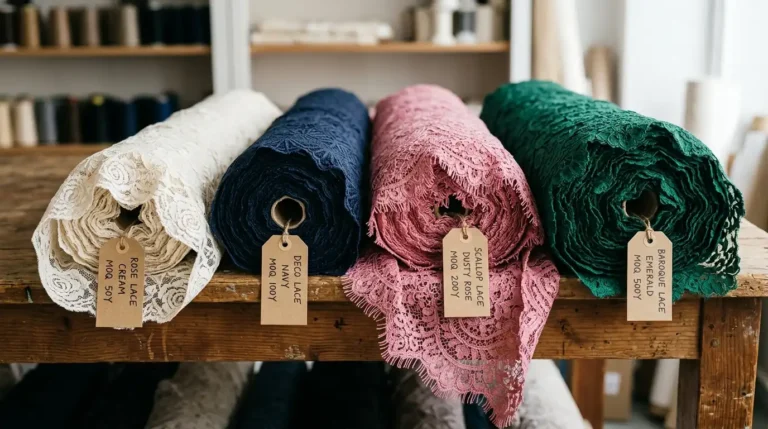
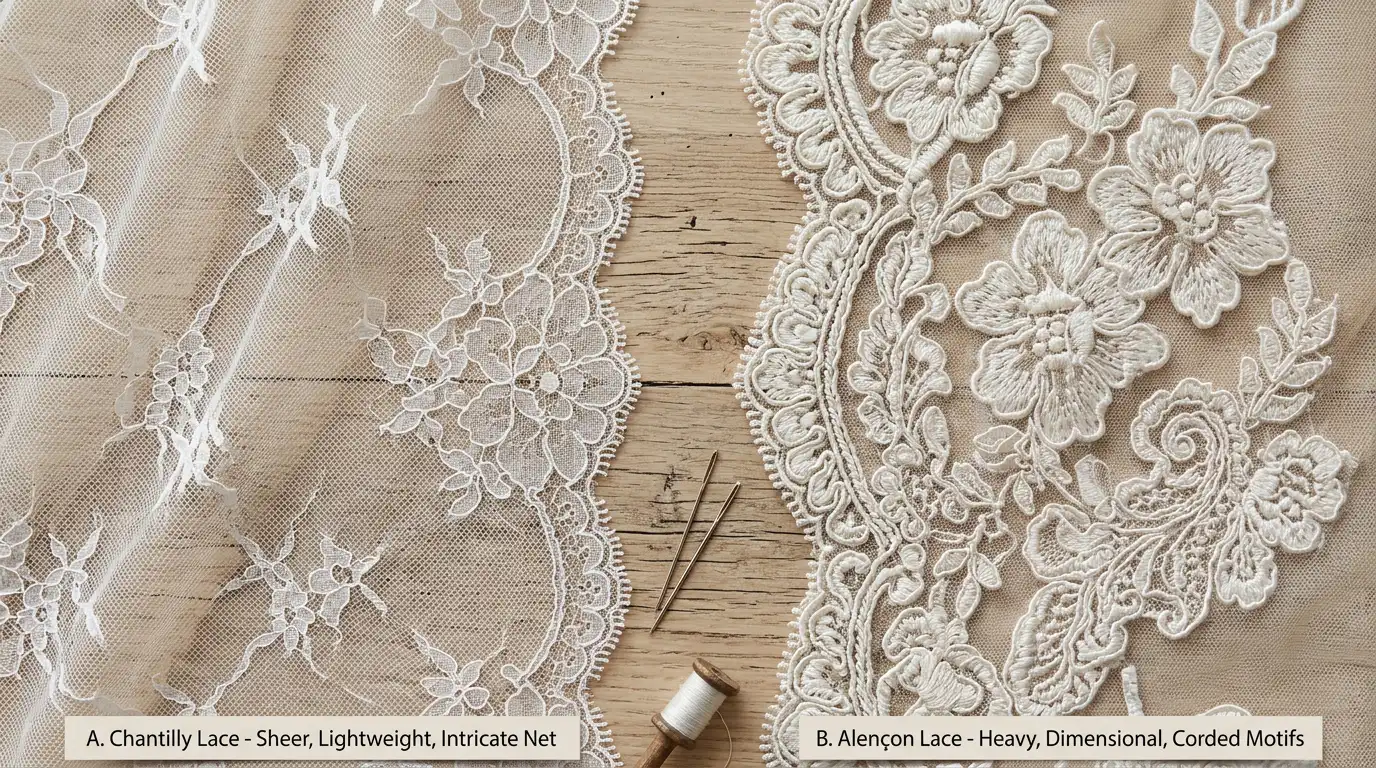
Corded lace outlines its pattern with a thicker, raised thread, giving it real dimension. It reads as structured and a little formal, and it’s heavy enough to hold a shape without lining. Our guide to eyelash lace fabric covers how corded construction compares to softer lace types in more technical detail.
Guipure lace skips the net ground entirely. Motifs connect through small bars instead of floating on mesh. That construction makes it stiff and graphic — strong enough to stand alone as a statement panel.
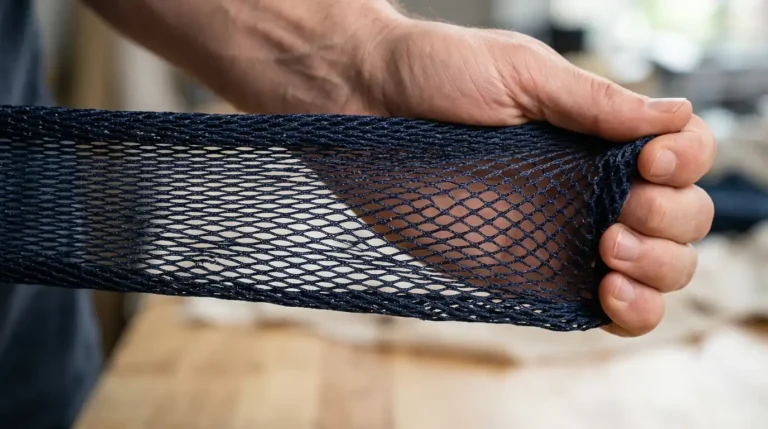
Stretch lace blends elastane into the base yarn, usually nylon. It’s the only real option for pencil and bodycon skirts, where the fabric has to move with the body instead of fighting it.
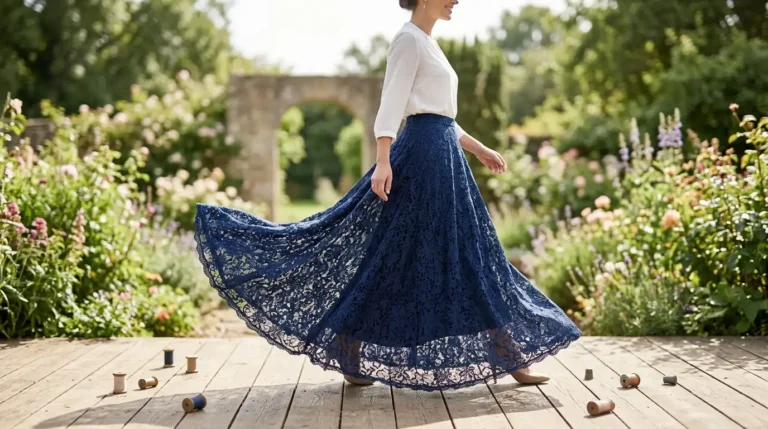
Embroidered and Chantilly-weight lace sit at the light end. Sheer, fluid, and better suited to A-line or tiered skirts where drape matters more than structure.
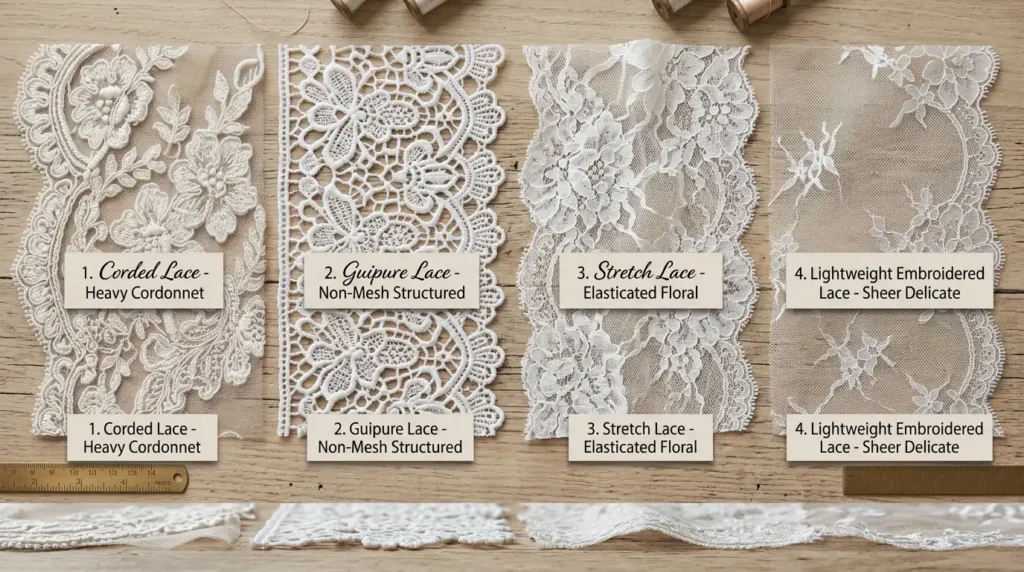
Our types of lace materials guide breaks down how these construction methods connect to fiber and machine type, if you want the fuller picture.
GSM by Skirt Silhouette: A Working Reference
Weight and drape aren’t the same thing, but they’re related enough to plan around. Here’s a rough band to work from.
| Weight Range | Feel | Best Silhouette |
|---|---|---|
| 40–70 g/m² | Sheer, fluid, needs lining | A-line, circle, layered tiers |
| 70–150 g/m² | Medium body, some structure | Midi, bubble, gathered waist |
| 150–280+ g/m² | Heavy, self-supporting, corded or beaded | Pencil, statement panel, structured wrap |
💡 Pro Tip: Ask for GSM in the same breath as the pattern name. “Corded lace” alone could mean anything from 90 g/m² to well over 250 g/m² depending on how dense the cording is.
A heavier lace doesn’t automatically mean a stiffer skirt, and a light one doesn’t guarantee softness. Always test-drape the actual swatch before committing to yardage.
One-Side vs Double-Sided Scallop Edges
Most sourcing guides treat scallop edges as one category. They aren’t.
Double-sided scalloped lace finishes both long edges of the panel. It’s built for situations where both sides of the fabric show — a full-width overlay, or a narrow trim running down a design’s center.
One-side scalloped lace finishes only one edge, usually paired with a straight or cut edge on the other side. That’s the better fit for a skirt hem. Only the bottom edge ever shows — the top gets sewn into a waistband or seam anyway.
⚠️ Warning: Ordering double-sided scallop for a hem application wastes half the design — and half the price premium you’re paying for it. Confirm which edge configuration you actually need before you quote yardage.
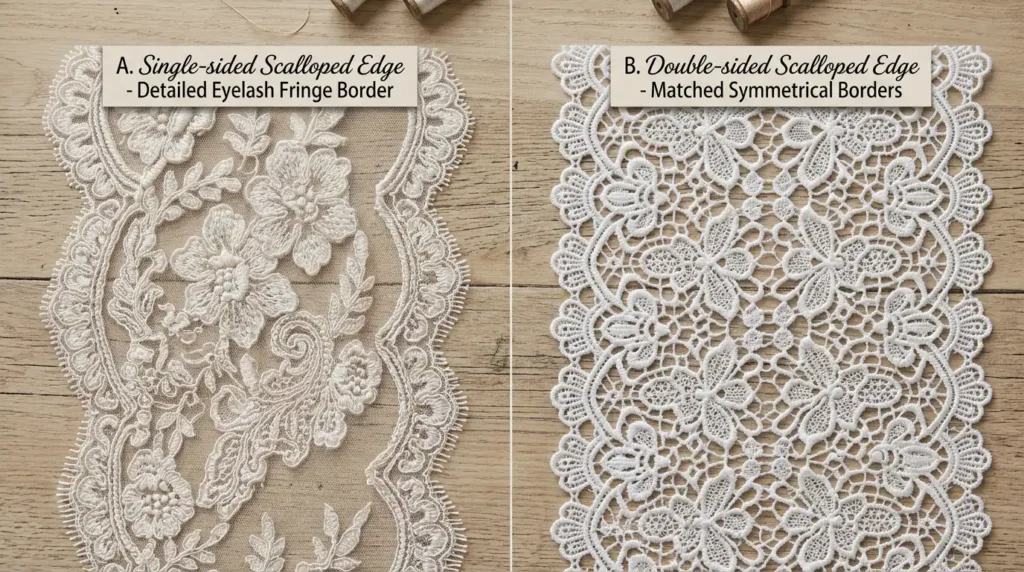
Matching Fabric to Occasion: Everyday vs Evening
Put type, weight, and edge together, and the occasion sorts itself out.
Daily wear and office skirts want light-to-medium weight, low-key edges, and enough stretch or lining to move comfortably through a full day. Subtlety wins here — a busy corded pattern reads costume-y under office lighting.
Evening and occasion skirts can carry more — heavier corded or guipure lace, a visible one-side eyelash edge, richer colorways. These are the details that photograph well and hold shape through hours of standing and dancing.
Read this by wear-time, not by trend. A skirt worn for eight hours needs different fabric behavior than one worn for three.
Sewing Techniques That Actually Matter for Skirts
Choosing the fabric is half the job. Sewing it correctly is the other half.
- Line it. Almost all skirt lace needs a lining underneath, both for opacity and to give sheer lace something to move against instead of clinging.
- Let the scallop do the work. A one-side scalloped edge can become the finished hem with no additional sewing — that’s the entire point of the design.
- Watch your seam allowance. Corded and heavily textured lace adds bulk at the seam; trim it back after stitching so it doesn’t show through the outer layer.
- Buy more than the pattern says. Motif matching at the seams eats yardage that a plain-fabric calculation won’t account for.
Our step-by-step guide to sewing lace trim covers the stitching details — needle size, stitch length, and how to stop a scalloped edge from puckering.
The Hardest Part: Pattern Matching on a Curved Panel
Here’s what makes skirts genuinely harder than most other lace garments.
A dress bodice is close to flat. A skirt panel curves around the body in a circle. That curve means a motif that lines up perfectly on a straight cutting table can drift out of alignment by the time the seam closes.
The fix isn’t clever cutting. It’s buying enough fabric to shift the pattern piece until the motif lands where you need it. That’s exactly why pattern repeat and extra yardage matter more for skirts than almost any other lace application.
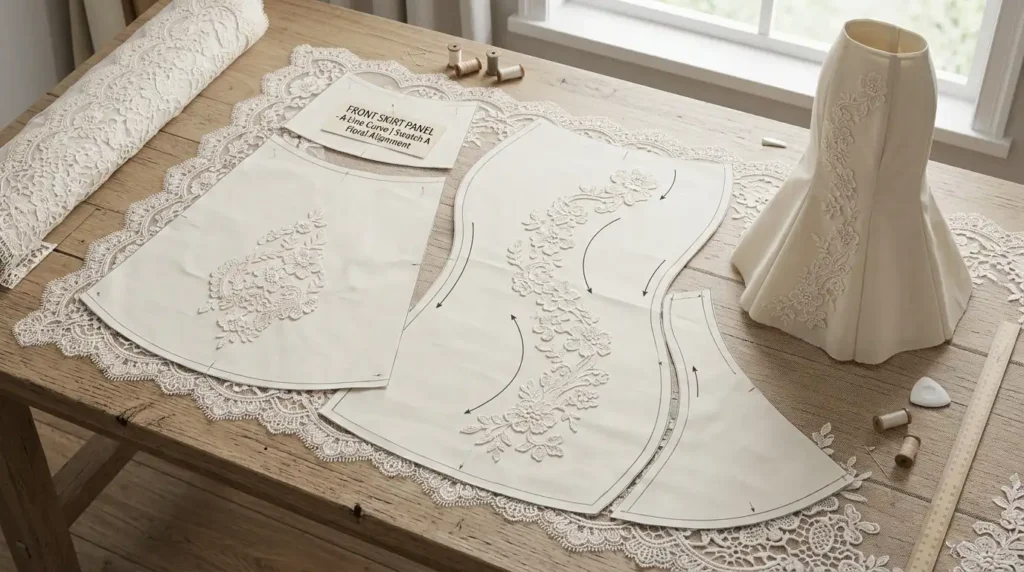
Case Study: A Corded Lace Built for Skirts
Every variable above shows up in one real product: G53, a corded lace with a one-side eyelash edge.
The specs make the framework concrete. It’s 75 × 150 cm, roughly 280 g/pc — solidly in the heavy, self-supporting band from the GSM table above.
The corded nylon-and-cotton construction gives it a strong 3D floral and leaf pattern. The one-side eyelash edge is built specifically to sit at a hem, not to run down both sides of a panel.
That combination is why it’s specified for skirts rather than flowing dresses or veils. The weight holds structure without lining, and the finished edge does the hem work for you.
It comes in three colorways: yellow/black, blue/black, and burgundy/gray. Lighting and screen display shift how any lace color reads, corded lace especially. A physical swatch before bulk confirmation is worth the extra few days.
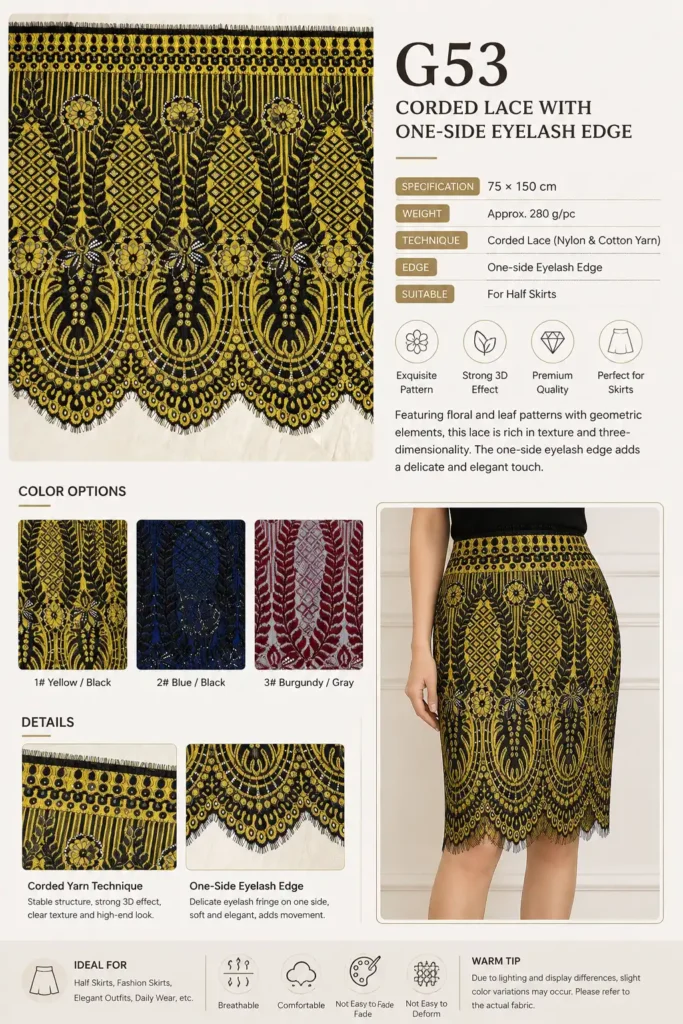
If a corded, one-side eyelash edge lace fits your sourcing needs, our lace fabric collection is a good place to browse and confirm current colorways.
Match the Skirt, Not Just the Swatch
Sourcing lace for a skirt line? Type, weight, edge, and occasion — get those four to agree, and the fabric does most of the design work for you.
Fuyuan Knitting produces corded, eyelash-edge, and stretch lace fabric for fashion and skirt brands. In-house dyeing keeps colorways like G53’s consistent across a full production run.
Reach out for swatches and we’ll help match the construction to the silhouette, not just the pattern name to the pattern name.