How to Style Long Skirts: Why the Fabric Decides Before You Do
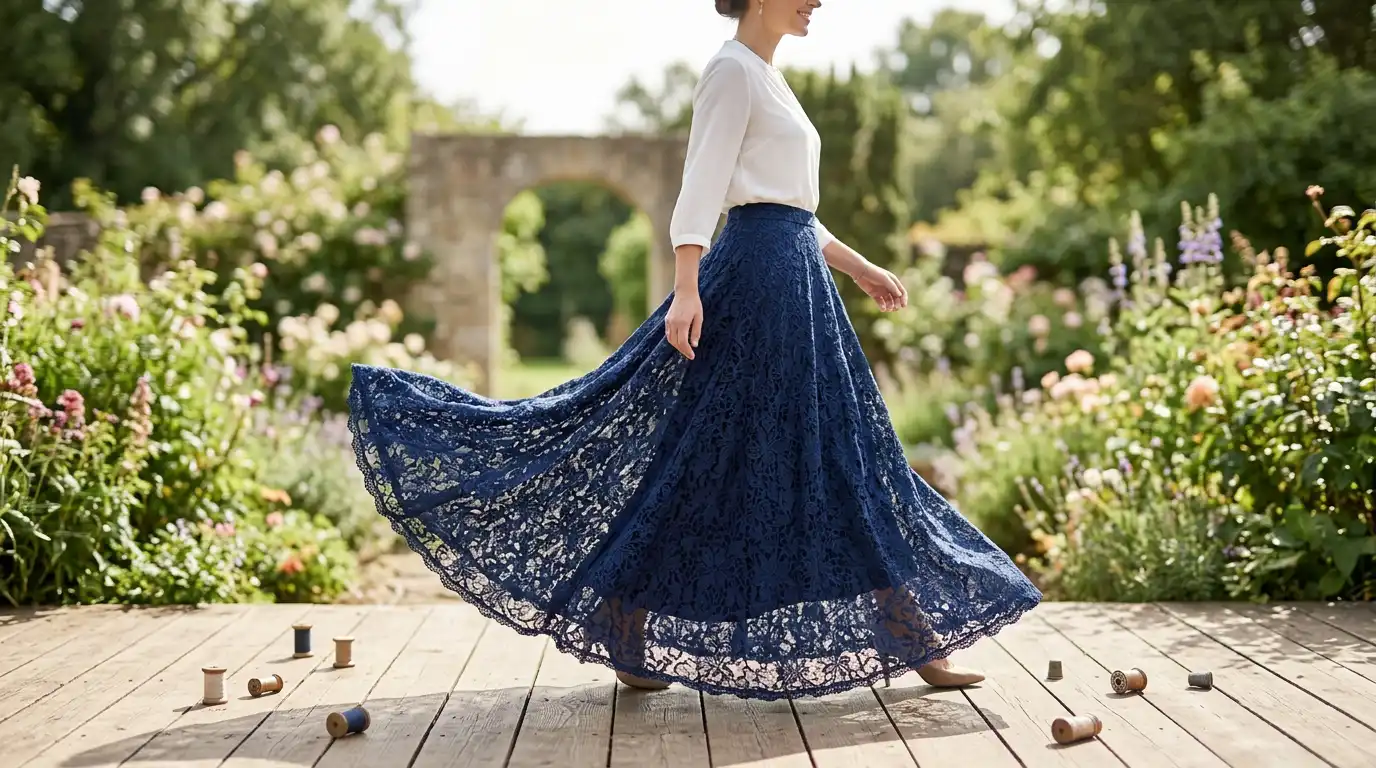
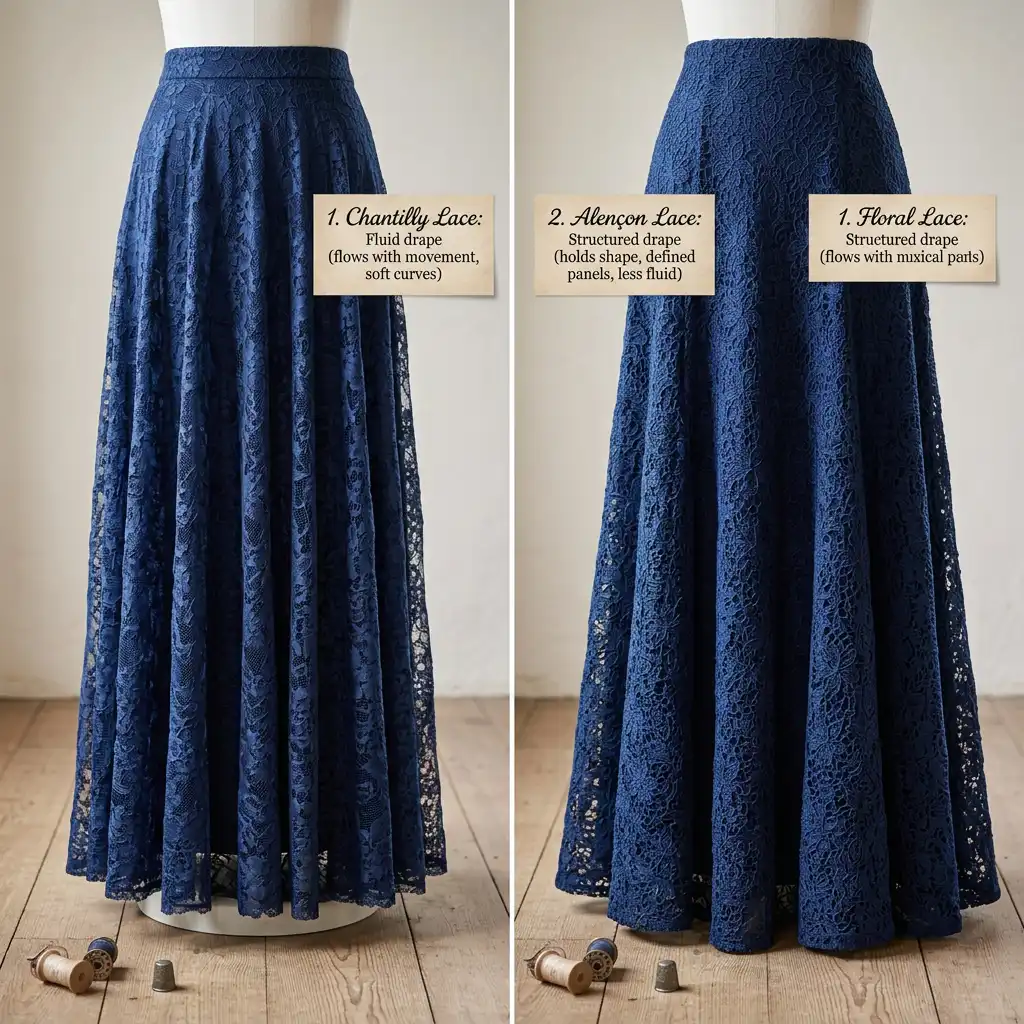
Two long skirts. Same silhouette, same length, same pattern maker.
One moves when you walk. The other just sits there, stiff at the hem.
The cutting was identical. The fabric wasn’t.
This guide is for dress and skirt brand buyers and small-batch designers. It’s for anyone trying to figure out why some styling advice works on one long skirt and fails on another.
The short answer: the fabric was deciding the outcome long before anyone chose an outfit.
Styling Advice Assumes You Already Picked the Right Fabric
Most “how to style a long skirt” guides start after the fact. Pick shoes, add a belt, layer a jacket.
None of that works if the fabric fights the silhouette from the start. Three things decide whether a long skirt drapes, moves, and photographs the way a stylist promises:
- Drape — how the fabric falls under its own weight.
- Fiber content — what the yarn is actually made of, which sets that drape.
- Pattern direction — how a printed or knitted design behaves once it’s cut into curved pieces.
Get these right, and the styling tips actually work. Get them wrong, and no amount of accessorizing fixes a skirt that hangs like cardboard.
Drape Is What Decides How a Long Skirt Actually Behaves
Drape is simply how fabric falls under its own weight — fluid and flowing, or structured and stiff.
A high-drape fabric moves with the body. It skims rather than clings, and needs a fitted or cropped top to keep the whole outfit from reading as shapeless.
A low-drape fabric holds its own shape. It can carry bolder accessories precisely because the skirt itself already has enough visual weight to not get lost.
💡 Pro Tip: Don’t judge drape from a flat swatch on a table. Pick the fabric up and let six inches hang free — that’s the only way to see how it will actually move on a body.
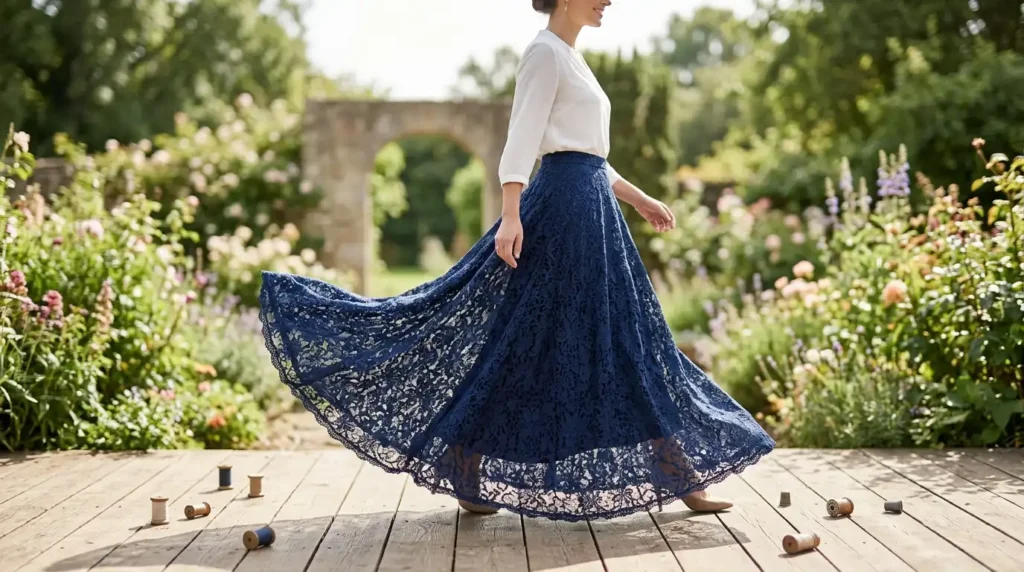
Our guide to testing lace fabric before bulk production covers how buyers check steam response and relaxation. Both properties quietly shape how a fabric drapes once it’s off the roll.
Where That Drape Actually Comes From: Fiber Content
Drape isn’t random. It comes from what the yarn is made of.
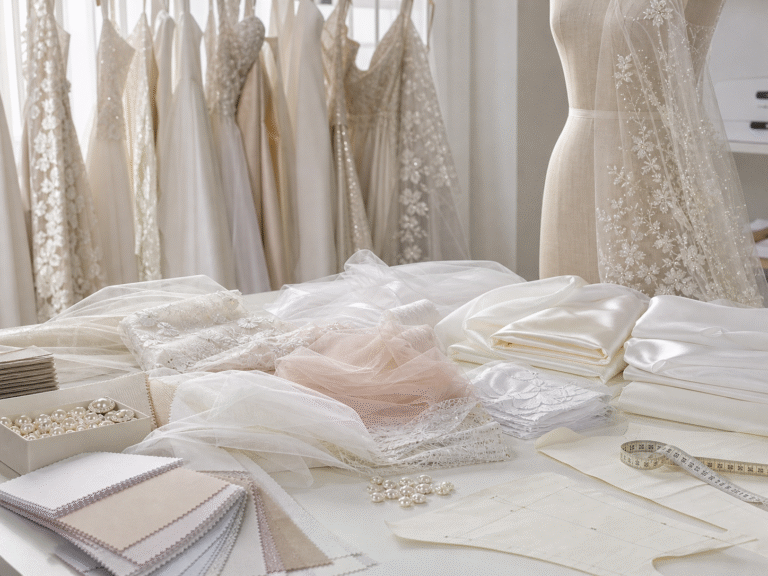
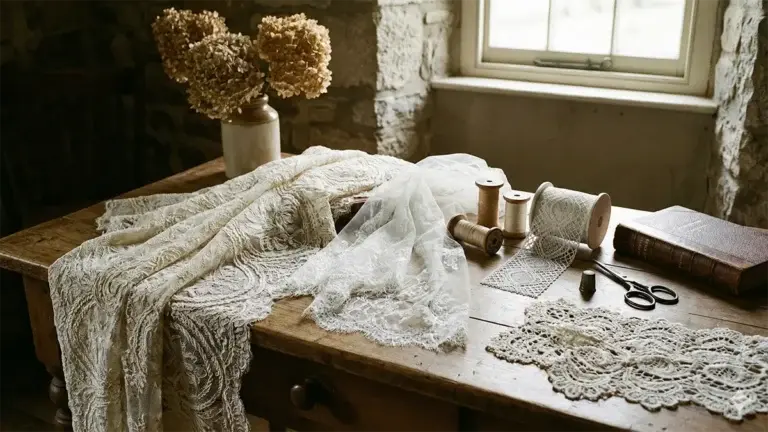
Nylon is the base fiber behind most eyelash and bridal lace. It tends to be light and fluid, which is one reason it shows up so often in veils and evening overlays.
Cotton-and-polyester blends behave differently. Cotton adds body and a soft, matte hand; polyester adds structure and shape retention. Together they land somewhere between fluid and stiff — soft enough to feel comfortable against skin, structured enough to hold a defined silhouette.
That’s not a downgrade from nylon lace. It’s a different job. A cotton-poly lace built for everyday dresses and skirts isn’t trying to behave like a bridal overlay, and it shouldn’t be judged against one.
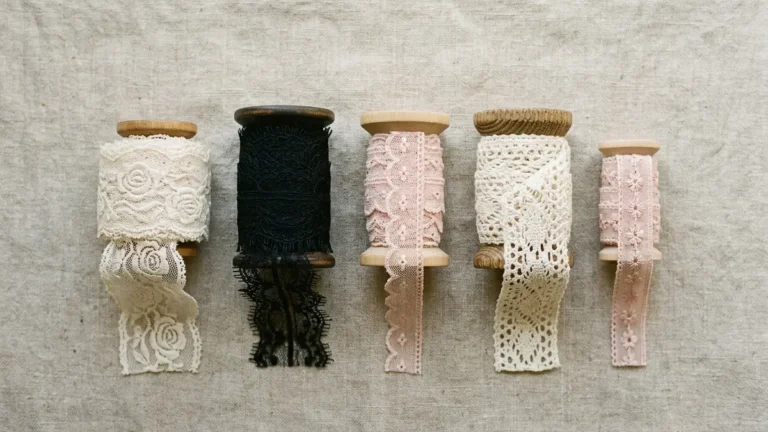
Our types of lace materials guide covers how fiber choice connects to the wider family of lace constructions, if you want the fuller picture.
The Fiber Blend Also Decides How You Have to Wash It
Fiber content doesn’t just set the drape. It sets the care instructions too — and this is where a lot of buyers get surprised.
Cotton shrinks under hot water and high heat. Polyester softens and can warp under the same conditions. A cotton-poly blend inherits both weaknesses at once, not just one.
That’s why blended lace almost always ships with conservative care instructions: cool water, no bleach, low-heat ironing, and dry cleaning recommended over home laundering. It’s not caution for its own sake — it’s the only setting safe for both fibers at the same time.
⚠️ Warning: Never assume a cotton blend can handle the same wash temperature as pure cotton. The polyester half of the yarn has a lower heat tolerance, and it sets the real limit.
Diagonal Patterns Add One More Layer of Difficulty
Most lace patterns repeat straight up and down the fabric. Diagonal patterns don’t — and that changes how a long skirt gets cut.
A motif set on the diagonal has to be matched carefully across every seam, or the pattern visibly breaks where the panels meet.
Sewing guides that cover diagonal and striped fabrics consistently point to two fixes. Cut a single layer at a time instead of folding the fabric. Buy extra yardage too — often a quarter to a full yard more — to leave room for matching.
For a long skirt with several curved panels, that extra step matters a lot. It’s what separates a continuous flowing pattern from one that looks stitched together from mismatched pieces.
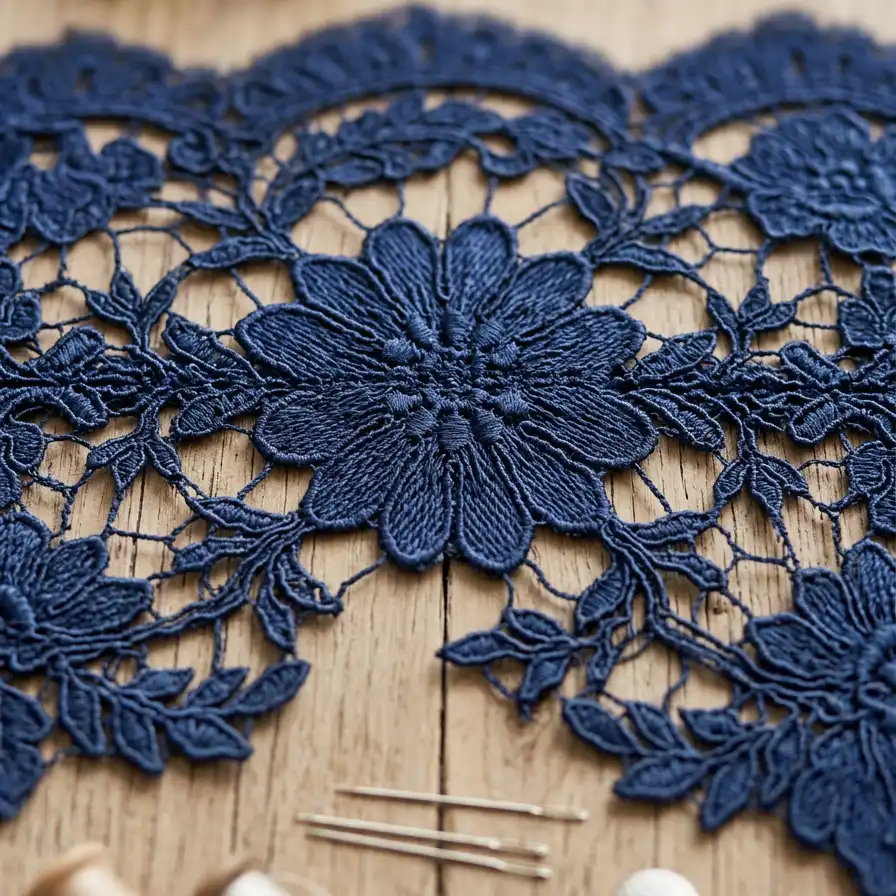
Case Study: G114 Lace Fabric
G114 is a working example of everything above, not a separate topic.
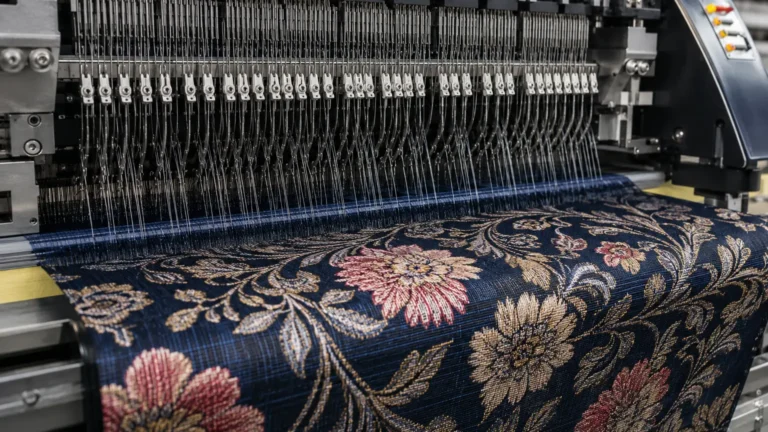
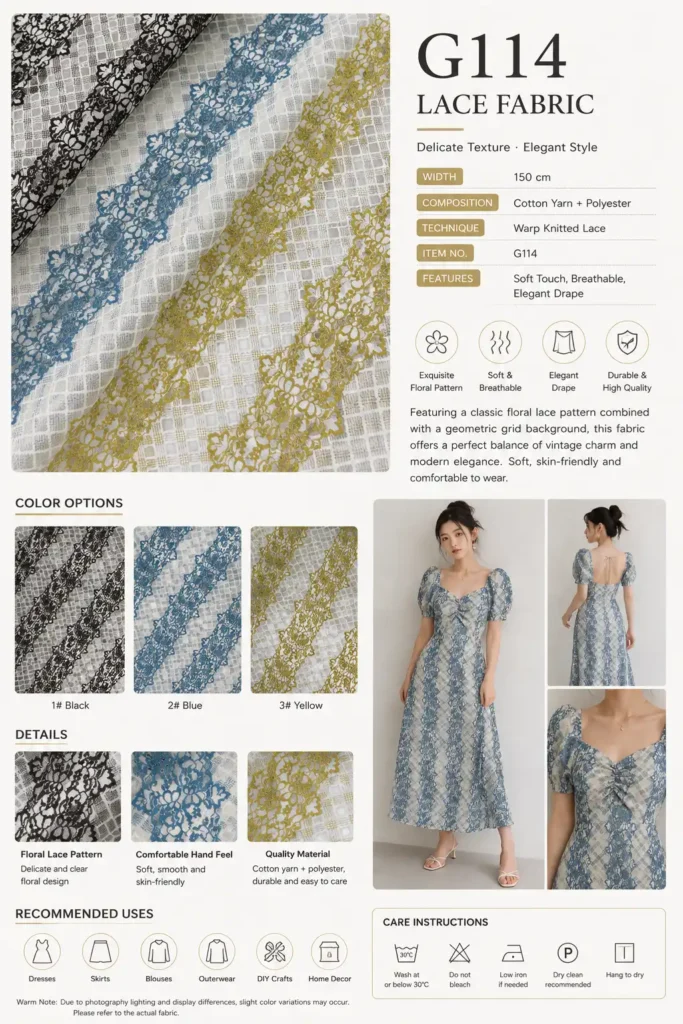
It’s a cotton yarn and polyester warp-knitted lace, 150cm wide, carrying a floral pattern set diagonally across a geometric grid ground. The blend gives it what the spec sheet calls “elegant drape” — soft enough to move, structured enough to hold shape without lining.
The diagonal layout is exactly the pattern-matching case discussed above. And the care instructions follow the conservative cotton-poly protocol discussed earlier, not a simpler synthetic-only routine. That means wash below 30°C, no bleach, low iron, dry clean recommended, and hang to dry.
It ships in three colorways — black, blue, and yellow — each keeping the same diagonal floral-on-grid structure. The listed uses go beyond skirts, too: dresses, blouses, outerwear, even home décor. That range tracks with a blend built for everyday wear, not a single occasion.
If a soft-structured, everyday-wearable lace fits your next collection, our lace fabric collection is a reasonable place to start browsing constructions.
The Styling Tips Were Never the Whole Story
Long skirt looking flat despite following every styling rule you’ve read? Check the fabric first.
Drape, fiber content, and pattern direction decide what a long skirt is capable of before a single accessory gets added.
Fuyuan Knitting develops both nylon-based lace for bridal and eveningwear, and cotton-poly blends like G114 for everyday dresses and skirts. In-house dyeing keeps each colorway consistent across a full run.
Reach out for swatches and tell us what the finished garment needs to do. We’ll help you pick a fiber blend that actually supports it.