Stretch Lace Fabric: What It Is, How It Differs from Rigid Lace, and When to Use It
A bra wing that measured perfectly on the flat pattern can still pop its seams at the first fitting if it was cut from rigid lace: the garment needs to stretch around the ribcage, and the lace won’t. Stretch lace fabric solves that: it is lace knitted with spandex (elastane) in the ground, so it stretches and recovers like a knit, while non-stretch lace holds a fixed shape. This guide is for lingerie, bridal and fashion buyers and designers deciding where stretch lace belongs in a garment, how to check it, and what to put on the spec sheet.
What Stretch Lace Is Made Of
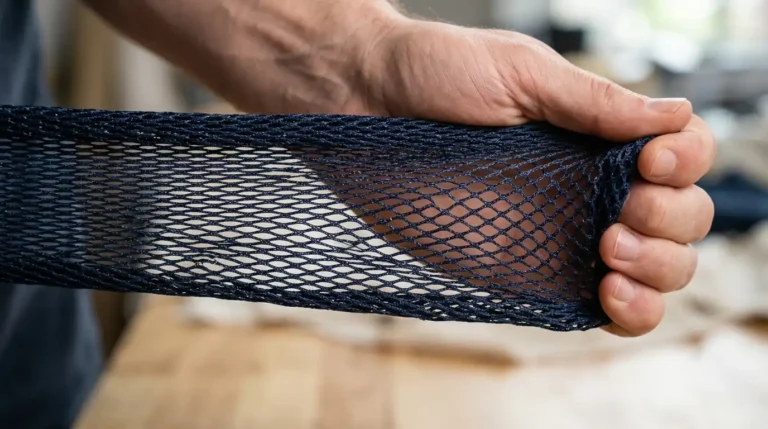
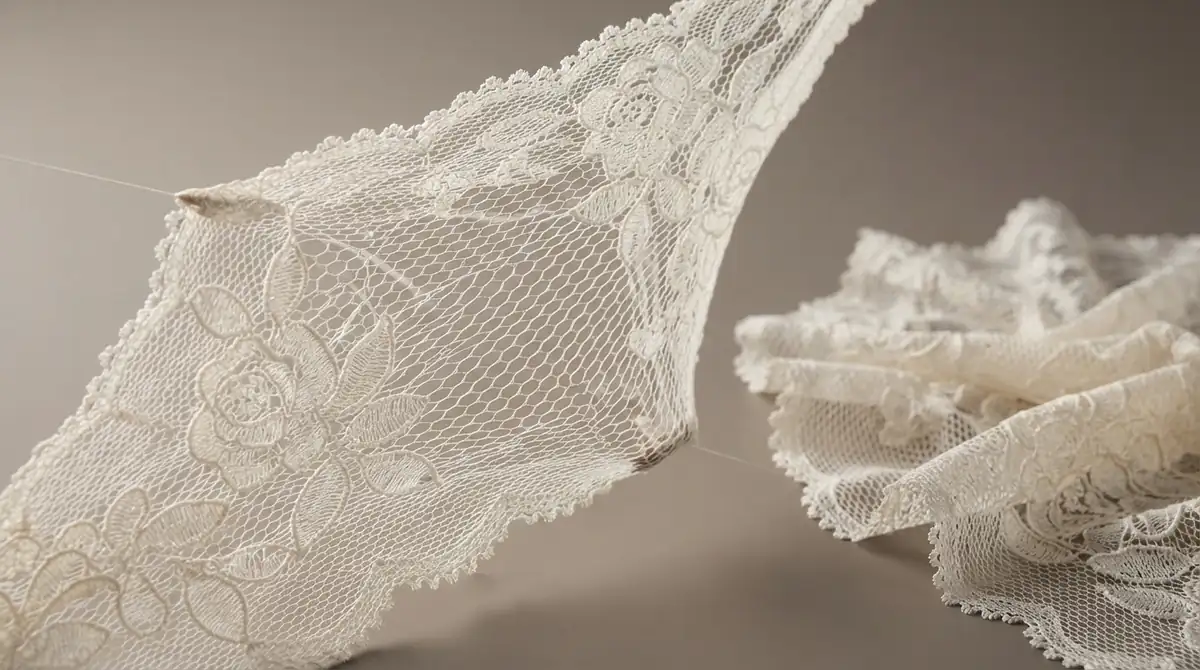
Most stretch lace is made on Raschel warp-knitting machines. The machine knits the open mesh ground and the pattern at the same time, and lays spandex yarn into the ground so the whole fabric can extend and spring back.
The usual blend is nylon plus spandex. Around 90% nylon and 10% spandex is a common starting point, and softer, stretchier qualities go higher; treat these as rule-of-thumb ranges and confirm the exact blend with your supplier. Nylon gives the fine, soft surface and dyes to deep, even colors. Polyester stretch laces also exist and are usually cheaper, but they dye differently from nylon, which matters when you need to match other components (more on that below).
On a US care label, the stretch fiber is listed as spandex, the generic name under the FTC’s textile labeling rules (16 CFR 303.7). “Elastane” is the name used in Europe for the same fiber family, and our elastane fabric guide explains how the fiber itself works.
Stretch Lace vs Non-Stretch Lace
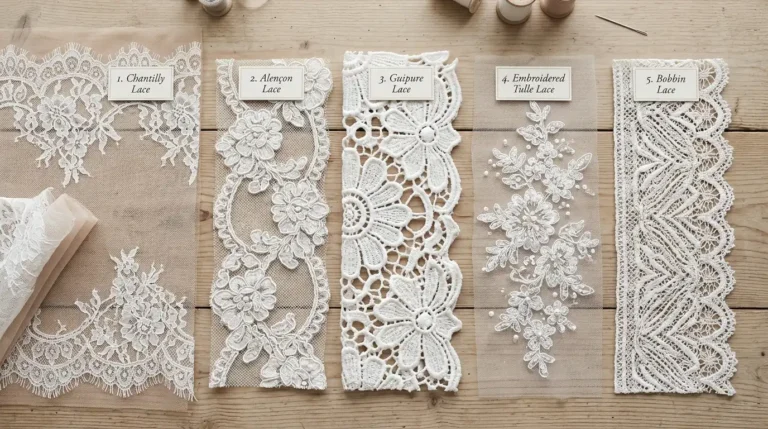
Non-stretch (rigid) lace covers several different constructions: Leavers lace such as Chantilly, guipure, corded lace, and lace embroidered onto tulle or organza. They share one trait: they keep their shape instead of moving with the body.
| Stretch lace | Non-stretch lace | |
|---|---|---|
| Construction | Raschel warp knit with spandex in the ground | Leavers, guipure, embroidered or rigid Raschel |
| Typical fibers | Nylon/spandex, sometimes polyester/spandex | Nylon, polyester, cotton, viscose |
| Movement | Stretches and recovers | Holds a fixed shape |
| Hand and drape | Soft, clinging, lightweight | Crisper, more structured |
| Cutting motifs out | Possible, but edges can curl and distort | Easier; motifs stay flat for appliqué |
| Typical uses | Bras, bralettes, bodysuits, fitted sleeves, bodycon dresses | Bridal overlays, appliqué, structured gowns, corset panels |
| Sewing | Stretch stitches, no hot iron | Standard stitches; tolerates more pressing |
Neither is better. Stretch lace wins wherever a garment has to fit closely and move; rigid lace wins where the design depends on crisp motifs, appliqué or a shape that shouldn’t change. Our overview of types of lace materials covers the rigid constructions in more detail.
Stretch Lace Fabric vs Stretch Lace Trim
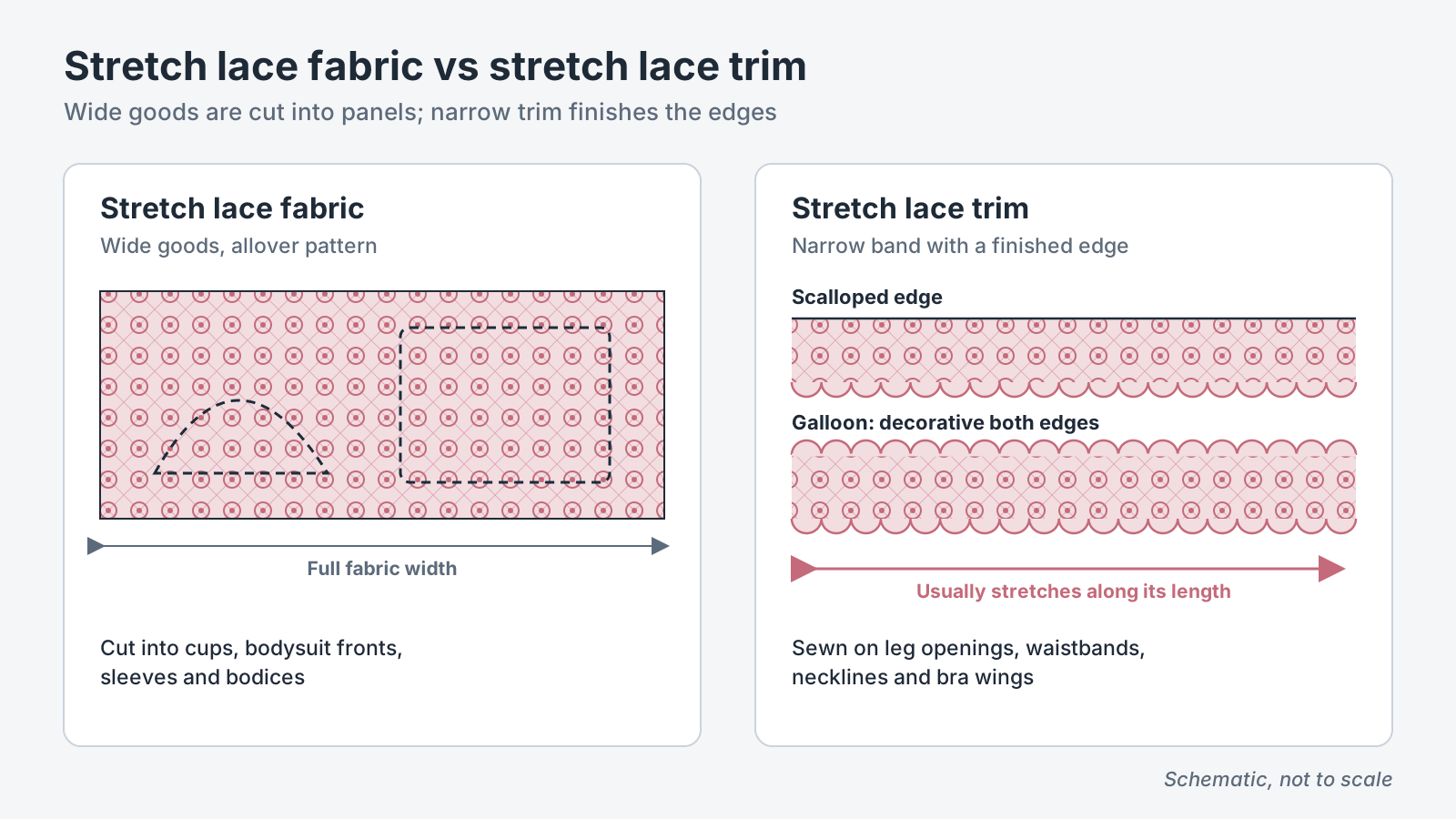
The two are sold, specified and used differently:
- Stretch lace fabric is wide goods with an allover pattern, cut into panels such as bra cups, bodysuit fronts, sleeves or a dress bodice.
- Stretch lace trim is a narrow band with a finished edge, often scalloped or with an eyelash fringe, sewn along leg openings, waistbands, necklines and bra wings. Galloon trim has a decorative edge on both sides.
Trim usually has to stretch along its length, because it follows an edge that moves. Fabric needs stretch in the direction the body pulls on that particular panel.
How to Check Stretch, Direction and Recovery
“Stretch lace” on a swatch card doesn’t tell you how much it stretches or in which direction. Three things decide whether a lace suits your pattern:
- Direction. Some stretch laces stretch mainly in one direction, others in both. Mark the stretch direction on the pattern pieces and on the spec sheet, or a cutting room may lay pieces the wrong way. Our stretch fabric guide explains 2-way versus 4-way stretch.
- Amount. Mark 10 cm on a swatch, stretch it gently to a comfortable maximum without straining the lace, and read the new length. 15 cm means about 50% stretch.
- Recovery. Release the swatch, wait a minute, and measure again. Good stretch lace returns close to the original 10 cm. A swatch that stays noticeably longer will bag in the garment.
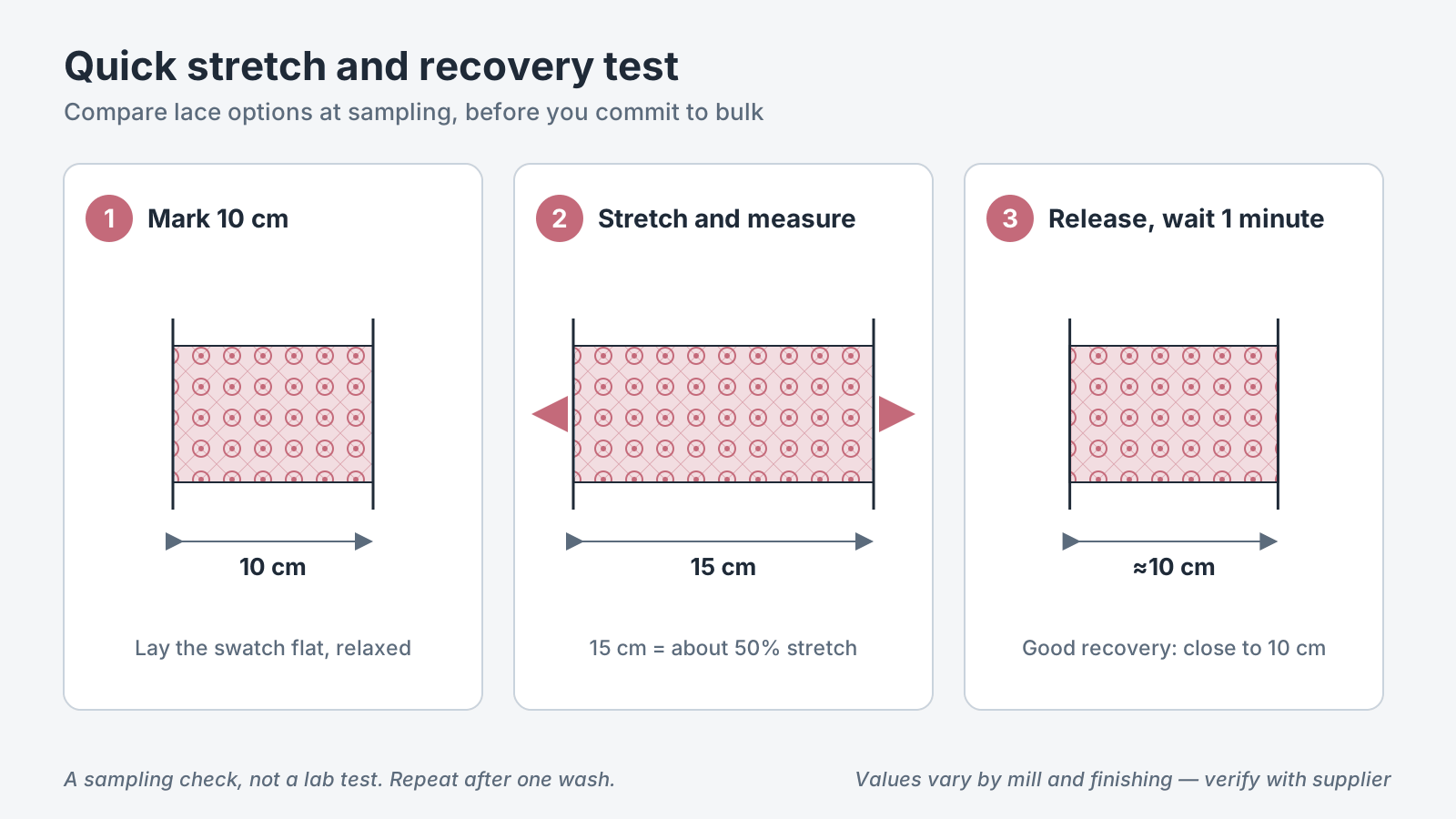
This quick test is for comparing options at sampling, not a lab result. Values vary by mill and finishing, so confirm stretch and recovery with your supplier on the production quality.
⚠️ Warning: Repeat the test after one wash. Some laces measure well off the roll but relax or shrink after washing; our lace shrinkage test shows how to check before bulk.
Where Stretch Lace Works, and Where It Doesn’t
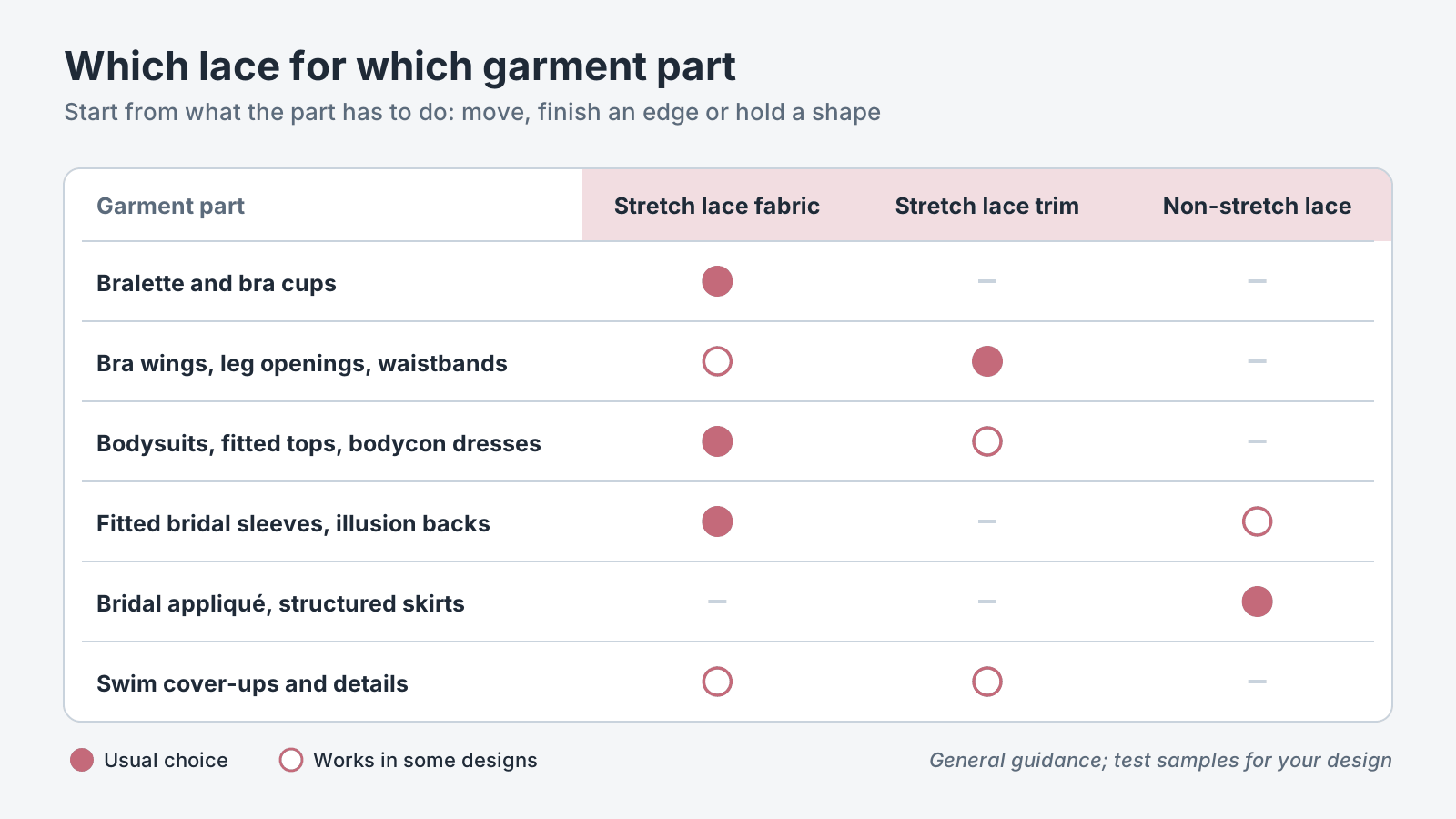
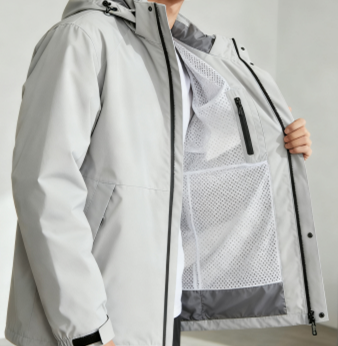
Lingerie. This is stretch lace’s home ground: bralette and bra cups (often over a lining), bodysuits, briefs and shapewear overlays. Bra wings usually pair a stretch lace face with power mesh behind it, because lace alone rarely gives enough support.
Bridal and eveningwear. Stretch lace suits fitted sleeves, illusion backs and close-fitting bodices that must move with the wearer. For appliqué, cut motifs and structured skirts, rigid laces like Chantilly or guipure usually behave better. Our guide to the best lace fabric for wedding dresses compares the options.
Fashion. Fitted tops, bodycon dresses, skirts and layered pieces where a soft, body-skimming lace is the point.
Swimwear. Use it with care. Chlorine and sunscreen break down spandex, and an open lace structure gives less coverage, so stretch lace is better for cover-ups and trim details than for the main swimsuit body. See our swimwear fabric guide for what holds up in the pool.
Matching Stretch Lace to Mesh, Elastic and Lining
A lingerie set or bridal bodice is rarely one fabric. Lace, power mesh, tricot lining and elastic all have to stretch together and look like one color.
- Match the base fiber. Nylon lace, nylon mesh and nylon elastic take the same type of dye, so a dye house can bring them to one shade. Pairing polyester lace with nylon mesh makes an exact match harder, because the two fibers need different dye classes.
- Match the stretch. A lining or mesh that stretches much less than the lace will restrict the garment and pucker the seams; one that stretches much more can sag behind it.
💡 Pro Tip: When you order lace, mesh and trim for the same garment, ask for lab dips of all three in one round and approve them side by side under the same light.
Sewing and Care Basics
Stretch lace is easier to sew than many people expect, because knitted lace doesn’t fray:
- Use a stretch or ballpoint needle (around size 75/11) and polyester thread.
- Sew with a narrow zigzag or three-step zigzag so seams can stretch with the lace.
- For nearly invisible joins, overlap the pieces and stitch around the motifs instead of using a plain seam. Our step-by-step guide to sewing lace trim shows the technique.
- Keep heat low: press with a cool iron through a cloth, if at all. Wash cold, avoid chlorine bleach and dry flat.
Heat, chlorine and body oils are what wear out the spandex, so care labels for stretch lace garments should steer customers away from hot dryers and bleach.
What to Put on a Stretch Lace Spec Sheet
Before requesting samples, write down:
- Composition by percentage, for example nylon/spandex.
- Width (usable) and weight in g/m².
- Stretch amount and direction, plus acceptable recovery after stretching.
- Pattern and repeat size, and the edge type for trims (straight, scalloped, eyelash, galloon) with the trim width.
- Color standard and lab dip approval, and whether the lace must match mesh, lining or elastic.
- Colorfastness and shrinkage requirements.
- Certifications, such as OEKO-TEX Standard 100 for skin-contact fabric, or the Global Recycled Standard (GRS) if you are buying recycled nylon.
FAQ
How can you tell if lace is stretch lace?
Pull a corner gently in both directions. Stretch lace extends noticeably and springs back; rigid lace barely moves or distorts without recovering. The fiber content label is the other giveaway: stretch lace lists spandex or elastane.
Does stretch lace need to be lined?
Not always. For sheer bodysuits or overlays it can be worn unlined. Bra cups, light colors and anything needing coverage or support usually get a lining or mesh behind the lace, chosen to stretch at a similar rate.
Can you iron stretch lace?
Only gently. Use a low setting with a pressing cloth, or skip ironing altogether; high heat can damage the spandex and leave the lace permanently stretched or shiny.
Does stretch lace shrink?
It can, slightly, especially after the first wash or a hot dryer. Ask your supplier for shrinkage results and test a washed swatch before cutting bulk.
Sourcing Stretch Lace
Fuyuan Knitting makes stretch lace fabric and stretch lace trim on its own lace machines, alongside non-stretch lace and warp knit mesh. Because dyeing happens in Fuyuan’s own dye house, lace, mesh and trim for one design can be shade-matched together, with low MOQs and fast sampling. Send us your target composition, stretch and color, and we’ll send swatches to test.