Wedding Dress Fabrics: A Practical Sourcing Guide for Bridal Brands
Wedding dress fabrics are often discussed with romantic words: airy tulle, liquid satin, soft chiffon, crisp organza, delicate embroidery, and elegant lining. Those words help describe the mood, but they do not solve production problems. A bridal brand also has to think about weight, drape, transparency, color shift, sewing behavior, pressing, packing, and whether the same look can be repeated across sizes and reorders.
This guide is for bridal designers, sample rooms, sourcing managers, and private-label dress brands that need to choose fabric more systematically. It looks beyond one beautiful swatch and focuses on how fabrics behave in real wedding dress development.
Start With the Dress Structure
The right fabric depends on the structure of the dress. A fitted mermaid gown, a soft A-line dress, a structured ball gown, a minimalist slip dress, and a detachable overskirt all require different fabric behavior. Before choosing material, define the silhouette, support level, number of layers, train length, and whether the dress needs volume, fluid drape, or clean architectural shape.
A fabric can look elegant on a table but fail in the garment. Soft chiffon may not hold a sculpted neckline. Crisp organza may create too much volume for a narrow dress. Heavy satin may drape beautifully but become difficult for light construction. Sourcing should begin with the intended silhouette, not only the fabric name.
Understand the Role of Each Fabric Layer
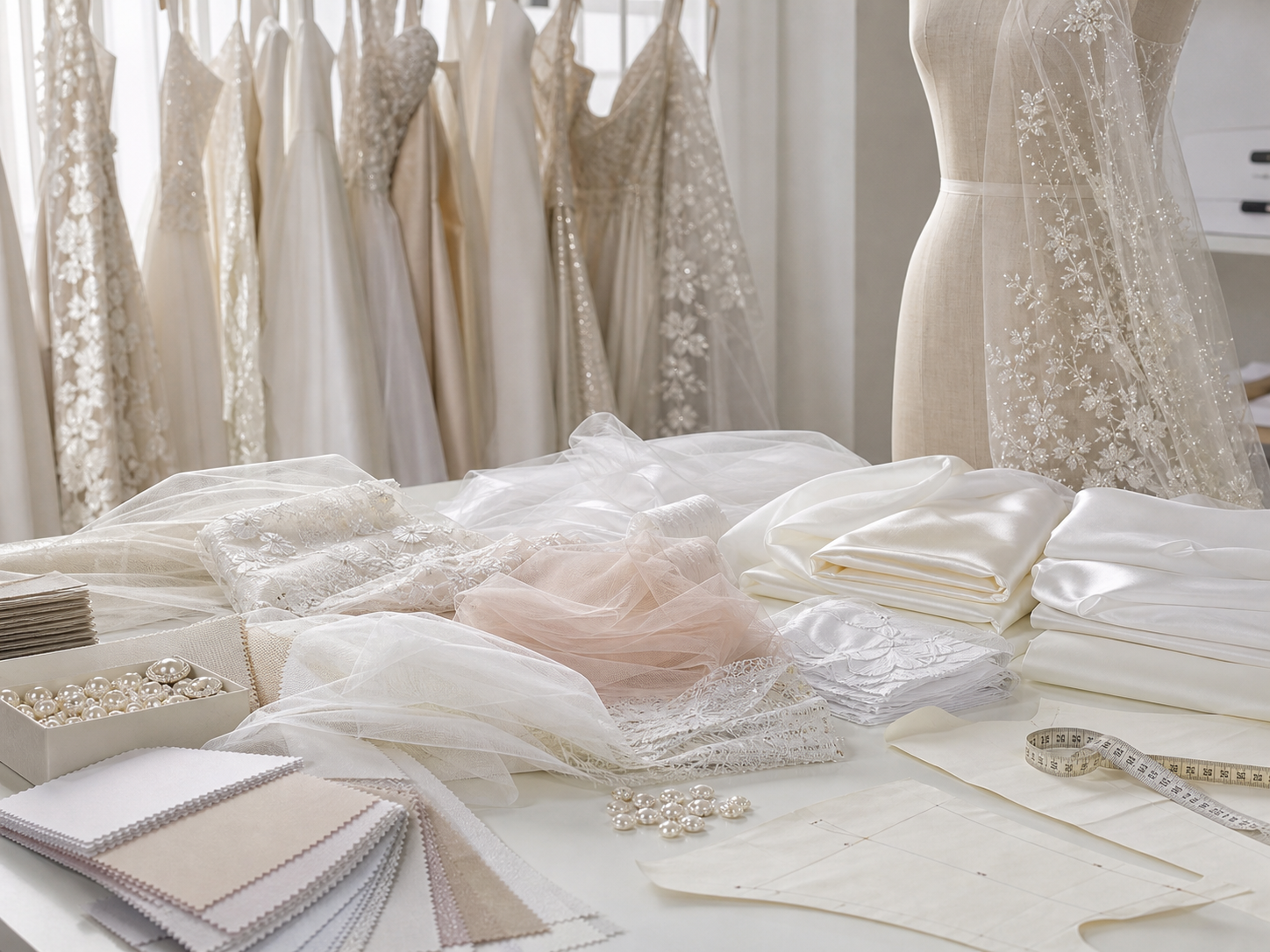
Most wedding dresses are built from layers. The outer layer creates the visual effect. The interlining or support layer controls shape. The lining touches the body and affects comfort. Overlays, embroidery, and trims add texture and identity. When these layers are chosen separately, the final gown can become too heavy, too transparent, too stiff, or too fragile.
Review fabric combinations as a stack. Place tulle over satin, organza over lining, chiffon over nude backing, or embroidery over the actual base. Move the stack, fold it, and hold it against light. This is the simplest way to see whether the final dress will have the intended color, transparency, and movement.
| Fabric | Typical Role | Sourcing Check |
|---|---|---|
| Satin | Clean surface and body | Weight, sheen, crease behavior, drape |
| Tulle | Volume, veil, overlay, illusion areas | Softness, hole size, scratchiness, color |
| Organza | Crisp volume and shape | Stiffness, transparency, edge behavior |
| Chiffon | Soft movement and overlays | Sheerness, snag risk, cutting stability |
| Lining | Comfort and opacity | Touch, color backing, static, seam show-through |
Color Is a Layering Decision
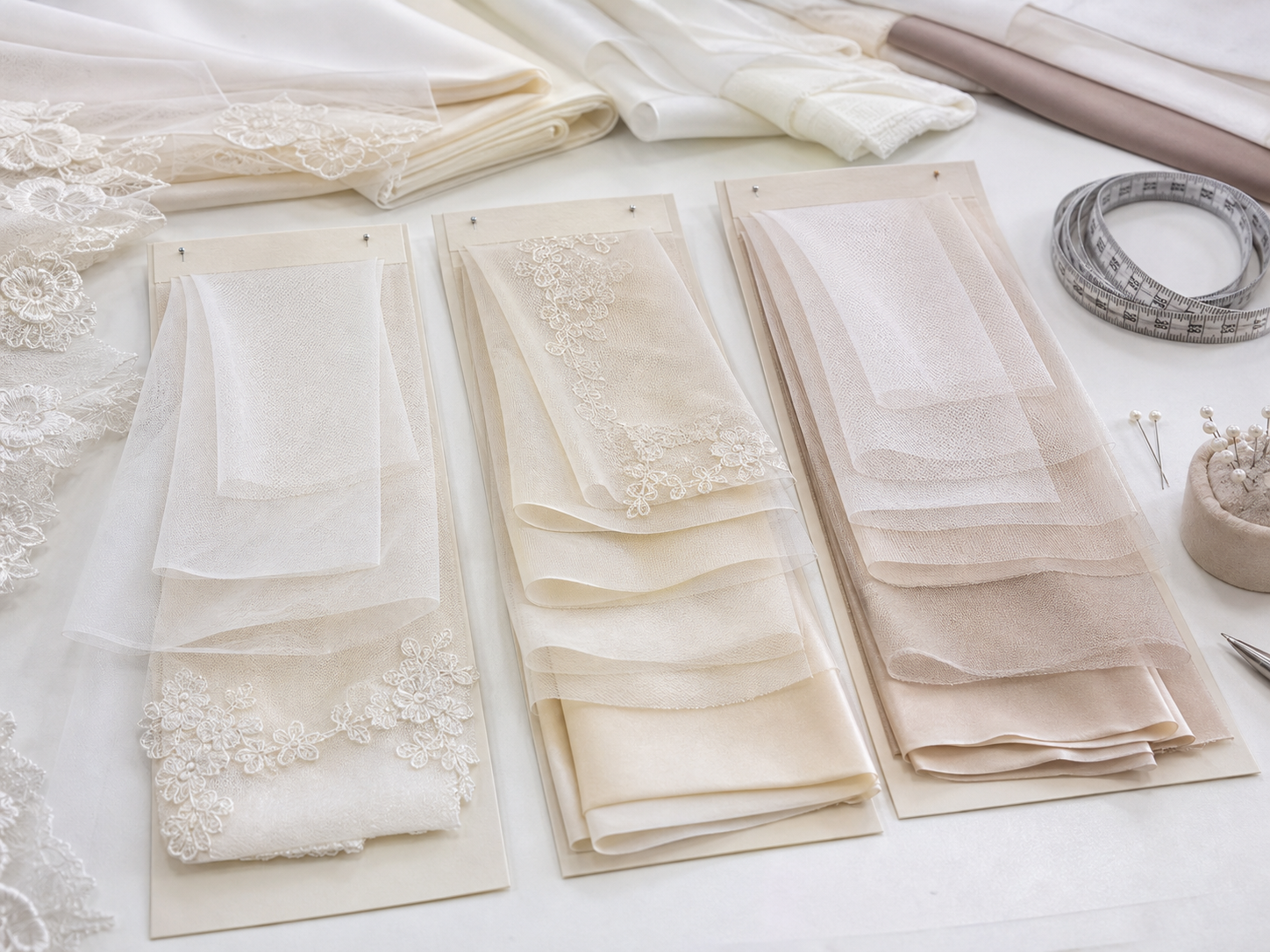
Ivory, off-white, champagne, nude, blush, and pure white can change dramatically when fabrics are layered. A white tulle over ivory satin may look cool. Champagne lining under sheer fabric may warm the whole dress. Nude backing can make embroidery stand out or disappear. For this reason, bridal color approval should not happen on isolated swatches.
Create a small layer card for each proposed dress combination. Include outer fabric, lining, underlayer, and any embroidery or trim. Review the card under daylight and indoor light. If the dress will be photographed often, check whether shine or transparency becomes exaggerated under strong lighting.
Drape and Weight Should Match the Pattern
Fabric weight affects more than comfort. It changes how a train falls, how a bodice supports decoration, how a skirt moves, and how seams behave. A heavier satin may make a gown feel premium but can pull on straps or distort a light bodice. A very light fabric may look graceful but reveal seam allowances, lining edges, or body lines.
Before bulk purchase, cut a small test panel or sample skirt section. Let it hang for a day if the fabric is bias-cut or very fluid. Check whether the hem drops, whether seams twist, and whether the fabric needs special handling. This is especially important for chiffon, satin, and other fabrics where gravity changes the final shape.
Sewing and Pressing Behavior Can Decide the Final Quality
Some bridal fabrics are beautiful but unforgiving. Satin can show needle marks. Organza can crease sharply. Chiffon can shift while cutting. Tulle can snag or distort under tension. Beaded or embroidered materials may require special seam planning. A sourcing decision should include sample-room feedback, not only designer preference.
Run a sewing test before confirming bulk. Use the intended seam type, needle size, thread, pressing method, and lining. Check whether the fabric puckers, shines, melts, frays, or becomes wavy. For bridal brands, small sewing defects are visible because customers inspect the gown closely.
Plan for Production, Packing, and Alterations
A wedding dress does not leave the factory and go straight to a simple shelf. It may be packed, shipped, steamed, tried on, altered, stored, photographed, and worn for many hours. Fabrics should be judged against that journey. Ask whether the material wrinkles easily, whether it can be steamed safely, whether trims can handle alteration, and whether layers recover after being packed.
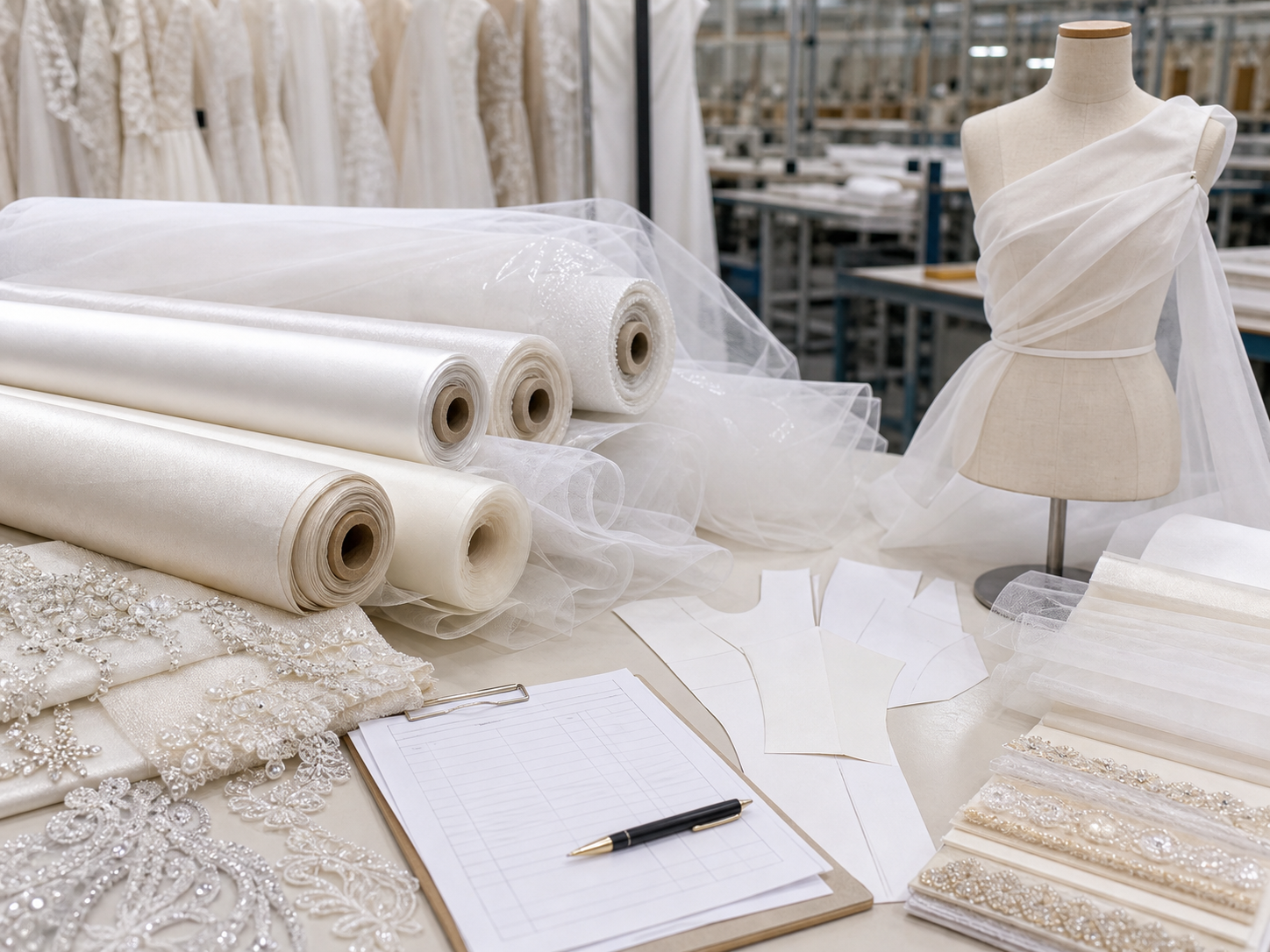
If the dress has a long train or multiple layers, discuss roll width and cutting layout before fabric ordering. Narrow width can create extra seams or waste. Wide fabric may reduce joins but increase handling difficulty. The best choice depends on the pattern and production setup.
Questions Bridal Brands Should Ask Suppliers
- Which dress silhouettes are best suited to this fabric?
- How does the color change when layered over ivory, nude, or champagne backing?
- What needle, seam, and pressing methods are recommended?
- Will the fabric hold shape after hanging, steaming, and packing?
- Can the same shade and handfeel be repeated for future orders?
- What roll width gives the best cutting yield for gowns and trains?
Common Sourcing Mistakes
One common mistake is selecting fabric by name. Satin, tulle, chiffon, and organza each come in many weights and finishes, so the name alone says little about final behavior. Another mistake is approving color on a single layer even though the dress uses several layers. Bridal teams also sometimes ignore packing and alteration, which are major parts of the customer experience.
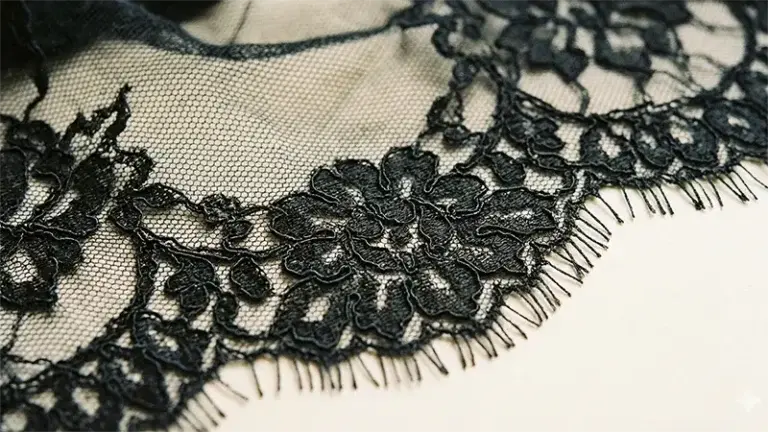
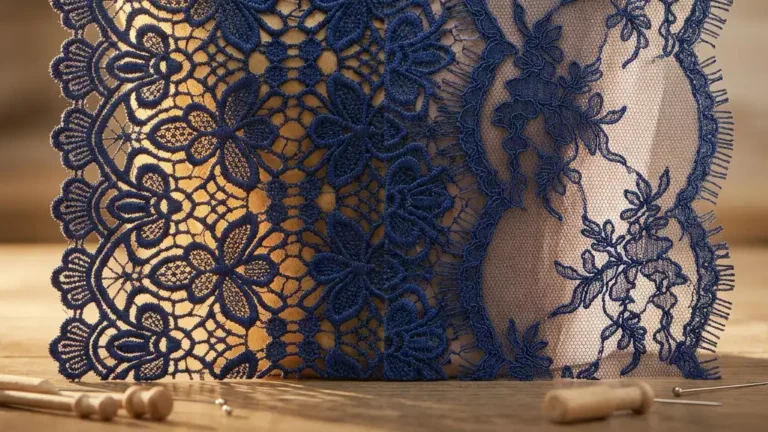
For brands that also use decorative overlays or trims, Fuyuan’s floral fabric example can be reviewed alongside satin, tulle, and lining to understand how surface pattern, backing color, and edge behavior affect a finished gown.
Match Fabric Choice to Sales Channel
A bridal gown sold through a showroom is judged differently from a made-to-order online dress or a rental gown. Showroom dresses are touched, tried on, clipped, steamed, and handled many times before the final sale. Online bridal products need fabric that photographs consistently and matches customer expectations when opened at home. Rental or occasionwear programs need stronger durability and easier care than a one-time custom gown.
This is why the same beautiful fabric can be right for one bridal business and wrong for another. A very delicate overlay may be perfect for a luxury made-to-measure dress but risky for a high-volume online style. A heavier satin may feel premium in a boutique but increase shipping weight and alteration difficulty. Sourcing should reflect the way the dress will actually be sold, altered, and worn.
Do Not Separate Fabric Cost From Cutting Yield
Bridal fabric cost is not only price per meter. Width, repeat, defect rate, direction, and cutting layout can change the real cost of a gown. A wider fabric can reduce seams in a full skirt. A narrow fabric may create more joins in a train. Directional shine in satin can force one-way cutting. Embroidered or beaded materials may require careful motif placement, which increases waste.
Before approving a fabric, ask the sample room to estimate cutting yield for the actual dress pattern. This is more useful than comparing swatch prices alone. A slightly more expensive fabric can be cheaper in production if it cuts cleanly, reduces joins, and needs fewer repairs. A cheaper fabric can become expensive if it snags, shifts, or creates too many rejected panels.
Build a Bridal Material Library
For brands that release collections every season, a material library is more valuable than one-off fabric hunting. Keep approved satin weights, lining qualities, tulle types, organza structures, and chiffon options with notes on drape, opacity, sewing behavior, and best silhouettes. Add photos of finished samples, not only flat swatches. Over time, this library helps designers choose faster and helps suppliers understand the brand’s standard.
A good library also improves communication with factories. Instead of saying “use a soft ivory lining,” the brand can refer to an approved lining quality and shade. Instead of restarting every season, the team can adjust color, overlay, or trim while keeping the base construction stable. This makes product development faster and reduces the risk of inconsistent gowns across a collection.
Final Takeaway
Wedding dress fabric sourcing works best when the brand thinks in layers, not isolated swatches. Start with the silhouette, test fabric stacks, approve color in real combinations, check drape and sewing behavior, and consider packing and alterations before bulk. This approach helps bridal brands create dresses that look refined in the showroom and remain practical in production.